The Caledonian Invasion

In early 1942, Winston Churchill faced a barrage of bad news. Kriegsmarine warships had escaped detection, sailing from occupied France to Germany, and Singapore had just fallen to the Japanese. The time for a large-scale offensive had not yet arrived, but Churchill desperately needed a victory. German radar technology – the Würzburg – was hindering British air operations, and one station, perched on the cliffs of Bruneval near Le Havre in Northern France, became the target of a daring raid. A successful breach of the Nazi fortress would offer much-needed relief during those harsh winter months.

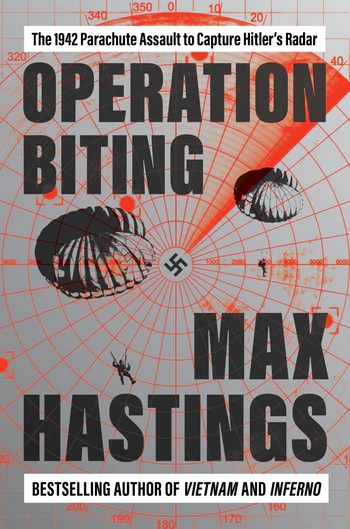
Thus, Operation Biting: The 1942 Parachute Assault to Capture Hitler’s Radar (Harper) vividly springs to life through Sir Max Hastings’ writing. Members of the Black Watch, the Cameron Highlanders, the King’s Own Scottish Borderers, and the Seaforth Highlanders took center stage among the British paratrooper units involved, demonstrating the martial prowess long associated with Caledonian regiments. Nemo me impune lacessit.

Unmistakably, Churchill is the story’s central figure. During the Boer War, which he covered as a young war correspondent, he admired the effectiveness of Afrikaner commandos. True to the British instinct of adapting enemy tactics, Churchill later founded the Special Operations Executive (SOE) in 1940, followed by the formation of the Special Air Service (SAS) the next year. As Hastings notes, the recruits manning these units “were seldom the sort of people to make docile household pets.” The deployment of paratroopers for Operation Biting naturally stemmed from this evolution.

Continue reading “The Caledonian Invasion”

Mahan’s Ideas Sank Hitler’s Ambitions at Sea

In their illuminating book about Winston Churchill’s involvement in the discussions, planning, and logistics surrounding the Normandy landings on D-Day, Lord Richard Dannatt and Allen Packwood describe how the duties of wartime leadership took a significant toll on the British Prime Minister’s health. But as Churchill himself admitted, there was only one thing that truly filled him with fear: the German U-boats that claimed so many Allied ships during the Battle of the Atlantic. And it’s easy to see why. Britain was isolated entirely – hemmed in by Nazi-occupied Europe, with America still months away from entering the war.

The attack on Pearl Harbor on December 7, 1941, changed everything. When Japanese forces shattered the peace of that Sunday morning, Churchill knew he finally had a powerful ally in President Franklin D. Roosevelt. Roosevelt would not only commit U.S. troops against the Axis but would also put into practice the doctrine of Alfred Thayer Mahan – the naval strategist who argued that “the sea has been the element through which history’s most decisive wars have been won”, as French researcher Antony Dabila reminds us.

Continue reading “Mahan’s Ideas Sank Hitler’s Ambitions at Sea”

The Four Musketeers of the SOE

A stone’s throw away from the House of Commons and Westminster Abbey lies the St. Ermin’s Hotel in London. Apart from being one of the best addresses in the City, the iconic establishment hosted Winston Churchill, who liked to sip his favourite Champagne at the Caxton Bar. There was even a secret tunnel linking the hotel lobby to Parliament. During a meeting at St. Emin’s, he asked a group of unconventional people to “Set Europe Ablaze” in founding the Special Operations Executive – the legendary SOE. Any visitor to St. Ermin’s can enjoy the sight of a monastic-sized room where the contribution of its members is soberly showcased.

Thanks to a miniseries like SAS: Rogue Heroes, the inestimable achievements of the men and women who waged unconventional warfare in World War II’s most punishing conditions are vividly brought back to public awareness. Shannon Monaghan’s book A Company of Dangerous Men: The Forgotten British Special Operations Soldiers of World War II (Viking) is another significant and euphemistically pleasant contribution. This enthralling book reminded me of Alexandre Dumas’s The Three Musketeers, the elite corps defending the King of France against domestic and foreign threats.

Continue reading “The Four Musketeers of the SOE”

“Bomber” Harris’ Foresight

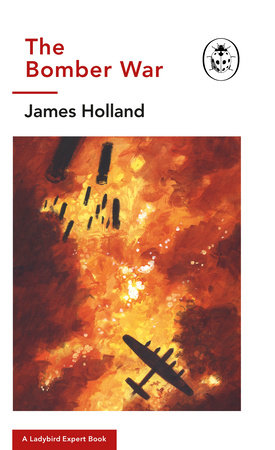
At the beginning of the summer, my sons and I were captivated by the riveting Apple TV series Masters of the Air. I was therefore enthusiastic to carry my copy of James Holland’s book The Bomber War (Penguin Random House) in my backpack. Those who follow this blog know how much of a fan I am of this talented author. Full disclosure, I intend to review every one of the books he published in the Ladybird Expert Series.

While air power played a role “in Germany’s rapid victory in Poland” at the very beginning of World War II, the same could not be said in the following chapters of the conflict. “The tiny British island of Malta, for example, was not defeated despite in the spring of 1942 briefly becoming the most bombed place on earth”, writes the incomparable historian.

Continue reading ““Bomber” Harris’ Foresight”