When Homer Meets Jack Ryan

The pleasure of reading about World War II through the lens of the Greek theatre is seldom found on bookstore shelves. I was therefore thrilled to discover The American School of Spies: The Archaeologists Who Fought the Nazis and Saved the Treasures of Ancient Greece (Dutton) by Stephan Talty. Little did I know when I started that I was about to discover one of the most fascinating stories I have ever read about the convergence of history, academia, and espionage.

The author reminds us that Adolf Hitler’s chief theorist, Alfred Rosenberg, “was hopeful that his men, led by the famous Nazi archaeologist Hans Reinerth, would pull from the ground “pre- and protohistoric Germanic and Slavic finds” that would at long last prove the connection between ancient Greece and the early Germans.” The occupation of Greece proved to be anything but pleasant. According to the author, approximately 5 percent of the population would not survive it. It would also provide the Feldgrau Horde with ample opportunities to seek out the alleged—and entirely imaginary—bridge between the civilization that gave birth to democracy and the warped minds that sought to appropriate its legacy for their own purposes.

Enter William “Wild Bill” Donovan, the former Wall Street lawyer and larger-than-life character whom President Franklin Delano Roosevelt tasked with creating the Office of Strategic Services (OSS), the ancestor of the CIA, an intelligence organization designed to help win the war in the shadows. In 1942, Rodney Young, an archaeologist in his thirties who had been assistant director of the American School in Athens, was given a mission. He knew the Greek landscape well, not least from his wartime efforts to reach and assist local populations: following the German invasion, he had found a way to acquire an ambulance to help those in need. As head of the Greek Desk, he would recruit classicists and teach them the art of spycraft “in order to save Greece and its ancient relics”. A Herculean task.

Continue reading “When Homer Meets Jack Ryan”
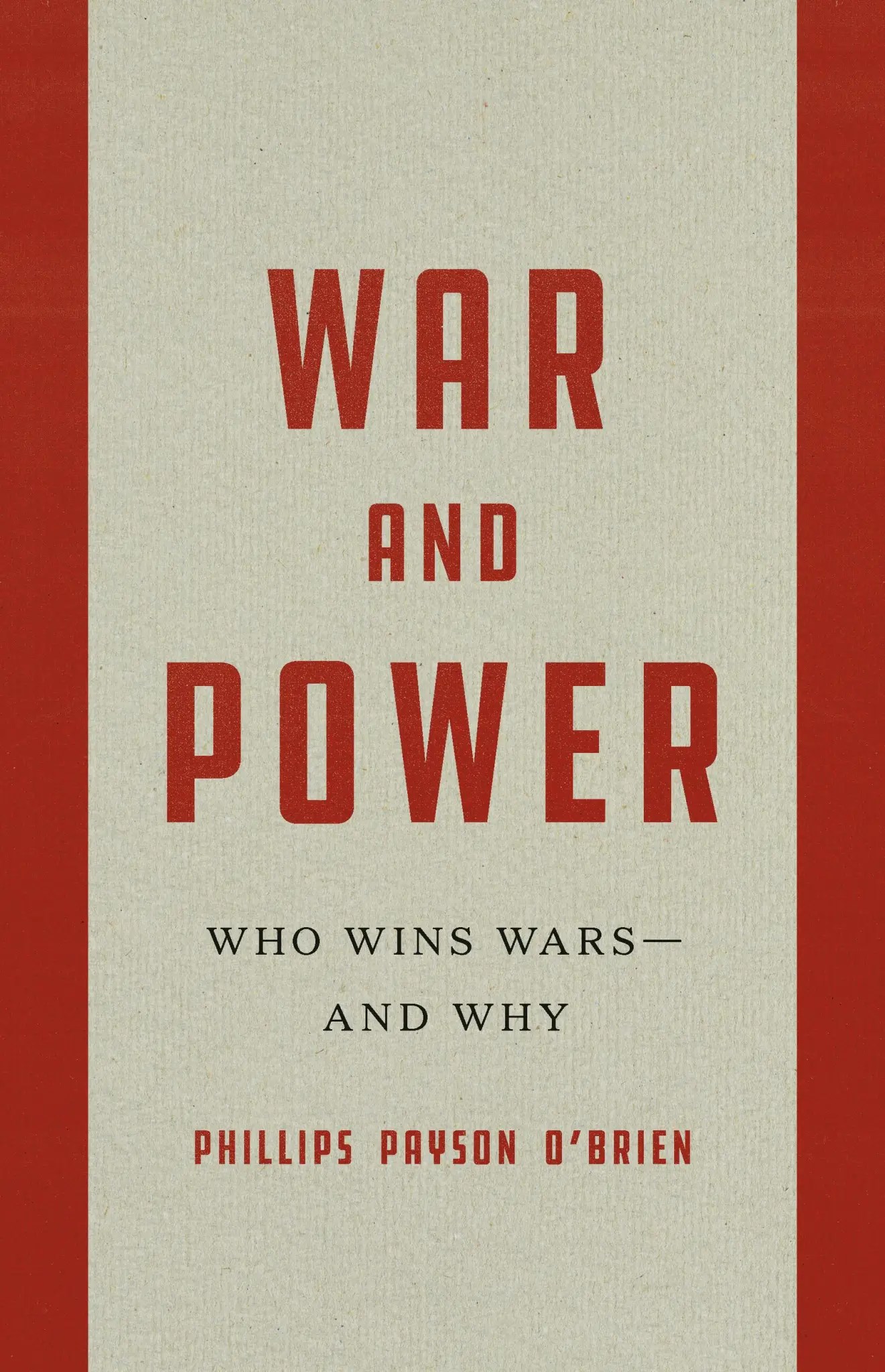
The Sinews of Victory, the Seeds of Defeat

The fate of war is sealed long before the sound of cannons fills the air. That is the conclusion I reached after reading Phillips Payson O’Brien’s latest book, and it recalls Sun Tzu’s teaching that victorious warriors win first and then go to war.

The argument resonates in a particular way when viewed against the backdrop of a news report according to which “the U.S. Army has significantly depleted its stockpile of highly accurate long-range missiles” (The Independent). Not necessarily the strongest posture from which to engage a determined enemy. “Going back to the great invasion of Greece by the Persian emperor Xerxes in 480 BCE (sometimes referred to as his second invasion), it can be seen how the largest and most powerful military forces can be crippled by the lack of supply”, writes the acclaimed historian in War and Power: Who Wins Wars and Why (PublicAffairs).

Before and beyond the clashes of iron and blood, “war is a test of various systems in a multitude of different ways; it is not a test of armies, and certainly not something that is determined by supposedly decisive battles”. Societies must therefore be willing to sustain the financial, industrial, and moral investments required to prevail when called upon. Alas, “instead of investing in their militaries, western European countries [to which we could add other countries, like Canada] have prioritized their vast welfare states”, as observed by former Senior National Security Adviser to the Australian government John Lee in a recent Foreign Affairs article. Such choices carry a cost—not only for national resources, but also for long-term strategic credibility.

Continue reading “The Sinews of Victory, the Seeds of Defeat”

L’Iran, pivot entre les puissances

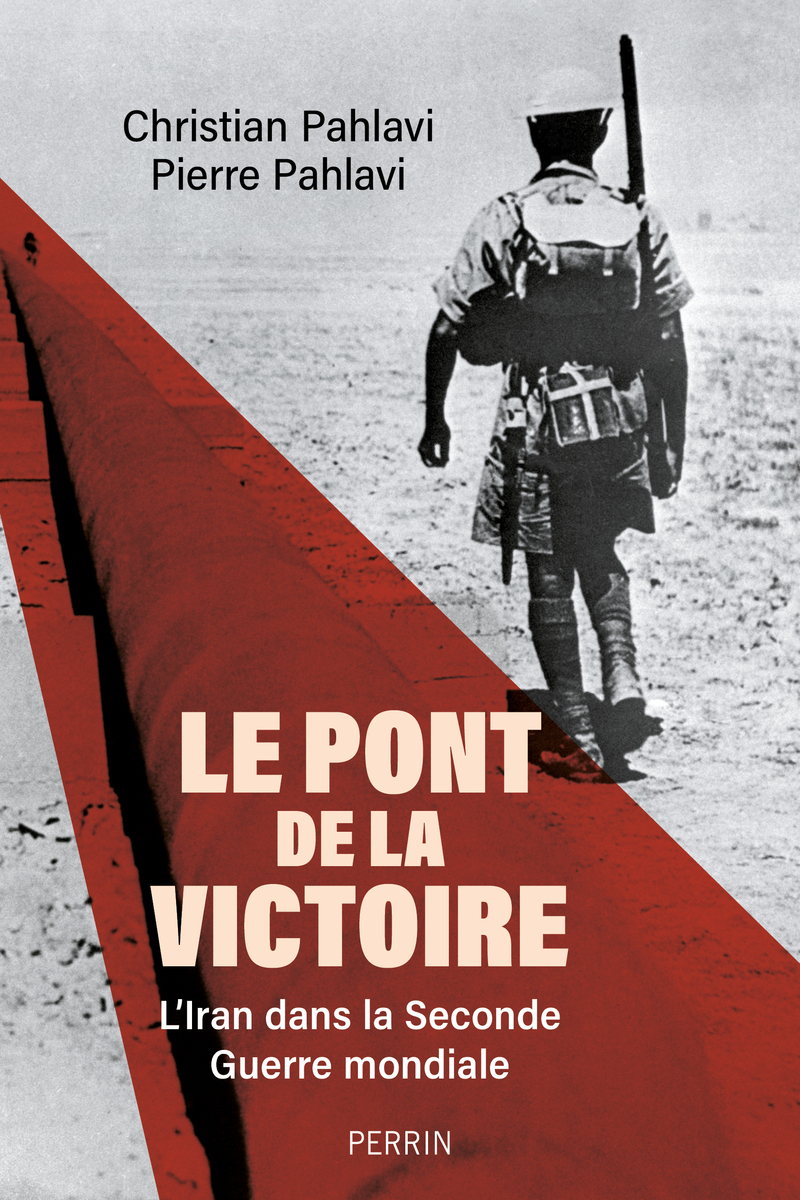
« L’entité iranienne est un rouage essentiel entre les grandes plaques tectoniques du système international ». Cette observation pourrait aisément s’appliquer à l’opération Epic Fury lancée le 28 février dernier par les États-Unis en collaboration avec Israël, mais elle émane du propos du livre de Christian et Pierre Pahlavi, Le Pont de la victoire : L’Iran dans la Seconde Guerre mondiale (Éditions Perrin). Paru en 2023, mais toujours d’une brûlante actualité, ce livre permet de constater que l’Iran n’en est pas à son premier épisode en tant que « pion stratégique » entre les puissances.

À la veille du conflit qui embrasera la planète au crépuscule des années 1930, les auteurs – de fins connaisseurs de l’histoire politique du pays – relatent que le souverain iranien Reza Chah souhaite « s’affranchir de l’emprise britannique ». Cet état d’esprit se manifeste notamment « en juin 1940, alors que se profile la défaite de la France, [et que] Téhéran durcit sa politique envers Londres en lui réclamant le remboursement d’une dette de 4 millions de livres sterling. » Agenouillée dans l’un des pires moments de son histoire, Albion n’oubliera pas cet affront, qui se paiera comptant.

poursuivre la lecture

Mahan’s Ideas Sank Hitler’s Ambitions at Sea

In their illuminating book about Winston Churchill’s involvement in the discussions, planning, and logistics surrounding the Normandy landings on D-Day, Lord Richard Dannatt and Allen Packwood describe how the duties of wartime leadership took a significant toll on the British Prime Minister’s health. But as Churchill himself admitted, there was only one thing that truly filled him with fear: the German U-boats that claimed so many Allied ships during the Battle of the Atlantic. And it’s easy to see why. Britain was isolated entirely – hemmed in by Nazi-occupied Europe, with America still months away from entering the war.

The attack on Pearl Harbor on December 7, 1941, changed everything. When Japanese forces shattered the peace of that Sunday morning, Churchill knew he finally had a powerful ally in President Franklin D. Roosevelt. Roosevelt would not only commit U.S. troops against the Axis but would also put into practice the doctrine of Alfred Thayer Mahan – the naval strategist who argued that “the sea has been the element through which history’s most decisive wars have been won”, as French researcher Antony Dabila reminds us.

Continue reading “Mahan’s Ideas Sank Hitler’s Ambitions at Sea”

Churchill, ce guerrier solitaire

Pendant près de 19 longs mois, Winston Churchill est seul à combattre le péril nazi avec les dominions britanniques. L’attaque sournoise qui déchire le ciel dominical à Pearl Harbor le 7 décembre 1941 met fin à cette solitude. Franklin D. Roosevelt et ses centurions entrent, enfin, dans la danse.

Mais toutes les alliances ont leurs jeux de puissance et la Seconde Guerre mondiale n’y fait pas exception. La montée en force des Américains correspond à la diminution de l’influence du premier ministre sur la conduite de la guerre. C’est l’un des principaux constats posés dans l’ouvrage éclairant de Lord Richard Dannatt et Allen Packwood, Le D-Day de Churchill : Dans les coulisses du Débarquement (Tallandier).

Malgré l’intention clairement exprimée par les Américains de procéder à un débarquement en France aussitôt qu’en 1942 (ils n’en auraient pas les capacités), Churchill sait que la partie est délicate parce qu’il ne peut « risquer de s’aliéner le président Roosevelt et George Marshall [chef d’état-major des Forces américaines]. Il ne pouvait pas non plus ignorer leur plan [un débarquement en France]. C’est ainsi que débuta un jeu diplomatique complexe. » Un ballet au cours duquel Churchill convainc FDR de prioriser un débarquement en Afrique du Nord comme « meilleur moyen d’alléger la pression qui pesait sur les Russes » qui bataillent sur le front de l’Est. Même si cela permet au descendant de Marlborough d’épargner une déconvenue majeure à ses alliés, ce n’est qu’une question de temps avant que le plan initial reprenne place en tête de liste.

poursuivre la lecture

Dans l’intimité des présidents américains

La présidence des États-Unis se prévaut d’une influence inégalée dans le monde. Pas une journée ne s’écoule sans que les plateformes d’informations ou de médias sociaux n’y fassent référence. Parfois, elle agace en raison de la perception véhiculée à propos de celui qui est appelé à travailler dans le Bureau Ovale. Acteur de série B, Ronald Reagan était vilipendé pour son prétendu déficit d’intellect. Idem pour George W. Bush. Mais jamais elle ne cesse de captiver. Et c’est redevable à la personnalité de ces grandes pointures qui sont parvenues à succéder aux immortels que sont devenus George Washington, Thomas Jefferson ou Abraham Lincoln.

C’est justement avec ce dernier que Thomas Snégaroff débute son fascinant ouvrage Dans l’intimité des présidents américains (Tallandier). En le choisissant pour présider aux destinées de la nation, « les Américains veulent élire un homme qui leur ressemble, et surtout qui met en musique le mythe d’une Amérique des possibles. » Au-delà des prises de position et des événements cruciaux qui jalonnent l’histoire des États-Unis, l’auteur s’emploie à éclairer un aspect fondamental de chacune des personnalités alimentant les portraits esquissés, c’est-à-dire son inimité, parce qu’ « elle donne à voir, derrière les grands discours et les beaux costumes, la vérité d’un homme. »

poursuivre la lecture

Behind the scenes in the Sit Room

From Pearl Harbor to the neutralization of Osama bin Laden, every US President is confronted with crises. Any one of them also needs to manage relations with foreign leaders. Hence, a need for an organized mechanism and apparatus to navigate the traffic and make sure that POTUS can take the pulse of the world at a moment’s notice. This is made possible thanks to a vital institution, whose history is brilliantly recounted by former Clinton administration official and ABC host George Stephanopoulos in The Situation Room: The Inside Story of Presidents in Crisis (Grand Central).

Before its establishment, Presidents monitored world events on an ad hoc basis. For any military history enthusiast, the depiction of Franklin D. Roosevelt’s wheelchair being pushed in a former billiard room to consult maps pinned on the walls to monitor developments unfolding during World War II is captivating. Like so many other things, John F. Kennedy would be an innovator by creating the Situation Room in light of the 1961 Bay of Pigs disaster. Every one of his successors would rely on this evolving institution to accompany the United States’ presence on the world scene.

The most important takeaway from the book relates to the notion of the “three Ps”. The Situation Room is: 1) a place where information is gathered, processed, analyzed and decided upon; 2) it regroups people who serve the Presidency in a selfless and non-partisan way and; 3) a process revealing how every commander in chief manages the affairs of the world.

Continue reading “Behind the scenes in the Sit Room”

Joe Biden: Leader of the Free World

“To every man there comes in his lifetime that special moment when he is figuratively tapped on the shoulder and offered a chance to do a very special thing, unique to him and fitted to his talents,” declared Winston Churchill. For many, that hour comes early. For some, like the heroic British Prime Minister, it comes later. For others, like US President Joe Biden, it comes even later in life.

As we commemorate today the tragic first anniversary of the murderous onslaught launched by Vladimir Putin against Ukraine, it seems fitting to write about one of the best political biographies I have read in a long time. The Fight of His Life: Inside Joe Biden’s White House (Scribner) is required reading for anyone seeking to understand the character of the 46th President of the United States.

In the summer of 2017, the events surrounding the extreme-right manifestations in the streets of Charlottesville convinced former Vice President Biden that Donald Trump “was giving evil a safe harbour”, thus contributing to the Democratic politician’s decision to run. The combat for 2020 was between good and evil. And no one was better equipped than Joe Biden to lead it.

Continue reading “Joe Biden: Leader of the Free World”

Putin’s Soviet Playbook

As I grow older, I realize that history is one of the surest guides to navigate the present. While many adhered to Francis Fukuyama’s theory that the demise of Soviet Union on December 26, 1991, represented the end of history, others lamented what they perceived as “the greatest geopolitical catastrophe of the century”.

Old habits die hard and Giles Milton’s Checkmate in Berlin: The Cold War Showdown That Shaped the Modern World is an excellent representation of that idiom. “”America is now the primary enemy,” said one of Marshal’s Zhukov’s general at the time of the capture of Berlin. “We have destroyed the base of Fascism. Now we must destroy the base of Capitalism – America.”” Things haven’t changed much in the last 77 years.

Continue reading “Putin’s Soviet Playbook”

Ian Fleming et James Bond: tel père, tel fils

Dans Skyfall (le meilleur film de James Bond à mon humble avis), il y a une scène où 007 fausse compagnie aux mercenaires de Silva en empruntant un tunnel secret dissimulé dans la maison de son enfance. Au moment de s’y engouffrer, le mythique agent secret déclare : « j’ai toujours détesté cet endroit ». Cette déclaration se veut non seulement emblématique des sentiments du personnage, mais aussi de son créateur, Ian Fleming.

Dans l’enlevante biographie qu’il consacre au père de James Bond (Perrin), l’historien Christian Destremau permet au lecteur de constater à quel point le père et le fils littéraire partagent le même ADN. Amour des voitures, de la vitesse, des douches à l’eau chaude, des montagnes, caractères irrévérencieux et vie sexuelle bien assumée, voilà autant de traits donnés par Fleming à son emblématique personnage. Et j’oubliais que la mère de l’agent du MI6 est Helvète, tout comme celle de Fleming. Je laisserai aux psychologues le plaisir d’épiloguer sur la parenté entre les deux hommes, mais je peux facilement imaginer que l’auteur aurait rêvé de vivre les aventures de son héros. Après tout, n’est-ce pas là le but de la fiction?

Cela dit, n’importe quel amateur des questions de renseignement, aussi novice soit-il, aura tôt fait de constater que M. Bond détonne de manière très exubérante par rapport à la discrétion élémentaire requise de la part des manœuvriers de cet univers ombrageux. Rares doivent être ceux et celles qui raffolent d’attirer l’attention. Il n’est donc guère étonnant que le biographe écrive que « […] James Bond est pour une large part l’héritier des braves du SOE » (Special Operations Executive) – les légendaires services spéciaux créés par Churchill quelques semaines après son arrivée aux commandes en juillet 1940.

poursuivre la lecture