Dans les pas d’Ibn Saud

Peu d’hommes ou de femmes d’État sont passés à l’histoire comme ayant fondé un pays. Ibn Saud (Abdelaziz ben Abderrahmane Al Saoud) fait partie de ce club sélect. La magistrale biographie que lui consacre Christian Destremau aux Éditions Perrin nous invite à découvrir un parcours singulièrement passionnant qui permet de comprendre pourquoi et comment le fondateur de l’Arabie saoudite – entité étatique qui a fait son entrée dans la familles des nations en 1932 – un « homme quasiment illettré »est parvenu à laisser une empreinte déterminante et durable dans l’histoire contemporaine.

D’entrée de jeu, cette biographie nous amène à la rencontre d’un virtuose de l’équilibrisme. Ayant échappé aux griffes des ennemis de sa famille à l’âge de 10 ans avec sa sœur en se cachant « dans une grande sacoche attachée par des lanières en cuir sur le flanc d’un dromadaire », Ibn Saud a tôt fait d’apprendre une vérité impitoyable. « L’adversaire le plus dangereux, celui qu’il faut avoir toujours à l’oeil, est tout proche, il partage les repas et le café avec vous, fait mine de vous écouter attentivement lors des assemblées, prend place à vos côtés lors de la prière. Un jour ou l’autre, il sortira lui-même son sabre ou ordonnera à l’un de ses gardes prétoriens de vous abattre. »

Usant donc de prudence, d’intelligence, d’astuce, de dissimulation, de générosité – malgré une situation financière souvent sérieusement précaire – et d’une rare capacité à être réputé comme étant l’homme le mieux informé, il posera les jalons de son œuvre en faisant « de la politique comme un leader européen ». Tout au long de sa vie, il saura ménager les différentes clientèles à l’intérieur du royaume – entre les clans, auprès des religieux et parmi les membres de sa propre famille – et à l’échelle internationale, sachant tirer son épingle du jeu dans la rivalité géopolitique entre la Sublime Porte de Constantinople et Londres, dans un premier temps, et ensuite les divergences américano-britanniques au sortir de la Seconde Guerre mondiale.

poursuivre la lecture
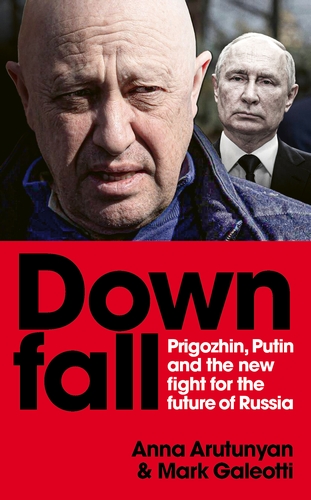
The kitchens of the Tsar

On June 24, 2023, Yevgeny Prigozhin – the former convict-turned-entrepreneur-turned-warlord, shook the pillars of the Kremlin. The eyes of the world were riveted on the screens while Wagner mercenaries drove to Moscow. The leader had had enough of Russia’s military leadership that was, in his opinion, responsible for the state of things in Ukraine. Could it be the end of the régime? Few could predict what would happen. At the end of the day, Vladimir Putin prevailed, but the mutiny revealed the character of a man who thought bigger of himself than he could deliver.

In the recent book Downfall: Prigozhin, Putin and the new fight for the future of Russia (Ebury Press) they co-wrote, journalist Anna Arutunyan and renowned Russia observer Mark Galeotti explain why and how Prigozhin – the servant who forgot his place – embarked on his death knell on what could be described as his highway to hell.

Since Prigozhin intertwined his destiny with Vladimir Putin’s reign, his biography can’t be dissociated from the nature and the functioning of the régime he eagerly served for his good fortune. Comparing the Kremlin to a medieval court where adhocracy prevails, the authors explain that one’s influence and fate are related to its importance to the Tsar.

Continue reading “The kitchens of the Tsar”

Waking up the American giant

Yesterday, December 7th, marked the infamous 83rd anniversary of the Japanese air raid against Pearl Harbor. This reckless decision would provoke the evaporation of the last isolationist emanations in American public life and pave the way to the Allied victory four years later. But before we got there, a war would need to be fought and waged against a determined and “extremely inflexible” enemy – to use the words of renowned historian James Holland – a favourite of this blog, in case you haven’t noticed.

A few years ago, he wrote a very insightful book in the Ladybird Expert Series about The Pacific War 1941-1943 (Penguin Random House), and I told myself this weekend would be the ideal time to write a few lines about it.

The morning of December 7 was a shocking experience resulting from their underestimation of a lethal nemesis. The Americans took the hit and bounced back. Ultimately, their victory was the result of three crucial ingredients. First, men and resources, which they had in abundance. Second, they had a second-to-none capacity in terms of intelligence, which notably thwarted Admiral Yamamoto’s plan and would ultimately cost him his life. Third, the incomparable leadership of military figures like Admirals Chester Nimitz and William “Bull” Halsey Jr. About the latter, the author evokes that he “gelled immediately” with General Douglas MacArthur – the latter being traditionally a hard-to-get-along figure. Together, “they planned a series of leapfrogging operations, drawing on hard-won experience already gained in the Pacific and on the United States’ burgeoning military might.” Finally, “they were quick to absorb the lessons of war.”

Continue reading “Waking up the American giant”

The Making of Trump 2.0

Historically, the main task of any President-elect in the United States is to form a cabinet. In the last weeks, we have seen a cascade of announcements that have raised some eyebrows. Donald Trump’s picks for key positions in his second administration might seem odd to many.

Not so much if you grab a copy of retired Lieutenant General H. R. McMaster’s insightful book At War with Ourselves: My Tour of Duty in the Trump White House (Harper).

Upon his selection as National Security Advisor by the 45th President, the military general wanted to give his boss the best of his expertise. After consulting with one of his notorious predecessors, Lieutenant General Brent Scowcroft, who masterfully seconded President George H. W. Bush, McMaster understood his role as “making the policy process work and developing options for the president; and second, advising the president with views unalloyed by the departments and their bureaucracies.” The only person that mattered to him was the President, whose foreign policy should be well served. He also perceived his role as being above partisanship. His goodwill would be rewarded with disappointment.

Continue reading “The Making of Trump 2.0”