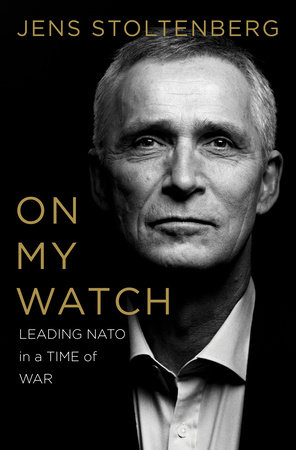
Jens Stoltenberg and the “Trump Effect”

Prima facie, the relationship between President Donald Trump and NATO is delicate. The role of Secretary General of the organization is anything but a sinecure. Yet the relationship between the resident of Avenue Louise in Brussels and the occupant of 1600 Pennsylvania Avenue in Washington stands out for its closeness. In Le Figaro, the astute journalist Florentin Collomp even wrote that Mark Rutte “is probably the only European capable of influencing the will of the President of the United States.” And as Collomp notes, it was following a meeting with NATO’s Secretary General at the Davos Forum that Donald Trump announced his dramatic reversals on Greenland and tariffs. Personal relationships are clearly crucial in international relations—especially with the US President. We could even say any US President.


This may come as a surprise to some, yet the closeness between the American statesman and the captain of the NATO ship fits within a clear continuum. In his memoirs, Jens Stoltenberg—former Norwegian Labour Prime Minister and current Finance Minister—describes a relationship that, exhausting as it may have been, proved beneficial. Stoltenberg, who accepted the post at Barack Obama’s invitation and had his term renewed under both Donald Trump and Joe Biden, candidly admits in his memoir, On My Watch: Leading NATO in a Time of War (Norton) to having adopted a strongly critical stance toward the United States in his youth. He also confesses to underestimating the chances of victory of the real estate mogul. Jens Stoltenberg is certainly no MAGA sympathizer—but his assessment is unambiguous: “When Donald Trump’s first term as President came to an end, NATO was stronger than it had been when he took office.” Intriguing, isn’t it?

Continue reading “Jens Stoltenberg and the “Trump Effect””

Waking up the American giant

Yesterday, December 7th, marked the infamous 83rd anniversary of the Japanese air raid against Pearl Harbor. This reckless decision would provoke the evaporation of the last isolationist emanations in American public life and pave the way to the Allied victory four years later. But before we got there, a war would need to be fought and waged against a determined and “extremely inflexible” enemy – to use the words of renowned historian James Holland – a favourite of this blog, in case you haven’t noticed.

A few years ago, he wrote a very insightful book in the Ladybird Expert Series about The Pacific War 1941-1943 (Penguin Random House), and I told myself this weekend would be the ideal time to write a few lines about it.

The morning of December 7 was a shocking experience resulting from their underestimation of a lethal nemesis. The Americans took the hit and bounced back. Ultimately, their victory was the result of three crucial ingredients. First, men and resources, which they had in abundance. Second, they had a second-to-none capacity in terms of intelligence, which notably thwarted Admiral Yamamoto’s plan and would ultimately cost him his life. Third, the incomparable leadership of military figures like Admirals Chester Nimitz and William “Bull” Halsey Jr. About the latter, the author evokes that he “gelled immediately” with General Douglas MacArthur – the latter being traditionally a hard-to-get-along figure. Together, “they planned a series of leapfrogging operations, drawing on hard-won experience already gained in the Pacific and on the United States’ burgeoning military might.” Finally, “they were quick to absorb the lessons of war.”

Continue reading “Waking up the American giant”

The Crown as a Geopolitical Player

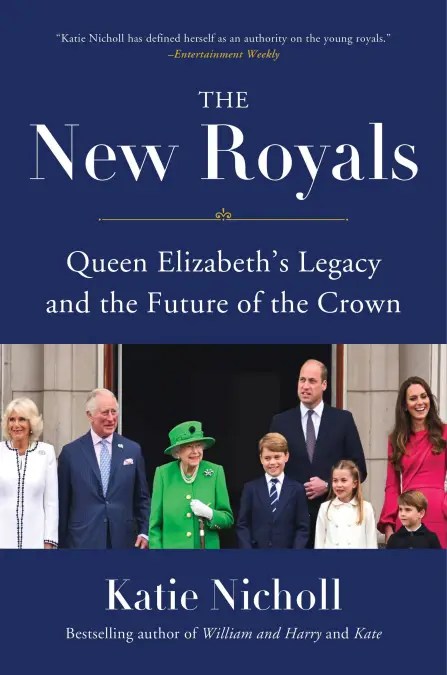
“The worst thing for a monarchy is not hostility, but indifference”, writes Katie Nicholl in her book The New Royals: Queen Elizabeth’s Legacy and the Future of the Crown (Hachette Books). I was reminded of that crucial notion when I took note of a recent poll conducted in Canada, according to which “[…] only 19 percent of Canadians would prefer that the country remain a monarchy, down 12 points since a similar poll conducted in September 2022.

The Crown has visibly not lost its appeal in the UK, but the warning signs in places like Canada, Australia, and New Zealand – just to name these – would be ignored at great peril.

The author, one of the keenest observers of the Crown and a gifted writer who has acquired first-hand knowledge of her subject, exposes the challenges facing the successors of Queen Elizabeth II while brushing the personal traits of the actors who are and will be called upon to meet them.

King Charles III was the longest-serving Prince of Wales, a title created in 1301 after “[…] King Edwards I conquered Wales and gave the title to his son”. With the help of genetics and a life of privilege, his reign might span a few decades, but most consider it transitional.

Continue reading “The Crown as a Geopolitical Player”

“Overall, 2021 has been a difficult year for the Biden team” – Admiral James Stavridis

Admiral James Stavridis USN (Ret.) (source: US Naval Institute)

Before the Holidays, Admiral James Stavridis USN (Ret.), one of my favorite authors, granted me an end of year interview about issues related to his amazing novel 2034 about a war between China and the United States. These geopolitical issues are unlikely to disappear from the radar in the coming months and years. The Admiral’s insights are therefore not only very informative, but also crucial to grasp the state of the world.

Admiral Stavridis, I’ve read and reviewed 2034: A Novel of the Next World War (Penguin Random House) with tremendous interest. Before we head into more serious stuff, a question burns my tongue. Since there are lots of mention of the delicious M&Ms throughout the novel, I was wondering if you are a fan of that candy yourself and if that’s the reason why it is mentioned in the book?

While I am not personally a fan of M&M candies, I have known many sea-going naval officers who are. I liked the idea of Lin Bao [one of the main characters of 2034] enjoying an American candy, essentially a nod to the duality of his upbringing.

Continue reading ““Overall, 2021 has been a difficult year for the Biden team” – Admiral James Stavridis”