In April 2013, I made a point to be in London for Lady Thatcher’s funeral, on my way back to Canada from Rome. Throughout my youth, the former Prime Minister of Great Britain had always been one of my favorite leaders. It was therefore an honor to stand on the street and see her casket pass in front of me on a morning of reverence.
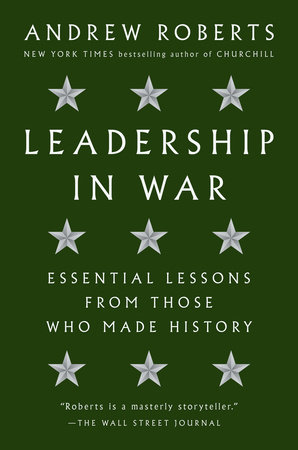
Just a few days ago, I finished reading Andrew Robert’s last book, Leadership in War: Essential Lessons from those who made history and, to my great delight, the 9th leader about whom he writes is Margaret Thatcher (the preceding 8 are Napoleon Bonaparte, Horatio Nelson, Winston Churchill, Adolf Hitler, Joseph Stalin, George C. Marshall, Charles de Gaulle and Dwight D. Eisenhower). I was pleasantly surprised. After all, if the Iron Lady doesn’t deserve a place in such a book, who does?
Thinking about leaders who left an indelible mark in military leadership makes one wonder how did they get there in history? Andrew Robert answers this question when he writes that: “Except through heredity, one does not become a war leader in the first place unless one has a strong personality.”
While it is easy to think and write about the qualities and strengths of great figures of history, it is no less important and vital to understand that, like us, they are humans. The first challenge they must meet is failure. For the road to success if filled with obstacles, but, as Winston Churchill would say, “sometimes, when she scowls most spitefully, [goddess Fortune] is preparing her most dazzling gifts.” Furthermore, you can’t please everyone. I found it almost unbelievable to read that “Although eight admirals, all of them in tears, carried his [Admiral Nelson’s] coffin, such was his controversial status in the Admiralty because of his ceaseless self-promotion and occasional refusal to obey orders that eighteen other admirals refused to attend.” How can anyone dare refuse attending the victor of Trafalgar’s funeral? Statesmen also need to cope with ungratefulness – like those dealing with Stalin and Charles de Gaulle learnt. Finally, you can’t afford modesty. After all, most of these leaders understood “[…] that if their reputations could help conquer, and thus save the lives of their men, who were they to be modest?” Hence, the myth created by de Gaulle to safeguard France’s self-respect during World War II.
But, more than anything, the leaders perform better when they’re profoundly humane. Those who know me are aware of my deep admiration for Churchill, but my favorite chapter is the one Andrew Roberts wrote about Napoleon. I loved to read about the Emperor’s obsession with his men’s boots (after all, his army covered lots of territory by foot), the fact that “he always made sure that wine from his own table was given to the sentries outside his door”, the fact that Napoleon didn’t hesitate to take his own medal of the Légion d’honneur to present it to a deserving soldier or having the feeling that you are observing the Emperor’s “superb filing system” while riding in his busy carriage moving across Europe on bumpy roads. I never was a big fan of the man derisively called the “God of War” by Clausewitz, but Andrew Roberts deserves the credit for turning the ship of my fascination in his direction.
Tomorrow, January 27th, will mark the 75th anniversary of the liberation of Auschwitz, let me say a few words about Margaret Thatcher again. Before picking up Leadership in War, I was totally unaware of her profound philo-Semitism – a disposition I share with her. It was also fascinating to read that “Churchill […] was theologically a lot closer to Judaism than to the Anglican Church into which he was born.” But I digress. Thatcher learnt from her father “[…] the superiority of decisive practical action over mere hand-wringing and vapid moralizing, of the kind that all too many appeasers – in the 1930s and since – have been guilty.” As the metastases of the antisemitic cancer are spreading throughout the world, men and women of goodwill who seek to fight this disease will have to take inspiration from Margaret Thatcher to wage this vital battle. But that’s another story for another post.
I’m writing it for the first time on this blog, but I have been saying it for years. Few authors compare to Andrew Roberts. He dips his pen in the most eloquent ink to bring to life figures who have heaps of lessons to teach us (sometimes about values not to espouse like in the case of Hitler or Stalin).
If there was one leader about whom I would love to know what Andrew Roberts has to say, it would be Moshe Dayan. He mentions him on a few occasions in the book. Just enough to tease, but who knows? We might see something published about the famous Israeli warlord by the author in the future.
Leadership in War is an essential addition on the bookshelves of any leadership enthusiast, whether in the business world, in politics or in the ranks of the military.
239 pages of exquisite intellectual pleasure.
_____________________________________________
Andrew Roberts, Leadership in War: Essential Lessons from those who made history, New York, Viking, 2019, 256 pages.
I would like to express my heartfelt gratitude to the fantastic Sharon Gill at Penguin Random House Canada for helping me with a review copy of this excellent book.


 BookMarc