Mahan’s Ideas Sank Hitler’s Ambitions at Sea

In their illuminating book about Winston Churchill’s involvement in the discussions, planning, and logistics surrounding the Normandy landings on D-Day, Lord Richard Dannatt and Allen Packwood describe how the duties of wartime leadership took a significant toll on the British Prime Minister’s health. But as Churchill himself admitted, there was only one thing that truly filled him with fear: the German U-boats that claimed so many Allied ships during the Battle of the Atlantic. And it’s easy to see why. Britain was isolated entirely – hemmed in by Nazi-occupied Europe, with America still months away from entering the war.

The attack on Pearl Harbor on December 7, 1941, changed everything. When Japanese forces shattered the peace of that Sunday morning, Churchill knew he finally had a powerful ally in President Franklin D. Roosevelt. Roosevelt would not only commit U.S. troops against the Axis but would also put into practice the doctrine of Alfred Thayer Mahan – the naval strategist who argued that “the sea has been the element through which history’s most decisive wars have been won”, as French researcher Antony Dabila reminds us.

Continue reading “Mahan’s Ideas Sank Hitler’s Ambitions at Sea”

The Presidential Satchel

Historically, the concept of war has followed a familiar script: one victor and one vanquished. However, there exists a scenario that defies this ancient logic — nuclear war. In such a case, writes Annie Jacobsen in Nuclear War: A Scenario (Dutton), “there is no such thing as capitulation. No such thing as surrender.” Only the scorched silence of what once was.

From the very first lines, the reader is drawn into a vortex of dread—a work of speculative fiction so meticulously constructed that it becomes indistinguishable from reality. This is not merely an intellectual exercise; it is a mirror held up to our world, one where the unthinkable remains entirely plausible—and where our ability to avoid catastrophe may depend less on preparedness than on our collective refusal to acknowledge the danger.

The scenario imagined by the author begins with a North Korean nuclear strike on the United States. Confronted with the unthinkable, the President has only six minutes –  six excruciating minutes – to respond, as Ronald Reagan warned in his memoirs. From this point of no return, events unfold with brutal logic, and everything collapses.

Continue reading “The Presidential Satchel”

With God on his side

“Patton is a problem child, but he is a great fighting leader in pursuit and exploration”, said General Dwight D. Eisenhower about his unconventional subordinate. That quote is in Alex Kershaw’s last book Patton’s Prayer: A True Story of Courage, Faith, and Victory in World War II (Dutton).

I have been a longtime fan of this author’s books. I have reviewed some here. I initially wanted to publish this review before Christmas in commemoration of the start of the iconic Battle of the Bulge, “the greatest ever fought, in terms of the number of US troops involved, in US military history” and “the deadliest for the US in World War II”. However, events dictated otherwise, and I told myself I had until the end of January, when the battle officially ended, to move forward with my intention.

But then came President Donald Trump’s inauguration earlier this week, and the words pronounced by Cardinal Timothy Dolan, blessing the incoming administration. The Catholic Archbishop of New York mentioned “General George Patton’s instructions to his soldiers as they began the Battle of the Bulge eight decades ago: “Pray! Pray when fighting. Pray alone. Pray with others. Pray by night. Pray by day.””

Continue reading “With God on his side”

Winning the Battle of Britain

Since the Battle of Britain officially ended on October 31st, 1940, a review of The Battle of Britain by James Holland in the Ladybird Expert Series (Penguin Random House) remains timely in the aftermath of the commemoration of the 84th anniversary of that pivotal episode of World War II on September 15th – just a few days ago.

I might have written it before, but the greatest merit of James Holland’s book in this collection is to offer the reader the most important aspects of the battles he writes about. The Battle of Britain certainly makes no exception to that rule.

Right from the beginning, Adolf Hitler is aware that he needs to knock Britain out of the war, if he is to be successful in his ambitions. The prospects of appeasement decreased as Winston Churchill grew stronger in his role as Prime Minister. After the successful British evacuation at Dunkirk, the feldgrau horde needs to take London by force. But “it would be suicidal to attempt a Channel crossing without command of the skies and sea lanes secure.”

Continue reading “Winning the Battle of Britain”

How Churchill and Dowding saved Britain and the World

“Nothing great will ever be achieved without great men, and men are great only if they are determined to be so”, said Charles de Gaulle – Winston Churchill’s brother in arm during World War II. Resilience is the common thread of Martin Dugard’s new book Taking London: Winston Churchill and the Fight to Save Civilization (Dutton).

While de Gaulle escaped France with only 2 suitcases aboard the RAF plane that flew him into history on June 17, 1940, Churchill wasn’t much more gifted politically when he was asked to become Prime Minister a month earlier. The author reminds the reader that he was the second choice to occupy the role and that he had “no political currency beyond his words and beliefs.”

Yet, he had to keep the country – and the free world – safe from the claws of Nazism. Alone. A longtime admirer and promoter of the Royal Navy – which ruled the waves for centuries – Churchill had no choice but to realize that Nelson’s heirs couldn’t save Britain. Along with his legendary courage, the Royal Air Force was his only asset.

Continue reading “How Churchill and Dowding saved Britain and the World”

“Bomber” Harris’ Foresight

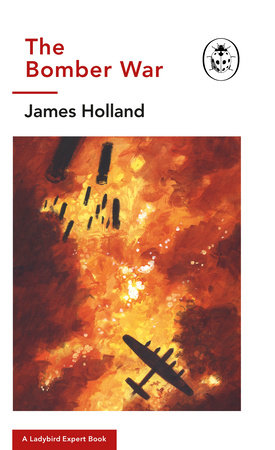
At the beginning of the summer, my sons and I were captivated by the riveting Apple TV series Masters of the Air. I was therefore enthusiastic to carry my copy of James Holland’s book The Bomber War (Penguin Random House) in my backpack. Those who follow this blog know how much of a fan I am of this talented author. Full disclosure, I intend to review every one of the books he published in the Ladybird Expert Series.

While air power played a role “in Germany’s rapid victory in Poland” at the very beginning of World War II, the same could not be said in the following chapters of the conflict. “The tiny British island of Malta, for example, was not defeated despite in the spring of 1942 briefly becoming the most bombed place on earth”, writes the incomparable historian.

Continue reading ““Bomber” Harris’ Foresight”

Coca-Cola and ice cream to defeat Japan

In their seminal book Conflict, which was reviewed here recently, General Petraeus and Lord Roberts posit that, in warfare, “the side that learns and adapts the fastest typically prevails.” An ageless lesson, throughout military history.

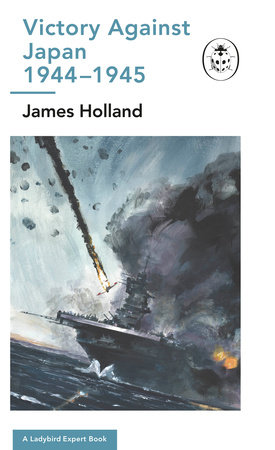
As geopolitics evolves, my interest in the Pacific theatre during World War II has increased significantly lately. To prevail against the Empire of the Rising Sun, the US Navy needed to destroy its crucial naval power, which dominated its sphere of influence for five decades. Curtailing Japanese supply lines, notably to deprive its fleet and troops of oil, was instrumental. To that end, American forces would be attacking the islands it occupied. “Capturing these outposts in the middle of the ocean would not only deny them to the Japanese, it would bring the Allied forces closer to Japan itself”, writes renowned military historian James Holland in Victory against Japan 1944-1945, published as part of his insightful contribution to the Ladybird Expert Series (Penguin Random House).

The author also evokes the military ineffectiveness of Chinese Nationalist warlord Chiang Kai-Shek “despite the United States’ two years of ceaseless supplies”, the inestimable contribution of future Marshal Bill Slim and Special Operations Executive (SOE) teams in Burma and the appearance of the B-29 “Superfortress” in the Pacific, “the most expensive single weapons system ever built” up to that point.

Continue reading “Coca-Cola and ice cream to defeat Japan”

The Ferocious Battle for Normandy

In less than 60 days, we will commemorate the 80th anniversary of D-Day, the Allied landing in Normandy on June 6th, 1944. The celebrations surrounding that event are already under way. In the last hours, the French Ambassador to Canada travelled to Regina, the capital of Saskatchewan, to present the Légion d’honneur – France’s highest distinction established by Napoleon in 1802 – to a 104-year-old veteran who set foot on the beach on that fateful morning.

As we salute these men and prepare to sadly see the last ones depart for eternity, the need for remembrance becomes ever more crucial. Historians play an essential role on that score. Plenty of great books have been written about the longest day and the campaign that followed.

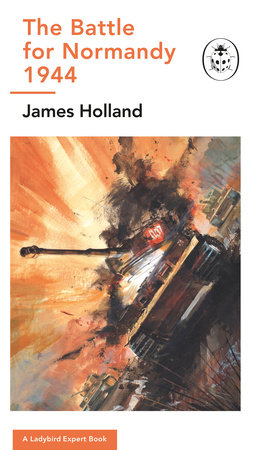
I just finished reading James Holland’s contribution to that impressive list, through the Ladybird Expert Book series. For anyone wanting to grasp the development of the Battle for Normandy in a summarized and vividly written style, this book is a must.

Continue reading “The Ferocious Battle for Normandy”

Morale: Determining Factor in the Desert War

“It was a combination of weight of arms and the grim determination of the men on the ground as well as air power that brought victory to the British”, writes historian James Holland in his book about The Desert War in the Ladybird Expert series.

The renowned author starts his book with an observation about the lack of enthusiasm among the crowd massed on the square facing the Palazzo Venezia when Italian dictator Benito Mussolini declared war on June 10, 1940. Italians were not fervent about fighting alongside the Germans. The feeling would have fateful consequences in the fight for the Mediterranean.

In October 1940, the Duce decided to invade Greece, probably motivated by the desire to prove his worth to his German ally. It was a bad decision that forced Hitler’s hand to send troops to the Mediterranean theatre. The Führer became obsessed with his southern flank and devoted considerable resources to beef it up.

Continue reading “Morale: Determining Factor in the Desert War”

“Grit, determination and sacrifice”

In a recent book about FDR and Churchill, historian James B. Conroy recounts how the iconic British Prime Minister convinced the US President to choose the option of attacking the underbelly of the Axis, namely North Africa and Italy, rather than an early landing in France. But more about it later.

Any traveler from Rome disembarking the train at Monte Cassino is granted the unique spectacle of the breathtaking view of the iconic 6th Century Benedictine monastery overlooking the town. Only then can you fully grasp the magnitude of what Allied soldiers endured on their way to Rome.

Yet, despite its cruciality, the Italian front is a poor cousin of World War II history. Renowned historian James Holland’s work contributes to correcting that perception. He notably does so in a brief but evocative book he devotes to The War in Italy as part of the excellent Ladybird Expert series. Between the covers, James Holland notably illustrates that, far from disengaging the enemy, German troops did everything they could to block its way North. For instance, he writes that the bombing of the Monte Cassino Abbey made the position stronger for the 1st Fallschirmjäger paratroopers who reinforced the Gustav Line in that sector. British General Harold Alexander’s 15th Army Group would not be celebrating Christmas 1943 in the Eternal City. Hitler’s troops were anything but a spent force. They would stubbornly defend their positions “for over a year and a half”. On the Allied side, the landings at Salerno (Sicily) were “very nearly a catastrophic failure”, foreshadowing hardships to come.

Continue reading ““Grit, determination and sacrifice””