
In their seminal book Conflict, which was reviewed here recently, General Petraeus and Lord Roberts posit that, in warfare, “the side that learns and adapts the fastest typically prevails.” An ageless lesson, throughout military history.
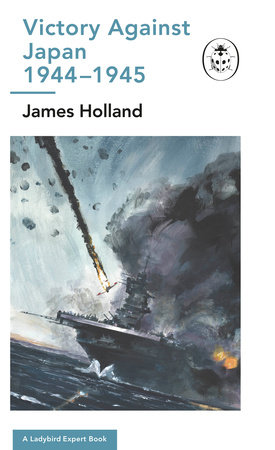
As geopolitics evolves, my interest in the Pacific theatre during World War II has increased significantly lately. To prevail against the Empire of the Rising Sun, the US Navy needed to destroy its crucial naval power, which dominated its sphere of influence for five decades. Curtailing Japanese supply lines, notably to deprive its fleet and troops of oil, was instrumental. To that end, American forces would be attacking the islands it occupied. “Capturing these outposts in the middle of the ocean would not only deny them to the Japanese, it would bring the Allied forces closer to Japan itself”, writes renowned military historian James Holland in Victory against Japan 1944-1945, published as part of his insightful contribution to the Ladybird Expert Series (Penguin Random House).
The author also evokes the military ineffectiveness of Chinese Nationalist warlord Chiang Kai-Shek “despite the United States’ two years of ceaseless supplies”, the inestimable contribution of future Marshal Bill Slim and Special Operations Executive (SOE) teams in Burma and the appearance of the B-29 “Superfortress” in the Pacific, “the most expensive single weapons system ever built” up to that point.
Facing an enemy whose ferocity was fueled by the increasing despair on the battlefield (another timeless lesson in warfare), the Americans masterfully adapted their strategy thanks to the leadership of Admiral Chester Nimitz, who ensured that his “forces were both well trained and […] highly experienced”.. Over time, “Japanese naval ratings were almost starved while American sailors could drink Coco-Cola and eat ice cream.” Morale being key in every war, the Americans had gained the upper hand, and it was only a matter of time and sacrifices before victory chose its side.
Faithful to his brand of military history, James Holland offers another brilliant summary of a decisive theater of World War II in a clear, concise and eloquent style.
Victory against Japan provides any category of readers with another reason to discover and embrace this amazing collection.
________
James Holland, Victory against Japan 1944-1945, London, Michael Joseph (Penguin Random House), 2023, 56 pages.
 BookMarc