
Prima facie, the relationship between President Donald Trump and NATO is delicate. The role of Secretary General of the organization is anything but a sinecure. Yet the relationship between the resident of Avenue Louise in Brussels and the occupant of 1600 Pennsylvania Avenue in Washington stands out for its closeness. In Le Figaro, the astute journalist Florentin Collomp even wrote that Mark Rutte “is probably the only European capable of influencing the will of the President of the United States.” And as Collomp notes, it was following a meeting with NATO’s Secretary General at the Davos Forum that Donald Trump announced his dramatic reversals on Greenland and tariffs. Personal relationships are clearly crucial in international relations—especially with the US President. We could even say any US President.
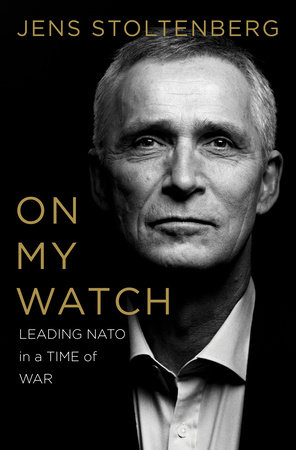
This may come as a surprise to some, yet the closeness between the American statesman and the captain of the NATO ship fits within a clear continuum. In his memoirs, Jens Stoltenberg—former Norwegian Labour Prime Minister and current Finance Minister—describes a relationship that, exhausting as it may have been, proved beneficial. Stoltenberg, who accepted the post at Barack Obama’s invitation and had his term renewed under both Donald Trump and Joe Biden, candidly admits in his memoir, On My Watch: Leading NATO in a Time of War (Norton) to having adopted a strongly critical stance toward the United States in his youth. He also confesses to underestimating the chances of victory of the real estate mogul. Jens Stoltenberg is certainly no MAGA sympathizer—but his assessment is unambiguous: “When Donald Trump’s first term as President came to an end, NATO was stronger than it had been when he took office.” Intriguing, isn’t it?
If I ran a Kahoot quiz asking which American commander-in-chief complained to his aides that “NATO states are not paying their fair share”, most would likely guess Donald Trump. Yet those words were actually spoken by John F. Kennedy… in 1963. Military spending concerns are far from a novelty attributable to the 45th President.
Donald Trump’s predecessors had raised similar concerns. Stoltenberg notes that Obama was among those who pressed the issue. Yet, once admonitions were forgotten, inertia would take over. In this context, the 45th President sought to break the mold, because, as Stoltenberg explains, he “was a man who did not easily give up”. And etiquette be damned. “Sometimes Stoltenberg writes, President Trump reminded me of the boy in the fairy-tale about the emperor’s new clothes, who comes straight out with what no one else dare say”.
Transactional to the core and embodying “brutal realism,” to quote French former Minister and geopolitics guru Hubert Védrine, Trump addressed the bearers of the blue flag adorned with a white compass rose pointing in four directions, telling them, “If you want full coverage, then you have to pay the full insurance premium”. Message received. Member countries’ defense investments increased, giving rise to what Stoltenberg coined as the “Trump effect” within NATO—a phenomenon that countered “the lack of willingness to allocate adequate resources to defence” that had previously hindered the Alliance and frustrated Washington.
In truth, Stoltenberg’s portrait of Donald Trump is more nuanced than the iconoclastic image the President himself cultivates.
Interestingly, Stoltenberg also speaks positively of other leaders, including Turkish President Recep Tayyip Erdoğan, whom he describes as “an engaged and knowledgeable leader, who always has a good overview of the details in whatever is to be discussed, and he is easy to get in touch with”. Despite the challenges and the patience required to work with this sometimes-stubborn partner—as evidenced by the negotiations surrounding Sweden’s accession to NATO—European security would be weakened without Turkey at the Atlantic Alliance table. It’s clear that Erdoğan and Turkey are key pieces on the geopolitical chessboard and sidelining them would be visibly detrimental. And I must admit, I have a soft spot for the delightful anecdote about the two leaders enjoying sweetcorn “in an old sultan’s palace in Istanbul.”
Stoltenberg’s account reminds readers that NATO, established in 1949 to counter Moscow during the Cold War, remains highly relevant. Confessing to having looked up to Deng Xiaoping as a “political role model”, he observes that “the Soviet Union was never any real technological challenger, while China competes with the United States to a much greater extent”. The current occupant of the White House most likely understands the importance of an alliance whose members “represent half of the world’s economic wealth and possess half of the planet’s military forces”—a reality enhanced by secretaries general who are also masters of personal diplomacy. Dealing with POTUS is far from a trivial undertaking, yet international stability depends on it.
In the end—and I may be mistaken—I assess that President Trump is probably less antagonistic toward NATO than one might think, or than his own rhetoric suggests. Citing Henry Kissinger’s dictum that “foreign policy is the art of establishing priorities,” Jens Stoltenberg notes that Trump’s priority was straightforward in insisting that the Allies do their fair share. He pressed them accordingly, and “fundamentally, he was right,” the Norwegian statesman observes.
Essential reading for any keen observer of world politics, On My Watch is a deeply human and engrossing book, refreshingly free of the “verbal hair-splitting” Stoltenberg so clearly disdains. These memoirs candidly trace the career of a key player in a critical period of history.
_____
Jens Stoltenberg, On My Watch: Leading NATO in a Time of War, New York, Norton, 2025, 480 pages.
 BookMarc