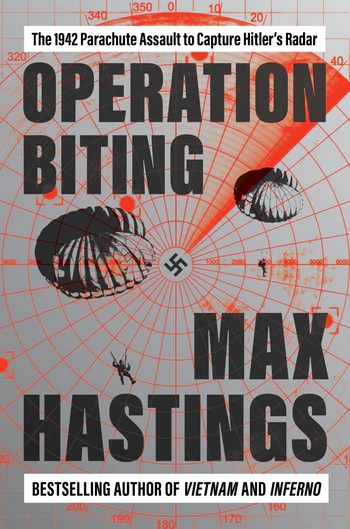
The Caledonian Invasion

In early 1942, Winston Churchill faced a barrage of bad news. Kriegsmarine warships had escaped detection, sailing from occupied France to Germany, and Singapore had just fallen to the Japanese. The time for a large-scale offensive had not yet arrived, but Churchill desperately needed a victory. German radar technology – the Würzburg – was hindering British air operations, and one station, perched on the cliffs of Bruneval near Le Havre in Northern France, became the target of a daring raid. A successful breach of the Nazi fortress would offer much-needed relief during those harsh winter months.

Thus, Operation Biting: The 1942 Parachute Assault to Capture Hitler’s Radar (Harper) vividly springs to life through Sir Max Hastings’ writing. Members of the Black Watch, the Cameron Highlanders, the King’s Own Scottish Borderers, and the Seaforth Highlanders took center stage among the British paratrooper units involved, demonstrating the martial prowess long associated with Caledonian regiments. Nemo me impune lacessit.

Unmistakably, Churchill is the story’s central figure. During the Boer War, which he covered as a young war correspondent, he admired the effectiveness of Afrikaner commandos. True to the British instinct of adapting enemy tactics, Churchill later founded the Special Operations Executive (SOE) in 1940, followed by the formation of the Special Air Service (SAS) the next year. As Hastings notes, the recruits manning these units “were seldom the sort of people to make docile household pets.” The deployment of paratroopers for Operation Biting naturally stemmed from this evolution.

Continue reading “The Caledonian Invasion”
La folie et la surprise : les services secrets dans la Deuxième Guerre mondiale

« À elles seules, les forces spéciales ne peuvent pas gagner les guerres. » Dans son dernier livre – probablement le plus intéressant – Rémi Kauffer évoque cette réalité dont Winston Churchill était pleinement conscient. Mais si elles ne peuvent remporter la mise à elles seules, elles peuvent toutefois causer des dégâts importants et déstabiliser dangereusement l’ennemi.

Avec maestria, ce fin connaisseur du monde du renseignement et des Services action nous offre un époustouflant tour d’horizon de leurs activités à l’échelle planétaire dans 1939-1945. La guerre mondiale des services secrets (Éditions Perrin).

Aux premières heures du conflit, les Britanniques font cavalier seul. Vent debout devant les forces de l’Axe. Militairement, ils ne font pas le poids. Mais le Vieux Lion a un atout majeur dans son jeu. « La folie est une maladie qui présente un avantage à la guerre : celui de réaliser la surprise », affirme-t-il. « Hitler méprisait ceux qui s’opposaient à lui. À l’inverse, Churchill s’est toujours fait un devoir de reconnaître le courage de ses ennemis », écrit Rémi Kauffer. Les actions des Kommandos – ces unités afrikaners de guérilla – affrontés durant la Guerre des Boers et des forces de l’IRA qui s’opposent à la Couronne pendant des décennies ont de quoi inspirer le chef de guerre lorsque vient le temps de mettre le feu à l’Europe.

poursuivre la lecture

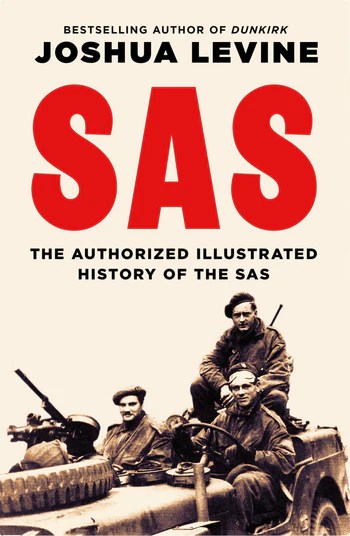
Churchill and the SAS

As a big fan of anything related to Special Forces, commandos, and covert operations, I enjoyed immensely reading Joshua Levine’s book SAS: The Authorized Illustrated History of the SAS (William Collins) during the Holidays. Incidentally, I finished reading it a few hours after I learnt that Mike Sadler, the last of the original members of the SAS (Special Air Service) had passed away.

Joshua Levine’s book is filled with breathtaking operations and incomparable characters, like Mike Sadler, David Stirling, Dudley Clarke, Paddy Mayne and Jock Lewes – among many who all played a crucial role in this inspiring chapter of World War II.

The main lesson I take from the author’s work is more political. History is full of fantastic ideas or projects that never lifted off the ground because they were not supported by the right people against all odds. The legendary SAS is not one of those. Bestselling author of Dunkirk, which was written in conjunction with the 2017 movie, Joshua Levine has a keen eye for military exploits.

Continue reading “Churchill and the SAS”