The Presidential Satchel

Historically, the concept of war has followed a familiar script: one victor and one vanquished. However, there exists a scenario that defies this ancient logic — nuclear war. In such a case, writes Annie Jacobsen in Nuclear War: A Scenario (Dutton), “there is no such thing as capitulation. No such thing as surrender.” Only the scorched silence of what once was.

From the very first lines, the reader is drawn into a vortex of dread—a work of speculative fiction so meticulously constructed that it becomes indistinguishable from reality. This is not merely an intellectual exercise; it is a mirror held up to our world, one where the unthinkable remains entirely plausible—and where our ability to avoid catastrophe may depend less on preparedness than on our collective refusal to acknowledge the danger.

The scenario imagined by the author begins with a North Korean nuclear strike on the United States. Confronted with the unthinkable, the President has only six minutes –  six excruciating minutes – to respond, as Ronald Reagan warned in his memoirs. From this point of no return, events unfold with brutal logic, and everything collapses.

Continue reading “The Presidential Satchel”
The Ferocious Battle for Normandy

In less than 60 days, we will commemorate the 80th anniversary of D-Day, the Allied landing in Normandy on June 6th, 1944. The celebrations surrounding that event are already under way. In the last hours, the French Ambassador to Canada travelled to Regina, the capital of Saskatchewan, to present the Légion d’honneur – France’s highest distinction established by Napoleon in 1802 – to a 104-year-old veteran who set foot on the beach on that fateful morning.

As we salute these men and prepare to sadly see the last ones depart for eternity, the need for remembrance becomes ever more crucial. Historians play an essential role on that score. Plenty of great books have been written about the longest day and the campaign that followed.

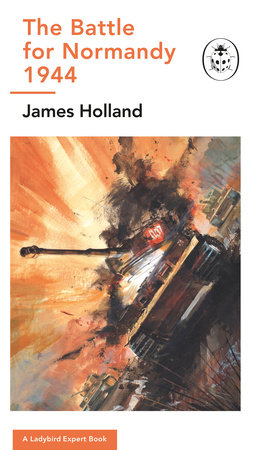
I just finished reading James Holland’s contribution to that impressive list, through the Ladybird Expert Book series. For anyone wanting to grasp the development of the Battle for Normandy in a summarized and vividly written style, this book is a must.

Continue reading “The Ferocious Battle for Normandy”

“It’s hard to be a Jew”

Mark Twain declared that “history doesn’t repeat itself, but it often rhymes.” Any student of Israel’s history certainly had that feeling on October 7, when the country was attacked the day after the festival of Sukkot, a significant moment in the Jewish calendar. Historians will undoubtedly spend lots of time and expertise drawing similarities between the surprise attack that marked the start of the Yom Kippur War on October 6, 1973, and the latest murderous incursions launched by Hamas terrorists last month.

Few weeks prior to that “date which will live in infamy” to borrow FDR’s words, author Uri Kaufman released an enthralling book, Eighteen Days in October: The Yom Kippur War and How It Created the Modern Middle East (St. Martin’s Press). From cover to cover, this book details the very existential nature of this war – or any armed conflict – for Israel’s survival. On several occasions, Israel could have lost, marking the end of the Jewish State.

Continue reading ““It’s hard to be a Jew””

“Grit, determination and sacrifice”

In a recent book about FDR and Churchill, historian James B. Conroy recounts how the iconic British Prime Minister convinced the US President to choose the option of attacking the underbelly of the Axis, namely North Africa and Italy, rather than an early landing in France. But more about it later.

Any traveler from Rome disembarking the train at Monte Cassino is granted the unique spectacle of the breathtaking view of the iconic 6th Century Benedictine monastery overlooking the town. Only then can you fully grasp the magnitude of what Allied soldiers endured on their way to Rome.

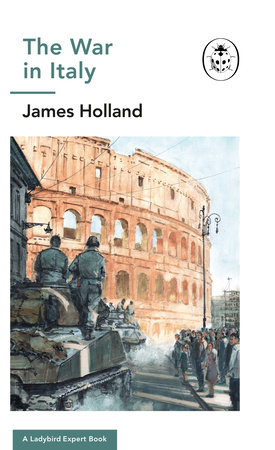
Yet, despite its cruciality, the Italian front is a poor cousin of World War II history. Renowned historian James Holland’s work contributes to correcting that perception. He notably does so in a brief but evocative book he devotes to The War in Italy as part of the excellent Ladybird Expert series. Between the covers, James Holland notably illustrates that, far from disengaging the enemy, German troops did everything they could to block its way North. For instance, he writes that the bombing of the Monte Cassino Abbey made the position stronger for the 1st Fallschirmjäger paratroopers who reinforced the Gustav Line in that sector. British General Harold Alexander’s 15th Army Group would not be celebrating Christmas 1943 in the Eternal City. Hitler’s troops were anything but a spent force. They would stubbornly defend their positions “for over a year and a half”. On the Allied side, the landings at Salerno (Sicily) were “very nearly a catastrophic failure”, foreshadowing hardships to come.

Continue reading ““Grit, determination and sacrifice””

The Devil’s Servants

The SS are still claiming victims to this day. Not on the battlefield, of course, but because of their nefarious legacy. Their ghosts have been sighted last week in the Canadian parliament when a former member of the Waffen-SS 14th (Galician) Division was hailed as a hero. The Speaker of the House of Commons, Anthony Rota, had no choice but to resign because of the storm his praise about 98 years old Ukrainian SS veteran Yaroslav Hunka generated. Truth be told, all those applauding were most certainly unaware of his past military service in Hitler’s elite troops.

Which brings back the crucial notion of education and awareness.

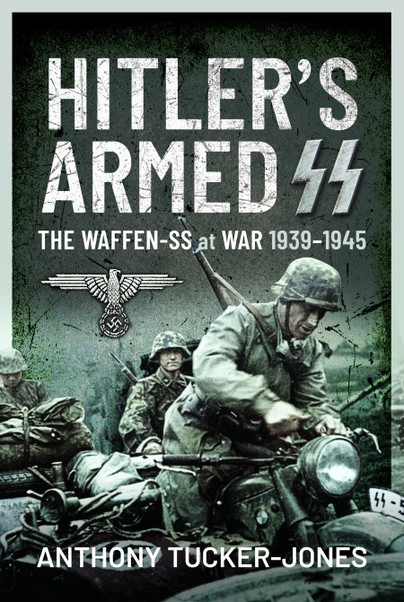
The events in Canada’s Nation Capital and the storm it legitimately generated occurred as I was completing my reading of Anthony Tucker-Jones’ book Hitler’s Armed SS: The Waffen-SS at War 1939-1945 (Pen & Sword Military).

One of Hitler’s main traits was that he fostered rivalry around himself. Loathsome of the military establishment, notably because it regrouped several characters born into the German aristocracy, the founder of the Third Reich created the Schutzstaffel as a counterweight. His investment would prove worthy. The members of the SS – who fought even after the Führer rendered his last breath after committing suicide in his bunker – had been his most committed and fanatical fighters.

Continue reading “The Devil’s Servants”

Patton was Destined for War

“Battle is the most magnificent competition in which a human being can indulge”, said General George S. Patton. Within four years, the famous World War II warlord went from soul-searching about his future in the profession of arms to being one of the main pugilists who brought Nazi Germany on its knees in 1945.

The full measure of Patton’s greatness and vanity are brought to life in Martin Dugard’s last book Taking Berlin: The Bloody Race to Defeat the Third Reich (Caliber), between the covers of which the author doesn’t hide his admiration for the legendary soldier who believed he was the reincarnation of a Roman legionnaire. Full disclosure, I think we can easily forgive this inclination, because it is all too easy to admire the character, a feeling to which I willingly plead guilty.

In the same manner as in his previous book Taking Paris, the author – who collaborated with journalist Bill O’Reilly to write several books – calls upon an army of pertinent details to bring his narrative to life. I personally discovered that the meaning of the Belgian town of Spa’s name “is an acronym of the Latin Salus per Aquam, meaning “health from water” or that the word “Roger” pronounced on the radio means “received”, but is also an acronym for “Received Order Given, Expect Results”.

Continue reading “Patton was Destined for War”

Sayeret Matkal on the frontlines

July 4th marked the 47th anniversary of the Entebbe operation, during which Israeli commandos rescued passengers held hostages by Palestinian terrorists and Ugandan soldiers after the hijacking of an Air France plane in Athens. Israel lost one soldier during the operation, Yoni Netanyahu, brother of the current Prime Minister of Israel. The audacious soldiers who appeared in the skies of Entebbe in the middle of the night belonged to Sayeret Matkal – Israel’s Defense Force’s General Staff Reconnaissance Unit. The unit was founded in 1957 by Avraham Arnan and was directly inspired by the iconic SAS (Special Air Service) warriors who served under the Union Jack during World War II.

I was too young to remember what happened at Entebbe. But another operation has captivated me since I was a teenager. I vividly remember hearing on the radio the news of Abu Jihad’s neutralization in April 1988 in Tunis. From memory, Israel was announced as having ordered this operation and I wondered how these intrepid operatives could perform their art so far away from the shores of their homeland.

I was therefore thrilled to read Sayeret Matkal: The Greatest Operations of Israel’s Elite Commandos (Skyhorse Publishing) by Avner Shur and Aviram Halevi, whose first chapter invites the reader to walk with the Israeli commandos to accomplish Operation Show of Force under the leadership of commander Moshe “Boogie” Ya’alon.

Continue reading “Sayeret Matkal on the frontlines”

Churchill was better at strategy than politics

Professor Simon J. Ball (University of Leeds)

I recently reviewed Professor Simon J. Ball’s revealing book about the battle of Alamein (The Folio Society). He generously accepted to answer few questions for this blog, and I take immense pleasure in sharing the content of our exchange with you today. I trust you will enjoy reading it.

_________

Professor Ball, I might be wrong, but I have a feeling that the Mediterranean theater during World War II has been overlooked. Why is it important to pay more attention to it? How crucial was it in the big picture of the conflict? 

SJB: The war in the Mediterranean was of central importance. It blew apart the idea of the Mediterranean as a unified zone, although all the major powers tried to engineer integration at some points. Oddly the idea of the Mediterranean as an integrated politico-economic-cultural area, “breathing with the same rhythms”, was popularized by Fernand Braudel in the late 1940s.

Continue reading “Churchill was better at strategy than politics”

Russian Game of Thrones

Back in March 2014, while I was sojourning in Moscow for the second time, I visited the Museum of the Great Patriotic War, the Borodino Battle Museum, and the Museum of the Patriotic War of 1812. I also took the time to drive to Zhukovo to visit the Museum dedicated to the famous Marshal – Georgy Zhukov – who vanquished the Nazis on the Eastern Front. Any serious student of history couldn’t help but note how attached the Russians are to their military heritage. It was an amazing trip for a military enthusiast like me!

To a degree that might seem astonishing to a Western mind, war occupies a fundamental place in the history of Russia. And it is imperative to fully grasp that reality, if one wants to ascertain what has been happening since February 24 in Ukraine. In that perspective, I was extremely happy to dig into Russia: Myths and Realities (Pegasus Books) by Sir Rodric Braithwaite.

I could detail all the qualities and insights of this book, but its main merit is to brush the portrait of a nation and people forged in war. “More than a thousand years ago a people arose on the territory of today’s Russia whose origins are disputed”, writes the author. “But Kievan Rus was invaded and destroyed in the thirteenth century by the Mongols.” The tone was set and even after the “Mongol yoke” was removed from Russia’s neck, the pugilistic character was well ingrained into the nation’s DNA.

Continue reading “Russian Game of Thrones”

The Gurkha Diaries

Any history buff strolling in Old Jerusalem can observe some vestiges of the British Empire. There’s the Mahane Yehuda police station on Jaffa Road, which served during the Mandate. Less than two hours from the capital city of Israel, on the Mediterranean Coast, one can visit the Acre prison where Jewish nationalists were imprisoned, including those who were condemned to death. At least, it was possible to do so when I visited back in 2008.

The rebirth of Israel in 1947-1948 was a direct consequence of the disappearance of the British Empire in the aftermath of World War II. The same year also witnessed the partition between India and Pakistan, a development that would give rise to population displacements and massacres. Robert Atkins, author of The Gurkha Diaries of Robert Atkins MC: India and Malaya 1944 – 1958 (Pen & Sword) and his fellow Gurkhas [the sturdy and legendary Nepalese soldiers who serve the Crown since the middle of the 19th century] were deployed on that theater and attempted “[…] to mitigate the massacres [between Hindus and Muslims] and stem the violence in the last days of a teetering Raj.” The magnitude of the violence perpetrated during that tragic chapter of contemporary history must have been staggering for the young soldiers, but they carried on with admirable bravery, nevertheless.

Continue reading “The Gurkha Diaries”