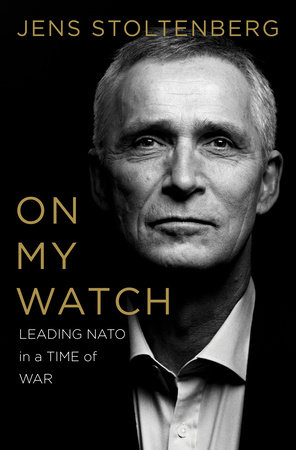
Jens Stoltenberg and the “Trump Effect”

Prima facie, the relationship between President Donald Trump and NATO is delicate. The role of Secretary General of the organization is anything but a sinecure. Yet the relationship between the resident of Avenue Louise in Brussels and the occupant of 1600 Pennsylvania Avenue in Washington stands out for its closeness. In Le Figaro, the astute journalist Florentin Collomp even wrote that Mark Rutte “is probably the only European capable of influencing the will of the President of the United States.” And as Collomp notes, it was following a meeting with NATO’s Secretary General at the Davos Forum that Donald Trump announced his dramatic reversals on Greenland and tariffs. Personal relationships are clearly crucial in international relations—especially with the US President. We could even say any US President.


This may come as a surprise to some, yet the closeness between the American statesman and the captain of the NATO ship fits within a clear continuum. In his memoirs, Jens Stoltenberg—former Norwegian Labour Prime Minister and current Finance Minister—describes a relationship that, exhausting as it may have been, proved beneficial. Stoltenberg, who accepted the post at Barack Obama’s invitation and had his term renewed under both Donald Trump and Joe Biden, candidly admits in his memoir, On My Watch: Leading NATO in a Time of War (Norton) to having adopted a strongly critical stance toward the United States in his youth. He also confesses to underestimating the chances of victory of the real estate mogul. Jens Stoltenberg is certainly no MAGA sympathizer—but his assessment is unambiguous: “When Donald Trump’s first term as President came to an end, NATO was stronger than it had been when he took office.” Intriguing, isn’t it?

Continue reading “Jens Stoltenberg and the “Trump Effect””

Why Vladimir Putin came to occupy the driver’s seat

TheEdge2It is too easy, in the Western context, to perceive the armed forces as a ceremonial tool used during commemorations and the military sector as a greedy budgetary expenditure for governments. As Mark Urban writes in his recent and sublime book, The Edge: Is the Military Dominance of the West Coming to an End?, “[…] most of the European public has been conditioned by education and popular culture to be repulsed by war, yet has little experience of it.” (p. 49).

Alas, this far too common perception and phenomenon associated with blind pacifism ignores the deep currents of history. Since time immemorial, armies have been used to conquer, defend, impress or intimidate. I know he’s been quoted already too many times for any reference to him to be original, but Clausewitz said it best when he said that: “war is the continuation of politics by other means”.

Failure to take these factors into consideration will come to a price to those who are guilty of ignorance. The future of the world will not solely be influenced by the tectonic plates of the economy, but also by the capacity of the emerging power to promote and defend it with the bayonet and the fighter jet. China, for instance, has understood that lesson very well.

We can’t say the same about Western countries, the United States chief among them. Outside the high-flown discourse they articulate and promote, Washington’s capacities to implement it in a concrete military way are decreasing. “What seems clearer is that many in Europe, the Middle East and Asia have not yet registered how old much of the United States military equipment has become, how far its numbers have already fallen, and how projected cuts will make it impossible for America to have the kind of military reach it used to.” (p. 79-80). In other words, the Emperor is loosing his clothes.

Enter Russia. One of the main gaps in how the West perceives Vladimir Putin is the fact that the Russian president is a keen student of history. Incidentally, one of the only observers not to fall in the trap of assuming that Putin is a shallow brain is journalist Ben Judah – but that’s another story.

Mark Urban notes that Russia has “[…] the will to use its armed forces to re-draw the map and [is] also reaping the dividends of a long reinvestment in these capabilities.” (p. 86) Vladimir Putin knows that, on the ground, good and modern tanks are better than eloquent United Nations resolutions or huge vocal protests without consequences. As Field Marshal Erwin Rommel reportedly once said: “in a man-to-man fight, the winner is he who has one more round in his magazine.”

For Vladimir Putin, military power is not just a beautiful toy to be displayed on the parade square or during commemorations, but a powerful and meaningful political tool. They’ve been an essential part of history making for ages and the Russian president knows that more than many other statesmen. That’s why he will, most probably, remain in the driver’s seat for many years to come.

All in all, Mark Urban’s book is one of the very best I have had the pleasure of reading since a long time. To be honest, I was sad to finish it. Short, very well researched and thought provoking, it should have a place on the bookshelves of any policymaker or serious student of history.

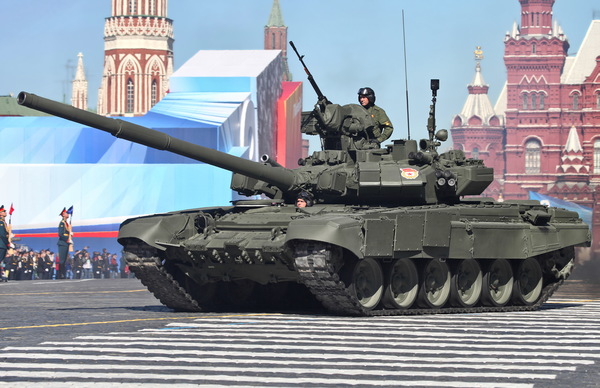
The T-14 Armata tank and the military buildup of the Russian army

296589_5_-2
The new Russian T-14 Armata tank. Source: http://bit.ly/1DS5YTD

Jane’s is a gem of a resource for anybody interested in military affairs and analysis.

This video shows that, with new acquisitions for its land forces, the Russian army will benefit from a big increase in capability.

Watching it reminded me of a very interesting and revealing quote in Mark Urban’s new (and honestly excellent and impossible to put down) book, The Edge:

“But even if his [President Putin’s] planned military buildup cannot now be funded, Russia has already taken its forces to the point where it is the global leader in several areas. Equally important, given the need of any aspiring military power to match capability with intent, the Kremlin has shown the willingness to use them.” (p. 89).

And this disposition will only benefit from economic recovery.

While the countries in the West continue to play cheap political games with cutbacks in military resources.