The Caledonian Invasion

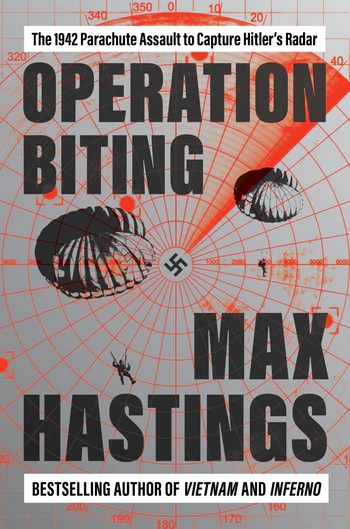
In early 1942, Winston Churchill faced a barrage of bad news. Kriegsmarine warships had escaped detection, sailing from occupied France to Germany, and Singapore had just fallen to the Japanese. The time for a large-scale offensive had not yet arrived, but Churchill desperately needed a victory. German radar technology – the Würzburg – was hindering British air operations, and one station, perched on the cliffs of Bruneval near Le Havre in Northern France, became the target of a daring raid. A successful breach of the Nazi fortress would offer much-needed relief during those harsh winter months.

Thus, Operation Biting: The 1942 Parachute Assault to Capture Hitler’s Radar (Harper) vividly springs to life through Sir Max Hastings’ writing. Members of the Black Watch, the Cameron Highlanders, the King’s Own Scottish Borderers, and the Seaforth Highlanders took center stage among the British paratrooper units involved, demonstrating the martial prowess long associated with Caledonian regiments. Nemo me impune lacessit.

Unmistakably, Churchill is the story’s central figure. During the Boer War, which he covered as a young war correspondent, he admired the effectiveness of Afrikaner commandos. True to the British instinct of adapting enemy tactics, Churchill later founded the Special Operations Executive (SOE) in 1940, followed by the formation of the Special Air Service (SAS) the next year. As Hastings notes, the recruits manning these units “were seldom the sort of people to make docile household pets.” The deployment of paratroopers for Operation Biting naturally stemmed from this evolution.

Continue reading “The Caledonian Invasion”
Churchill and the SAS

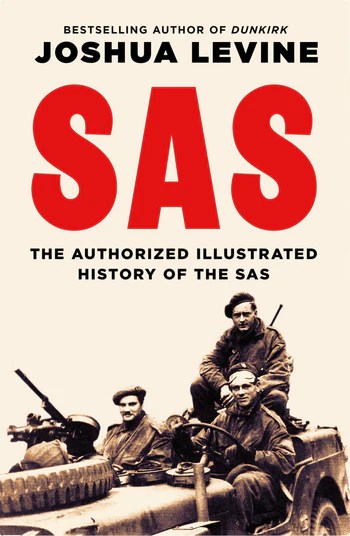
As a big fan of anything related to Special Forces, commandos, and covert operations, I enjoyed immensely reading Joshua Levine’s book SAS: The Authorized Illustrated History of the SAS (William Collins) during the Holidays. Incidentally, I finished reading it a few hours after I learnt that Mike Sadler, the last of the original members of the SAS (Special Air Service) had passed away.

Joshua Levine’s book is filled with breathtaking operations and incomparable characters, like Mike Sadler, David Stirling, Dudley Clarke, Paddy Mayne and Jock Lewes – among many who all played a crucial role in this inspiring chapter of World War II.

The main lesson I take from the author’s work is more political. History is full of fantastic ideas or projects that never lifted off the ground because they were not supported by the right people against all odds. The legendary SAS is not one of those. Bestselling author of Dunkirk, which was written in conjunction with the 2017 movie, Joshua Levine has a keen eye for military exploits.

Continue reading “Churchill and the SAS”

Sayeret Matkal on the frontlines

July 4th marked the 47th anniversary of the Entebbe operation, during which Israeli commandos rescued passengers held hostages by Palestinian terrorists and Ugandan soldiers after the hijacking of an Air France plane in Athens. Israel lost one soldier during the operation, Yoni Netanyahu, brother of the current Prime Minister of Israel. The audacious soldiers who appeared in the skies of Entebbe in the middle of the night belonged to Sayeret Matkal – Israel’s Defense Force’s General Staff Reconnaissance Unit. The unit was founded in 1957 by Avraham Arnan and was directly inspired by the iconic SAS (Special Air Service) warriors who served under the Union Jack during World War II.

I was too young to remember what happened at Entebbe. But another operation has captivated me since I was a teenager. I vividly remember hearing on the radio the news of Abu Jihad’s neutralization in April 1988 in Tunis. From memory, Israel was announced as having ordered this operation and I wondered how these intrepid operatives could perform their art so far away from the shores of their homeland.

I was therefore thrilled to read Sayeret Matkal: The Greatest Operations of Israel’s Elite Commandos (Skyhorse Publishing) by Avner Shur and Aviram Halevi, whose first chapter invites the reader to walk with the Israeli commandos to accomplish Operation Show of Force under the leadership of commander Moshe “Boogie” Ya’alon.

Continue reading “Sayeret Matkal on the frontlines”

President Bush gave Afghans a taste of freedom

After the publication of my review of his enthralling and inspiring book Special Forces Interpreter, I had the privilege of being in touch Eddie Idrees. He agreed to answer a few questions and I am extremely grateful and happy to publish the content of this exchange today, as we commemorate Remembrance Day. I am sure you will appreciate this content as much as I liked conducting the interview.

President Biden’s decision to withdraw from Afghanistan was a betrayal.

Mr. Idrees, how did you feel about the Biden administration’s decision to withdraw all US troops from Afghanistan last summer?

In short, it was a betrayal. President Biden’s decision to withdraw from Afghanistan, was not only a betrayal to me and millions of other Afghans, but to the Americans, the families who lost loved ones, to the Canadians who lost their lives in Kandahar or the Brits in Helmand. It was a betrayal of the cause. I felt like Biden allowed a terrorist network to win and gave psychological victory to the rest of the terrorist networks in the West and the Middle East. I have so much to say, but this was a historic betrayal of American values.

Continue reading “President Bush gave Afghans a taste of freedom”

“The chance to put the terrorists in their holes”

“Interpreters are the forgotten heroes who played a significant role in the war against terrorism.” Reading these words in Special Forces Interpreter: An Afghan on Operations with the Coalition (Pen & Sword) by Eddie Idrees reminded me of the frustration I felt late last summer when I heard that those Afghans who sacrificed so much to help the coalition forces involved in the International Security Assistance Force (ISAF) during so many years were threatened by the withdrawal from Afghanistan decided by the Biden administration and followed by other countries like my own, Canada.

While I was keeping abreast of all developments happening in Kabul airport at the time, social media algorithms suggested I read a memoir from a courageous young man who took the fight to the enemy alongside American and British soldiers. In that moment, there was no doubt in my mind that I would review this book, if only to better understand the crucial role played by the interpreters in the “forever war”.

The author – who writes under a pseudonym for understandable reasons – summarizes that “it was the Afghan interpreters who provided information on cultural issues to avoid misunderstandings between the village, tribal leaders, Afghan forces and US forces. In this way they ultimately reduced casualties.”

Continue reading ““The chance to put the terrorists in their holes””