Conflict: The study of warfare at its best

I was impatient to dive between the covers of General David Petraeus (retired) and Lord Roberts book, Conflict: The Evolution of Warfare from 1945 to Ukraine and saying I’m happy I did is a euphemism.

The best way for me to review this enthralling book is to get off the beaten path and summarize the 10 main takeaways that strike me the most.

1. Whatever you think of it, “war is still very much worth studying.” That’s the common thread of the book.

2. Totalitarian régimes have an easier time launching, conducting and bearing the brunt of war. The rise of autocracies throughout the world is therefore a challenge for democracies not accustomed with the pugilistic mindset.

3. Don’t cut military spending. “Money saved in piecemeal defense cuts often costs more in the long run.” The authors mention Great Britain’s decision to axe HMS Endurance before the Falklands War as a case in point. They also refer to Israel’s defense cuts after the Six Days War, with the consequences that followed six years later on the fateful morning of Kippur. Deterrence is cheap compared to war’s tribute in blood and treasure.

Continue reading “Conflict: The study of warfare at its best”

“It’s hard to be a Jew”

Mark Twain declared that “history doesn’t repeat itself, but it often rhymes.” Any student of Israel’s history certainly had that feeling on October 7, when the country was attacked the day after the festival of Sukkot, a significant moment in the Jewish calendar. Historians will undoubtedly spend lots of time and expertise drawing similarities between the surprise attack that marked the start of the Yom Kippur War on October 6, 1973, and the latest murderous incursions launched by Hamas terrorists last month.

Few weeks prior to that “date which will live in infamy” to borrow FDR’s words, author Uri Kaufman released an enthralling book, Eighteen Days in October: The Yom Kippur War and How It Created the Modern Middle East (St. Martin’s Press). From cover to cover, this book details the very existential nature of this war – or any armed conflict – for Israel’s survival. On several occasions, Israel could have lost, marking the end of the Jewish State.

Continue reading ““It’s hard to be a Jew””

Churchill’s Disciple

As far back as reading his incredible columns in the Daily Telegraph, I have been fascinated with Boris Johnson. Throughout his media and political career, the former Prime Minister of the United Kingdom has intrigued and amused me while often making me reflect further on the parallels between the past and the present. In that regard, his riveting and difficult-to-match biography of Winston Churchill underlies how much both statesmen share many similarities, which probably explains why Boris Johnson undertook the process of writing this biography.

That impression was rekindled while I read Sebastian Payne’s absorbing book The Fall of Boris Johnson: The Full Story (Macmillan). Even though the story it recounts was painful at times – yes, I admit, I’m a fan of Boris Johnson and reading about his downfall didn’t make me particularly joyful – it was unquestionably the best political book I have read for years.

Winston Churchill and Boris Johnson will both go down in history as unrivalled communicators of their respective eras. It must have been hard for the latter’s communications shop to provide products that met the criteria of a man who was probably his own best speechwriter.

Continue reading “Churchill’s Disciple”

Volodymyr Zelensky is in a league of his own

Author Lisa Rogak (HarperCollins India)

Last September, I took tremendous pleasure reviewing the insightful book Volodymyr Zelensky in His Own Words (Pegasus Books)by Lisa Rogak and Daisy Gibbons. Despite a hectic schedule, notably due to the deadline of an upcoming book, author Lisa Rogak was generous enough to answer a few questions for this blog. Here is the content of our exchange.

______

Ms. Rogak, where did the idea of your book about Ukrainian President Volodymyr Zelenskyoriginate from?

After the invasion of Ukraine, I started digging into his background. I was curious about this guy who seemed to be a natural-born leader. The more I dug, the more impressed I was. And he was funny! Who knew? I’ve done a slew of these quote books, so I put together a proposal for one on VZ. My agent said I needed a translator to dig for interviews and articles in his native Ukraine. I found Daisy Gibbons, who lives in London, and we quickly found a publisher, Pegasus Books.

Continue reading “Volodymyr Zelensky is in a league of his own”

“Putin’s war has forged Ukraine’s sense of nationhood on the battlefield”

Ukrainian soldiers (McGill University)

Two of the greatest pleasures I have as a blogger is reading the best books and being in touch with their authors. Few things make me happier than when they accept to answer a few questions for an interview.

I have always been a huge fan of Sir Rodric Braithwaite, and I was extremely happy to read and review his recent and captivating book about the history of Russia at a time when this country is at crossroads.

As a former British Ambassador to Moscow between 1988 and 1992 and a former foreign policy advisor to Prime Minister John Major, he combines the experience of a man who was on the ground when the URSS was on the cusp of exploding and the talent of an inspired historian.

I, therefore, felt extremely privileged when Sir Rodric generously agreed to answer my questions. I trust you will find his answers of tremendous interest.

___________

Sir Rodric, I’m of the school according to which great leaders make history. In that regard, I would be curious to know which Tsar or leader impresses you the most in the history of Russia and why?

The question of whether history is made by great leaders or impersonal forces will never be settled. It is the intellectual underpinning for Tolstoy’s War and Peace. In my view, you need both. Even the greatest leader cannot buck reality: Bismarck is eloquent on that.

Continue reading ““Putin’s war has forged Ukraine’s sense of nationhood on the battlefield””

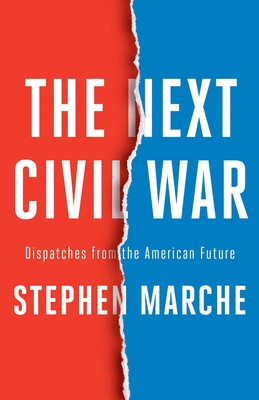
How America Could Fall

There has always been a soft spot for the United States in my heart. When I was about 10 years old, I uninstalled my parents’ clothesline to attach a flag of the United States on July 4th. I sensed my father was upset, but he said nothing, probably because he was somehow impressed with my audacity. A few decades later, my feeling of admiration and appreciation remained intact, and it was important for me to visit the Gettysburg National Military Park – which commemorates the most iconic battle of the Civil War during which approximately 50 000 soldiers became casualties. During those captivating pilgrimages on the battlefield, I remember the comfort I felt in my heart that such an occurrence would not happen again. America, I like to think, will remain a beacon of the values to which I am attached for many decades to come. And I guess my heart would like to believe it will be centuries…

But the last few years have considerably shaken this conviction. You may think I’m talking about Donald Trump’s election on November 8, 2016, and you are partially right. The events that occurred on January 6, 2021, were a formidable earthquake. I would never have believed anyone predicting those terrifying images of hooligans storming the US Capitol – the very seat of American democracy. Never. But here we were.

Continue reading “How America Could Fall”

A striking parallel between Zelensky and de Gaulle

I initially wanted to review Taking Paris: The Epic Battle for the City of Lights by Martin Dugard last February, but then Vladimir Putin launched his troops against Ukraine and I had to shuffle my publications calendar. As you will see, there are fascinating parallels between the fate of France in World War II and the current situation in Ukraine, if only at the leadership level.

After the invasion of France by the Germans in May 1940, the country is in disarray and its statesmen have given up. In the ashes of defeat, a temporary brigadier general will rise to the occasion. Fleeing his homeland on board an airplane provided by British Prime Minister Winston Churchill, Charles de Gaulle left with a “[…] hastily packed suitcase contain[ing] four shirts, one pair of pants, and a single photograph of Yvonne and the children, whose current whereabouts he does not know.” I couldn’t help but think of the same predicament in which Ukrainian President Volodymyr Zelensky found himself on February 24th. As did de Gaulle, he chose to fight, but from home.

Continue reading “A striking parallel between Zelensky and de Gaulle”

Drone Wars: The Poor Man’s Air Force

A few years ago, I was intrigued to read that President Barack Obama ordered 10 times more drone strikes than his predecessor, President George W. Bush. Since their appearance, drones have become omnipresent on the battlefield and not a week goes by without a news article about their feats.

Incidentally, drones have played a role in the war of aggression launched against Ukraine by Russia in the last few weeks. They are also used in several theaters around the world. In a nutshell, “the drones developed by Israel and then revolutionized by America have now proliferated everywhere”, writes Seth J. Frantzman in Drone Wars: Pioneers, Killing Machines, Artificial Intelligence, and the Battle for the Future (Bombardier Books).

The author writes that everyone wants drones, notably because they are cheaper than airplanes and reduce the potential for human casualties. They have become the “poor man’s air force”. Hence, their use by Houthi rebels in Yemen in the cross-fight between Iran and Saudi Arabia.About this conflict, the Jerusalem Post correspondent and analyst reminds us of a chilling episode when Houthi drones attacked an Aramco facility in Saudi Arabia – “some 1,000 kilometers from Houthi frontlines in Yemen” – in August 2019. The kingdom which ranked in 6th place in terms of military expenditures in the world in 2020 was defenseless in front of this incursion. A real military representation of the biblical tale of David versus Goliath and a manifestation that superpowers are not immune from an attack performed by a “poor man’s air force”.

Continue reading “Drone Wars: The Poor Man’s Air Force”

How Yeltsin Paved Putin’s Way

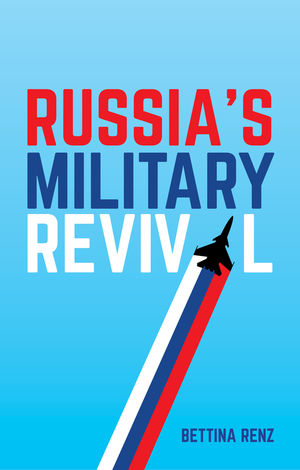
The Russian army and soldiers are all over the news since the invasion of Ukraine on February 24. It is therefore crucial to understand the military machine that is supposed to serve Vladimir Putin’s foreign policy. In her insightful book, Russia’s Military Revival (Polity), University of Nottingham Professor Bettina Renz quotes a fellow academic who observed that “by the end of the 1990s, Russia had largely been written off as a global military force as it was generally assumed that its armed forces stood ‘perilously close to ruin.’” While Putin’s 2008 modernization program proved instrumental in giving the Russian army its pride and means, the main argument of the author is that this development “did not occur in a vacuum.”

Since the reigns of the Tsars, “[…] having a strong military has always been important to Russia”, mainly to ensure régime stability, its presence in the world as a great power and the necessity – in the Kremlin’s perspective – of keeping a buffer zone against real or imagined potential invasion. Continuity is the main theme developed by Bettina Renz in her book.

Continue reading “How Yeltsin Paved Putin’s Way”

Heeding Wellington’s Advice

Dr. Seth G. Jones (source: CSIS)

In the aftermath of my review of his excellent book, Three Dangerous Men: Russia, China, Iran and the Rise of Irregular Warfare, its author Dr. Seth G. Jones accepted to answer my questions. Our exchange occurred before the start of the invasion of Ukraine. With cyber warfare at the disposal of current armies – like the crashing of the Kremlin website today – the content of this insightful book is ever more pertinent. And Dr. Jones is the best specialist to better understand this new way of conducting war.

Here is the content of this fascinating exchange.

Valery Gerasimov has been an avid student of U.S. military campaigns.

Dr. Jones, in Three Dangerous Men, one of the things I found most interesting was the reading habits of Russian General Valery Gerasimov. Apart from devouring tomes about Russian military doctrine and history, do you know if he is also interested in learning about Western figures and military episodes?

Valery Gerasimov has been an avid student of U.S. military campaigns. He closely studied U.S. operations in Bosnia, Kosovo, Afghanistan, Iraq, Libya, and other countries. Gerasimov concluded that the United States had moved away from what he called the “traditional” approach to warfare and toward a “new,” more clandestine approach, which he termed a “concealed use of force.” Gerasimov’s study of the United States was instrumental in evolving Russia’s own military doctrine, strategy, and tactics—including its use of irregular warfare.

Continue reading “Heeding Wellington’s Advice”