The Caledonian Invasion

In early 1942, Winston Churchill faced a barrage of bad news. Kriegsmarine warships had escaped detection, sailing from occupied France to Germany, and Singapore had just fallen to the Japanese. The time for a large-scale offensive had not yet arrived, but Churchill desperately needed a victory. German radar technology – the Würzburg – was hindering British air operations, and one station, perched on the cliffs of Bruneval near Le Havre in Northern France, became the target of a daring raid. A successful breach of the Nazi fortress would offer much-needed relief during those harsh winter months.

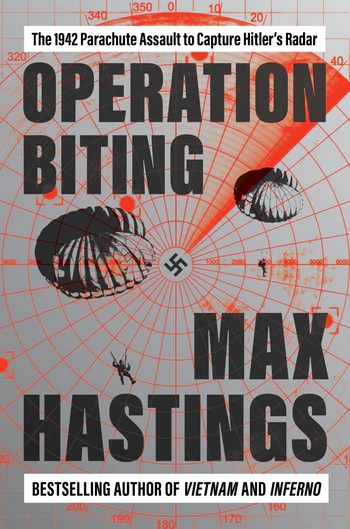
Thus, Operation Biting: The 1942 Parachute Assault to Capture Hitler’s Radar (Harper) vividly springs to life through Sir Max Hastings’ writing. Members of the Black Watch, the Cameron Highlanders, the King’s Own Scottish Borderers, and the Seaforth Highlanders took center stage among the British paratrooper units involved, demonstrating the martial prowess long associated with Caledonian regiments. Nemo me impune lacessit.

Unmistakably, Churchill is the story’s central figure. During the Boer War, which he covered as a young war correspondent, he admired the effectiveness of Afrikaner commandos. True to the British instinct of adapting enemy tactics, Churchill later founded the Special Operations Executive (SOE) in 1940, followed by the formation of the Special Air Service (SAS) the next year. As Hastings notes, the recruits manning these units “were seldom the sort of people to make docile household pets.” The deployment of paratroopers for Operation Biting naturally stemmed from this evolution.

Continue reading “The Caledonian Invasion”
The Presidential Satchel

Historically, the concept of war has followed a familiar script: one victor and one vanquished. However, there exists a scenario that defies this ancient logic — nuclear war. In such a case, writes Annie Jacobsen in Nuclear War: A Scenario (Dutton), “there is no such thing as capitulation. No such thing as surrender.” Only the scorched silence of what once was.

From the very first lines, the reader is drawn into a vortex of dread—a work of speculative fiction so meticulously constructed that it becomes indistinguishable from reality. This is not merely an intellectual exercise; it is a mirror held up to our world, one where the unthinkable remains entirely plausible—and where our ability to avoid catastrophe may depend less on preparedness than on our collective refusal to acknowledge the danger.

The scenario imagined by the author begins with a North Korean nuclear strike on the United States. Confronted with the unthinkable, the President has only six minutes –  six excruciating minutes – to respond, as Ronald Reagan warned in his memoirs. From this point of no return, events unfold with brutal logic, and everything collapses.

Continue reading “The Presidential Satchel”

Coca-Cola and ice cream to defeat Japan

In their seminal book Conflict, which was reviewed here recently, General Petraeus and Lord Roberts posit that, in warfare, “the side that learns and adapts the fastest typically prevails.” An ageless lesson, throughout military history.

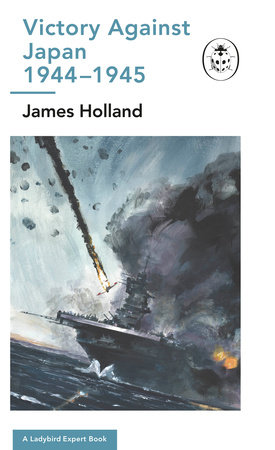
As geopolitics evolves, my interest in the Pacific theatre during World War II has increased significantly lately. To prevail against the Empire of the Rising Sun, the US Navy needed to destroy its crucial naval power, which dominated its sphere of influence for five decades. Curtailing Japanese supply lines, notably to deprive its fleet and troops of oil, was instrumental. To that end, American forces would be attacking the islands it occupied. “Capturing these outposts in the middle of the ocean would not only deny them to the Japanese, it would bring the Allied forces closer to Japan itself”, writes renowned military historian James Holland in Victory against Japan 1944-1945, published as part of his insightful contribution to the Ladybird Expert Series (Penguin Random House).

The author also evokes the military ineffectiveness of Chinese Nationalist warlord Chiang Kai-Shek “despite the United States’ two years of ceaseless supplies”, the inestimable contribution of future Marshal Bill Slim and Special Operations Executive (SOE) teams in Burma and the appearance of the B-29 “Superfortress” in the Pacific, “the most expensive single weapons system ever built” up to that point.

Continue reading “Coca-Cola and ice cream to defeat Japan”

Patton was Destined for War

“Battle is the most magnificent competition in which a human being can indulge”, said General George S. Patton. Within four years, the famous World War II warlord went from soul-searching about his future in the profession of arms to being one of the main pugilists who brought Nazi Germany on its knees in 1945.

The full measure of Patton’s greatness and vanity are brought to life in Martin Dugard’s last book Taking Berlin: The Bloody Race to Defeat the Third Reich (Caliber), between the covers of which the author doesn’t hide his admiration for the legendary soldier who believed he was the reincarnation of a Roman legionnaire. Full disclosure, I think we can easily forgive this inclination, because it is all too easy to admire the character, a feeling to which I willingly plead guilty.

In the same manner as in his previous book Taking Paris, the author – who collaborated with journalist Bill O’Reilly to write several books – calls upon an army of pertinent details to bring his narrative to life. I personally discovered that the meaning of the Belgian town of Spa’s name “is an acronym of the Latin Salus per Aquam, meaning “health from water” or that the word “Roger” pronounced on the radio means “received”, but is also an acronym for “Received Order Given, Expect Results”.

Continue reading “Patton was Destined for War”

The khaki presidency of Volodymyr Zelensky

Serhii Rudenko (courtesy of himself)

After the publication of my review of his insightful biography of Ukraine’s President Volodymyr Zelensky, author and political analyst Serhii Rudenko generously accepted my invitation to respond to a few questions for this blog.

In the aftermath of the war launched by Vladimir Putin on February 24th, the offices of the television station where he worked became a bomb shelter. He has moved to another region, which suffered the recent Russian onslaught. The coming winter will undoubtedly be extremely difficult for Ukrainians, but Mr. Rudenko’s resilience and determination to pursue his work is immensely commendable.

I consider myself privileged to be in touch with him and to present you with the content of our discussion.

________

Mr. Rudenko, in your book, you depict an administration with a lack of political experience and a very high turnover level. Has the situation stabilized since the beginning of the war?

Yes, it has stabilized. In the conditions of war, Zelensky had to choose the most optimal and effective people. Now we see around the President of Ukraine a team that governs the state in the conditions of war. Hardly anyone in the world has such experience in governing the state. It is not easy.

Continue reading “The khaki presidency of Volodymyr Zelensky”

How Putin Saved Zelensky

The world “would hardly have heard about [Volodymyr] Zelensky if he had become an engineer, gone into the military, or became a doctor”, writes political commentator Serhii Rudenko in a recent biography of the Ukrainian President (Polity Books). Thanks to the political reality crafted by Servant of the People in which he played the role of a history teacher elected against the odds to lead the country, fiction turned into reality in 2019. And thanks to Russian President Vladimir Putin’s decision to start a war on Ukraine before sunrise on February 24th, the actor turned President has become an icon of resilience in defense of freedom and democracy.

Serhii Rudenko paints the portrait of a leader who was not on sure footing before the war intervened.

After his election, Zelensky broke his promise to distance himself from the nepotism espoused by his predecessor, Petro Poroshenko. “[…] A year after his election, the Poroshenko family was replaced by the Zelensky family – or, more precisely, by the Kvartal 95 Studio.” In other words, those who accompanied him in his showbusiness career, including in his role as President Vasily Petrovych Goloborodko on television.

Continue reading “How Putin Saved Zelensky”

Drone Wars: The Poor Man’s Air Force

A few years ago, I was intrigued to read that President Barack Obama ordered 10 times more drone strikes than his predecessor, President George W. Bush. Since their appearance, drones have become omnipresent on the battlefield and not a week goes by without a news article about their feats.

Incidentally, drones have played a role in the war of aggression launched against Ukraine by Russia in the last few weeks. They are also used in several theaters around the world. In a nutshell, “the drones developed by Israel and then revolutionized by America have now proliferated everywhere”, writes Seth J. Frantzman in Drone Wars: Pioneers, Killing Machines, Artificial Intelligence, and the Battle for the Future (Bombardier Books).

The author writes that everyone wants drones, notably because they are cheaper than airplanes and reduce the potential for human casualties. They have become the “poor man’s air force”. Hence, their use by Houthi rebels in Yemen in the cross-fight between Iran and Saudi Arabia.About this conflict, the Jerusalem Post correspondent and analyst reminds us of a chilling episode when Houthi drones attacked an Aramco facility in Saudi Arabia – “some 1,000 kilometers from Houthi frontlines in Yemen” – in August 2019. The kingdom which ranked in 6th place in terms of military expenditures in the world in 2020 was defenseless in front of this incursion. A real military representation of the biblical tale of David versus Goliath and a manifestation that superpowers are not immune from an attack performed by a “poor man’s air force”.

Continue reading “Drone Wars: The Poor Man’s Air Force”