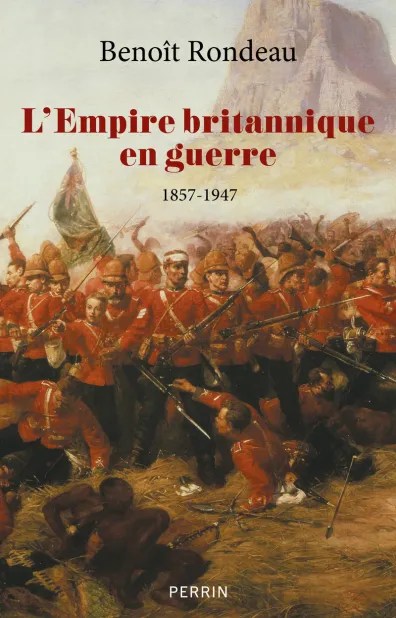
Les Tuniques Rouges

« La politique de toutes les puissances est dans leur géographie », affirmait Napoléon. Si elle s’était limitée à son insularité, la Grande-Bretagne ne se serait pas vu offrir la possibilité de trôner sur un Empire au-dessus duquel le soleil ne se couchait jamais.

« La couronne d’Angleterre se lance dans une série de guerres visant avant tout à assurer l’expansion de son influence mondiale, poussant à des expéditions d’ordre stratégique, qui débouchent sur la prise de contrôle de positions clés », écrit Benoît Rondeau dans L’Empire britannique en guerre – 1857-1947 (Perrin). « Pendant tout le règne de Victoria (1837‑1901), il ne s’est pas écoulé une année sans que les forces armées britanniques ne soient impliquées d’une façon ou d’une autre dans des opérations quelque part sur le globe. » Tout au long de la période couverte par l’auteur, Londres est un acteur géopolitique de premier plan. Son Empire lui offre les moyens de le demeurer. Il faut bien en esquisser les contours et défendre ses prérogatives. Et à tout Empire, le glaive est indispensable.

poursuivre la lecture
Coca-Cola and ice cream to defeat Japan

In their seminal book Conflict, which was reviewed here recently, General Petraeus and Lord Roberts posit that, in warfare, “the side that learns and adapts the fastest typically prevails.” An ageless lesson, throughout military history.

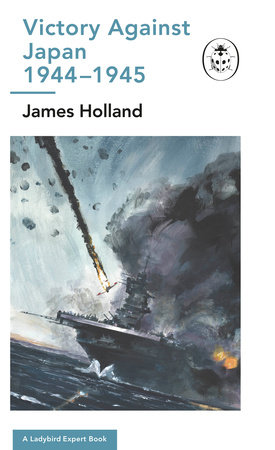
As geopolitics evolves, my interest in the Pacific theatre during World War II has increased significantly lately. To prevail against the Empire of the Rising Sun, the US Navy needed to destroy its crucial naval power, which dominated its sphere of influence for five decades. Curtailing Japanese supply lines, notably to deprive its fleet and troops of oil, was instrumental. To that end, American forces would be attacking the islands it occupied. “Capturing these outposts in the middle of the ocean would not only deny them to the Japanese, it would bring the Allied forces closer to Japan itself”, writes renowned military historian James Holland in Victory against Japan 1944-1945, published as part of his insightful contribution to the Ladybird Expert Series (Penguin Random House).

The author also evokes the military ineffectiveness of Chinese Nationalist warlord Chiang Kai-Shek “despite the United States’ two years of ceaseless supplies”, the inestimable contribution of future Marshal Bill Slim and Special Operations Executive (SOE) teams in Burma and the appearance of the B-29 “Superfortress” in the Pacific, “the most expensive single weapons system ever built” up to that point.

Continue reading “Coca-Cola and ice cream to defeat Japan”

How Bill Slim Turned the Tide

Any passerby on Whitehall in London walks in front of three statues representing towering British military figures of World War II. The most iconic one is naturally the one representing Viscount Montgomery, the victor of Alamein. Then there’s one of Viscount Alanbrooke, who headed the British Army during the conflict. The third and last one along the way – if you come from the House of Commons – depicts Viscount Slim, the victor of Burma. While I have devoured countless articles and books about Monty and read many things on Alanbrooke, my knowledge about the last member of the trio is scant at best. Mea culpa.

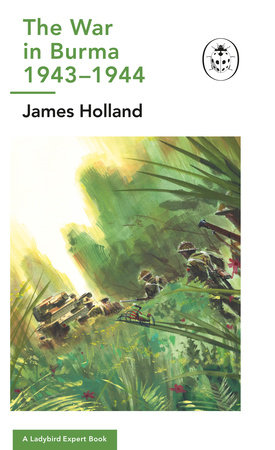
A few weeks ago, The War in Burma 1943-1944 by renowned military historian James Holland came to my attention. I dove right into it with delight. True to his eloquence and unparalleled expertise (I’m a huge fan of his documentaries and I have another book of his on my shelves), this engaging historian broadened my horizons about an aspect and a figure of World War II about which I knew too little.

Published as part of the Ladybird Expert Book collection, the most recent addition to James Holland series is beautifully enhanced by Keith Burns’ stunning and evocative illustrations summarizes the significance of the much too unknown South-East Asian theatre of World War II. Northwest Burma, the prolific historian writes, was “one of the most inhospitable places to fight in the world.” By the end of 1944, the Japanese were on the move to smash British troops on their way to India, hopefully end the British Raj and thwart the delivery of essential supplies to Chiang Kai-shek’s Nationalists in China who were also fighting the Japanese toe and nails. The stakes were unparalleled, and the British couldn’t afford to lose any ground. Outnumbered and demoralized, how could they reverse the tide?

Continue reading “How Bill Slim Turned the Tide”