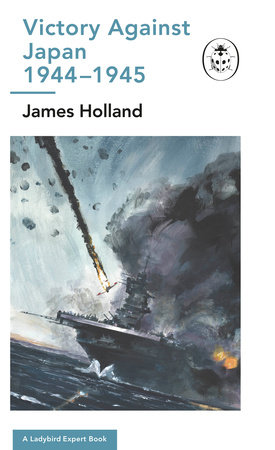
Coca-Cola and ice cream to defeat Japan

In their seminal book Conflict, which was reviewed here recently, General Petraeus and Lord Roberts posit that, in warfare, “the side that learns and adapts the fastest typically prevails.” An ageless lesson, throughout military history.

As geopolitics evolves, my interest in the Pacific theatre during World War II has increased significantly lately. To prevail against the Empire of the Rising Sun, the US Navy needed to destroy its crucial naval power, which dominated its sphere of influence for five decades. Curtailing Japanese supply lines, notably to deprive its fleet and troops of oil, was instrumental. To that end, American forces would be attacking the islands it occupied. “Capturing these outposts in the middle of the ocean would not only deny them to the Japanese, it would bring the Allied forces closer to Japan itself”, writes renowned military historian James Holland in Victory against Japan 1944-1945, published as part of his insightful contribution to the Ladybird Expert Series (Penguin Random House).

The author also evokes the military ineffectiveness of Chinese Nationalist warlord Chiang Kai-Shek “despite the United States’ two years of ceaseless supplies”, the inestimable contribution of future Marshal Bill Slim and Special Operations Executive (SOE) teams in Burma and the appearance of the B-29 “Superfortress” in the Pacific, “the most expensive single weapons system ever built” up to that point.

Continue reading “Coca-Cola and ice cream to defeat Japan”

Entre guerres

Dans les cours de relations internationales qui ont émaillé mes études universitaires, on nous savonnait les oreilles avec cette théorie selon laquelle la fin de la Guerre froide marquait la fin de la dominance de la geste militaire, du moins comme nous la connaissions jusque-là.

Le fracas des armes appartenait à une période révolue. Il fallait désormais composer avec « l’invention d’un nouveau concept d’opération militaire dont nous allions avoir le redoutable privilège d’inaugurer les contradictions insolubles », « l’intervention humanitaire », pour emprunter les mots utilisés par le général français François Lecointre (retraité) dans son livre Entre guerres (Gallimard).

De l’Irak à la Bosnie, en passant par le Rwanda et Djibouti – pour ne citer que quelques théâtres d’opérations – celui qui sera appelé à occuper la fonction de chef d’état-major des armées françaises entre 2017 et 2021 est issu d’une famille ayant contribué aux belles pages de l’histoire militaire française. Né en 1962, année de la crise de missiles à Cuba, la carrière de François Lecointre correspond à une période durant laquelle l’on croit que l’odeur du cambouis passe au second plan.

poursuivre la lecture

Conflict: The study of warfare at its best

I was impatient to dive between the covers of General David Petraeus (retired) and Lord Roberts book, Conflict: The Evolution of Warfare from 1945 to Ukraine and saying I’m happy I did is a euphemism.

The best way for me to review this enthralling book is to get off the beaten path and summarize the 10 main takeaways that strike me the most.

1. Whatever you think of it, “war is still very much worth studying.” That’s the common thread of the book.

2. Totalitarian régimes have an easier time launching, conducting and bearing the brunt of war. The rise of autocracies throughout the world is therefore a challenge for democracies not accustomed with the pugilistic mindset.

3. Don’t cut military spending. “Money saved in piecemeal defense cuts often costs more in the long run.” The authors mention Great Britain’s decision to axe HMS Endurance before the Falklands War as a case in point. They also refer to Israel’s defense cuts after the Six Days War, with the consequences that followed six years later on the fateful morning of Kippur. Deterrence is cheap compared to war’s tribute in blood and treasure.

Continue reading “Conflict: The study of warfare at its best”