En quête du Débarquement

« La bataille de Normandie n’est pas un sujet vidé. » La plaidoirie de Nicolas Aubin est sans appel. Son livre Le Débarquement, vérités et légendes (Éditions Perrin) l’articule magistralement.

Si vous avez été influencé par « toute une littérature d’après-guerre [qui] a idéalisé l’armée allemande », si vous être preneur de l’argument selon lequel l’échec des troupiers portant le feldgrau est exclusivement redevable au « sommeil de Hitler », si vous pensez que la Résistance a joué un rôle décisif dans l’issue de la bataille de Normandie ou que vous faites partie des nombreux détracteurs du Field Marshal Bernard L. Montgomery, vos certitudes seront déboulonnées.

Dans un livre extrêmement bien ramassé – après tout, il ne fait que 300 pages – l’historien militaire qui collabore à certaines des meilleures publications francophones sur le sujet remet plusieurs ouvrages sur le métier. Avant d’aller plus loin, il m’est toutefois agréable d’ajouter qu’il convoque un style d’écriture invitant qui fait le régal du lecteur. Une chaîne de commandement est « percluse de frictions », les Allemands s’échinent à établir des obstacles pour « déchiqueter » les planeurs alliés et les pièces d’artillerie offrent une « symphonie mortelle » aux adversaires. Le livre gargouille de ces belles tournures qui séduisent l’esprit.

Revenons maintenant au cœur de son propos et sur quatre points rapides sur lesquels je me permets d’attirer votre attention.

pourusivre la lecture
The Ferocious Battle for Normandy

In less than 60 days, we will commemorate the 80th anniversary of D-Day, the Allied landing in Normandy on June 6th, 1944. The celebrations surrounding that event are already under way. In the last hours, the French Ambassador to Canada travelled to Regina, the capital of Saskatchewan, to present the Légion d’honneur – France’s highest distinction established by Napoleon in 1802 – to a 104-year-old veteran who set foot on the beach on that fateful morning.

As we salute these men and prepare to sadly see the last ones depart for eternity, the need for remembrance becomes ever more crucial. Historians play an essential role on that score. Plenty of great books have been written about the longest day and the campaign that followed.

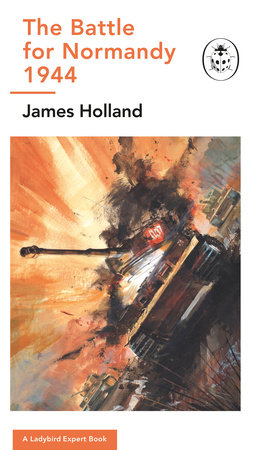
I just finished reading James Holland’s contribution to that impressive list, through the Ladybird Expert Book series. For anyone wanting to grasp the development of the Battle for Normandy in a summarized and vividly written style, this book is a must.

Continue reading “The Ferocious Battle for Normandy”

Churchill and the SAS

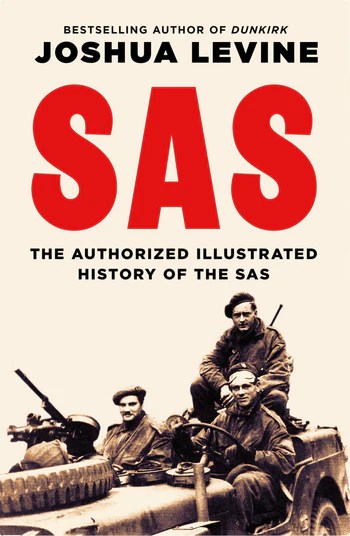
As a big fan of anything related to Special Forces, commandos, and covert operations, I enjoyed immensely reading Joshua Levine’s book SAS: The Authorized Illustrated History of the SAS (William Collins) during the Holidays. Incidentally, I finished reading it a few hours after I learnt that Mike Sadler, the last of the original members of the SAS (Special Air Service) had passed away.

Joshua Levine’s book is filled with breathtaking operations and incomparable characters, like Mike Sadler, David Stirling, Dudley Clarke, Paddy Mayne and Jock Lewes – among many who all played a crucial role in this inspiring chapter of World War II.

The main lesson I take from the author’s work is more political. History is full of fantastic ideas or projects that never lifted off the ground because they were not supported by the right people against all odds. The legendary SAS is not one of those. Bestselling author of Dunkirk, which was written in conjunction with the 2017 movie, Joshua Levine has a keen eye for military exploits.

Continue reading “Churchill and the SAS”

Morale: Determining Factor in the Desert War

“It was a combination of weight of arms and the grim determination of the men on the ground as well as air power that brought victory to the British”, writes historian James Holland in his book about The Desert War in the Ladybird Expert series.

The renowned author starts his book with an observation about the lack of enthusiasm among the crowd massed on the square facing the Palazzo Venezia when Italian dictator Benito Mussolini declared war on June 10, 1940. Italians were not fervent about fighting alongside the Germans. The feeling would have fateful consequences in the fight for the Mediterranean.

In October 1940, the Duce decided to invade Greece, probably motivated by the desire to prove his worth to his German ally. It was a bad decision that forced Hitler’s hand to send troops to the Mediterranean theatre. The Führer became obsessed with his southern flank and devoted considerable resources to beef it up.

Continue reading “Morale: Determining Factor in the Desert War”

How Bill Slim Turned the Tide

Any passerby on Whitehall in London walks in front of three statues representing towering British military figures of World War II. The most iconic one is naturally the one representing Viscount Montgomery, the victor of Alamein. Then there’s one of Viscount Alanbrooke, who headed the British Army during the conflict. The third and last one along the way – if you come from the House of Commons – depicts Viscount Slim, the victor of Burma. While I have devoured countless articles and books about Monty and read many things on Alanbrooke, my knowledge about the last member of the trio is scant at best. Mea culpa.

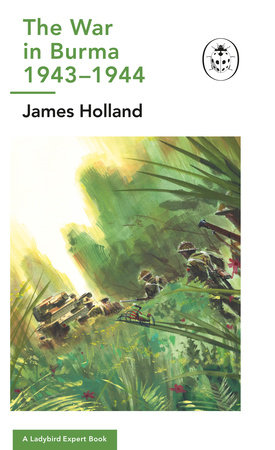
A few weeks ago, The War in Burma 1943-1944 by renowned military historian James Holland came to my attention. I dove right into it with delight. True to his eloquence and unparalleled expertise (I’m a huge fan of his documentaries and I have another book of his on my shelves), this engaging historian broadened my horizons about an aspect and a figure of World War II about which I knew too little.

Published as part of the Ladybird Expert Book collection, the most recent addition to James Holland series is beautifully enhanced by Keith Burns’ stunning and evocative illustrations summarizes the significance of the much too unknown South-East Asian theatre of World War II. Northwest Burma, the prolific historian writes, was “one of the most inhospitable places to fight in the world.” By the end of 1944, the Japanese were on the move to smash British troops on their way to India, hopefully end the British Raj and thwart the delivery of essential supplies to Chiang Kai-shek’s Nationalists in China who were also fighting the Japanese toe and nails. The stakes were unparalleled, and the British couldn’t afford to lose any ground. Outnumbered and demoralized, how could they reverse the tide?

Continue reading “How Bill Slim Turned the Tide”

Patton was Destined for War

“Battle is the most magnificent competition in which a human being can indulge”, said General George S. Patton. Within four years, the famous World War II warlord went from soul-searching about his future in the profession of arms to being one of the main pugilists who brought Nazi Germany on its knees in 1945.

The full measure of Patton’s greatness and vanity are brought to life in Martin Dugard’s last book Taking Berlin: The Bloody Race to Defeat the Third Reich (Caliber), between the covers of which the author doesn’t hide his admiration for the legendary soldier who believed he was the reincarnation of a Roman legionnaire. Full disclosure, I think we can easily forgive this inclination, because it is all too easy to admire the character, a feeling to which I willingly plead guilty.

In the same manner as in his previous book Taking Paris, the author – who collaborated with journalist Bill O’Reilly to write several books – calls upon an army of pertinent details to bring his narrative to life. I personally discovered that the meaning of the Belgian town of Spa’s name “is an acronym of the Latin Salus per Aquam, meaning “health from water” or that the word “Roger” pronounced on the radio means “received”, but is also an acronym for “Received Order Given, Expect Results”.

Continue reading “Patton was Destined for War”

La grande oubliée des vainqueurs de la Deuxième Guerre mondiale

Photo de l’auteur Benoît Rondeau prise au mémorial dédié aux Forces britanniques à Ver-sur-Mer (courtoisie de Benoît Rondeau)

Benoît Rondeau est un auteur que j’apprécie particulièrement. Il apporte au lectorat francophone une compréhension singulière de l’histoire militaire de la Seconde Guerre mondiale. Son livre consacré au soldat britannique durant ce conflit offre au lecteur la possibilité de marcher au combat au son de la cornemuse et de profiter de quelques instants de répit pour savourer une tasse de thé.

Suite à la publication de ma recension de cette excellente lecture, il a aimablement accepté ma demande d’entrevue et je suis enchanté d’en partager le contenu avec vous aujourd’hui.

_______

Monsieur Rondeau, je suis tout d’abord curieux de savoir combien de temps vous avez consacré à la recherche et à la rédaction de ce livre?

Pour ce qui est de la recherche, il va de soi que l’ouvrage a intégré le fruit d’années passées à découvrir et à comprendre l’armée britannique pendant la Seconde Guerre mondiale. La phase de recherche et de rédaction spécifiquement consacrée à l’ouvrage proprement dit s’est étalée sur un an et demi.

poursuivre la lecture

Churchill was better at strategy than politics

Professor Simon J. Ball (University of Leeds)

I recently reviewed Professor Simon J. Ball’s revealing book about the battle of Alamein (The Folio Society). He generously accepted to answer few questions for this blog, and I take immense pleasure in sharing the content of our exchange with you today. I trust you will enjoy reading it.

_________

Professor Ball, I might be wrong, but I have a feeling that the Mediterranean theater during World War II has been overlooked. Why is it important to pay more attention to it? How crucial was it in the big picture of the conflict? 

SJB: The war in the Mediterranean was of central importance. It blew apart the idea of the Mediterranean as a unified zone, although all the major powers tried to engineer integration at some points. Oddly the idea of the Mediterranean as an integrated politico-economic-cultural area, “breathing with the same rhythms”, was popularized by Fernand Braudel in the late 1940s.

Continue reading “Churchill was better at strategy than politics”

The distorted memory of Alamein

British soldiers during the second battle of Alamein (The Times of Israel)

“History will be kind to me for I intend to write it”, declared Winston Churchill. That quote might reveal why the second battle of Alamein seems only to reach a limited audience of military history specialists and enthusiasts. In terms of visibility and shelf space, Alamein doesn’t rank with D-Day, Stalingrad, or Bastogne.

Knowing that the battle stopped Field Marshal Erwin Rommel’s advance on Egypt during the turning point year of 1942, one can reasonably wonder why that is so. In a nutshell, “the absence of the victors left plenty of room for the ‘losers’ to have their say. […] the British state’s insistence on not telling a national narrative over-represented the voices of its enemies”, explains historian Simon Ball in The Folio Society edition of his insightful history of the battle fought in the sands of North Africa in October and November 1942.

Material rather than manpower would have been the drivers of the Allied victory. In sum, “the Axis had lost the battle for four reasons: enemy air superiority; the poor performance of the Italian troops; the Eighth Army’s superiority in modern weapons; and their own lack of fuel.” Rommel became an icon – a phenomenon I observed on numerous occasions while visiting military museums in the United Kingdom – and his opponent, Field Marshall Bernard Montgomery drew flak from “old régime” figures who could not stomach the methods of this iconoclast figure who privileged meritocracy. The tenants of that school preferred to give way to Rommel rather than applaud the success and qualities of Montgomery. That phenomenon is regrettably still observable to this day.

Continue reading “The distorted memory of Alamein”