The best books, their authors and the great people who inspire these stories / Les meilleurs livres, leurs auteurs et les grand.e.s de l'histoire qui les inspirent.
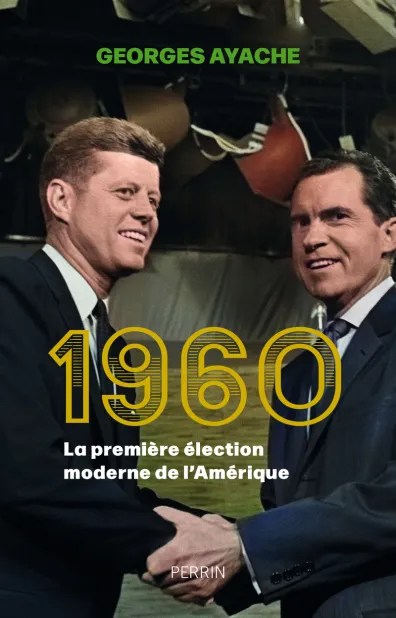
« Les lois sont comme les saucisses. C’est mieux de ne pas voir leur préparation », clamait l’homme d’État allemand Otto von Bismarck. Il en va des victoires électorales comme du processus législatif, puisque la fréquentation des arcanes de ces exercices démocratiques offre souvent la possibilité d’observer des épisodes baroques. Un exemple éloquent de cette affirmation se trouve entre les deux couvertures du dernier livre de l’ancien diplomate Georges Ayache, 1960 : La première élection moderne de l’Amérique (Perrin).
Aussi bien l’avouer d’entrée de jeu, j’ai grandi en m’abreuvant de la légende de JFK. Rien n’aurait pu déboulonner la statue mémorielle que lui avait érigée mon père. J’ai donc toujours nourri un vif intérêt pour ce président qui repose maintenant au panthéon de l’histoire américaine, à l’ombre des magnolias au cimetière national d’Arlington, en Virginie. Les chemins de traverse de mes années universitaires m’ont toutefois amené à la rencontre de celui qui souhaitait barrer la route du premier catholique à accéder au Bureau Ovale, l’insubmersible Richard Nixon.
La politique américaine est omniprésente. Ses grandes personnalités irriguent l’actualité et influencent le cours de l’histoire. À quelques jours de l’investiture du président Donald Trump pour un second mandat non consécutif, il m’apparaît pertinent de commenter la personnalité de l’un de mes présidents favoris, Dwight D. Eisenhower, à la lumière d’une excellente biographie que lui consacre l’universitaire Hélène Harter.
Les commémorations du 80e anniversaire du débarquement en Normandie le 6 juin 2024 ont permis à cette figure de proue des Forces alliées de faire une nouvelle apparition dans l’espace médiatique. À bon droit, puisque la contribution de celui qui « a réussi cinq débarquements » fut essentielle à la planification et au bon déroulement du « Jour J ». Tout au long de sa carrière militaire, ce fils du Kansas aura gravi méthodiquement les échelons. L’historienne spécialiste des États-Unis à l’Université Paris 1 Panthéon-Sorbonne résume éloquemment son passage au Département de la guerre, entre 1929 et 1935. « Il est compétent et il sait prendre des initiatives. Les entrepreneurs qu’il a rencontrés l’apprécient aussi. Il est diplomate et arrondit les angles quand les militaires ont la réputation d’être portés aux échanges rugueux en cas de désaccord », écrit-elle à propos de cet organisateur hors pair qui aura été aux premières loges du passage des forces américaines d’une 17e place mondiale à celle d’instrument incontournable dans « l’arsenal de la démocratie ». C’est tout Eisenhower qui est résumé dans cet extrait.
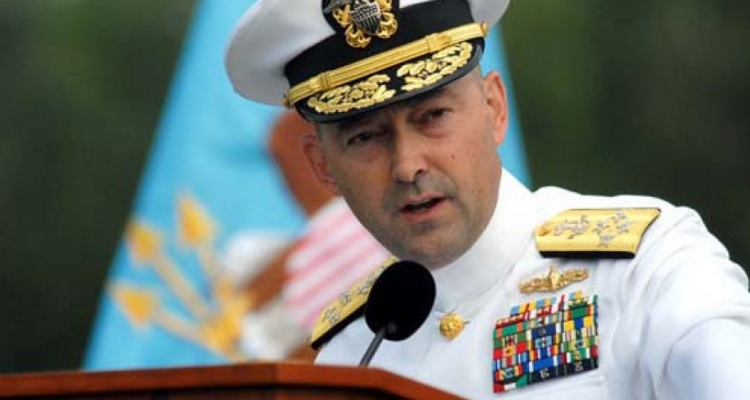
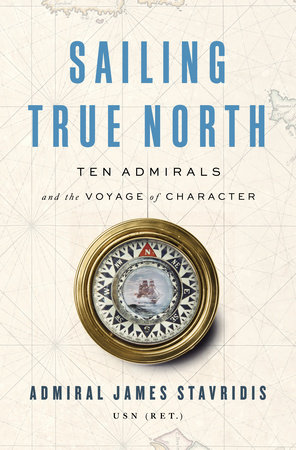
Retired Four-Star Admiral James Stavridis served as the 16th NATO Supreme Allied Commander – a function once occupied by the legendary General Dwight D. Eisenhower. In 2016, it was reported that he was vetted as a potential running mate for Democratic presidential candidate Hillary Clinton. He recently published an excellent book Sailing True North: Ten Admirals and the Voyage of Characterwhich I recently had the privilege – and tremendous pleasure – to review here on this blog.
Having always been attached to the Fourth of July celebrations because of my deep admiration for the United States, it was my intention of publishing a special interview for the occasion. Admiral Stavridis generously accepted to answer my questions and I’m profoundly grateful.
There is absolutely no doubt in my mind that this book would be an excellent holiday read. Happy Fourth of July to all my American friends!
Here is the content of this insightful interview.
We are headed into a new Cold War with China. That seems inevitable now, but we need a strategy to avoid it turning into a shooting war.
In Sailing True North, one of my favorite chapter (with the one devoted to Nelson) is the one about Zheng He. What do you think of the current tense situation with China and how do you think we should deal with that?
We are headed into a new Cold War with China. That seems inevitable now, but we need a strategy to avoid it turning into a shooting war. That will require a mix of diplomacy, military deterrence, tech savvy, economic tools (both in competition with China and in encouraging other nations to avoid Chinese “debt traps”). In essence, we should confront China where we must (cyber, trade, tariffs, their claims of “owning” the South China Sea) but cooperate where we can (environment, pandemics, arctic trade routes). It will be a difficult and at times a dangerous passage. My next book, In Face, out in March 2021, is a novel about … a war with China! It is a cautionary tale, and let’s hope we don’t find it turning from fiction to fact before our eyes. Here’s a link to the Amazon page.
In the book, there are several references to religion, one to the Conclave, the other to John XXIII and Thomas Aquinas. I might be wrong, but I assume you are a Catholic and that faith seems to have had a significant impact on your journey. Am I wrong? Would you say that faith might also be an important buoy on the voyage of character?


 In Sailing True North, one of my favorite chapter (with the one devoted to Nelson) is the one about Zheng He. What do you think of the current tense situation with China and how do you think we should deal with that?
 BookMarc