The best books, their authors and the great people who inspire these stories / Les meilleurs livres, leurs auteurs et les grand.e.s de l'histoire qui les inspirent.
From Pearl Harbor to the neutralization of Osama bin Laden, every US President is confronted with crises. Any one of them also needs to manage relations with foreign leaders. Hence, a need for an organized mechanism and apparatus to navigate the traffic and make sure that POTUS can take the pulse of the world at a moment’s notice. This is made possible thanks to a vital institution, whose history is brilliantly recounted by former Clinton administration official and ABC host George Stephanopoulos in The Situation Room: The Inside Story of Presidents in Crisis (Grand Central).
Before its establishment, Presidents monitored world events on an ad hoc basis. For any military history enthusiast, the depiction of Franklin D. Roosevelt’s wheelchair being pushed in a former billiard room to consult maps pinned on the walls to monitor developments unfolding during World War II is captivating. Like so many other things, John F. Kennedy would be an innovator by creating the Situation Room in light of the 1961 Bay of Pigs disaster. Every one of his successors would rely on this evolving institution to accompany the United States’ presence on the world scene.
The most important takeaway from the book relates to the notion of the “three Ps”. The Situation Room is: 1) a place where information is gathered, processed, analyzed and decided upon; 2) it regroups people who serve the Presidency in a selfless and non-partisan way and; 3) a process revealing how every commander in chief manages the affairs of the world.
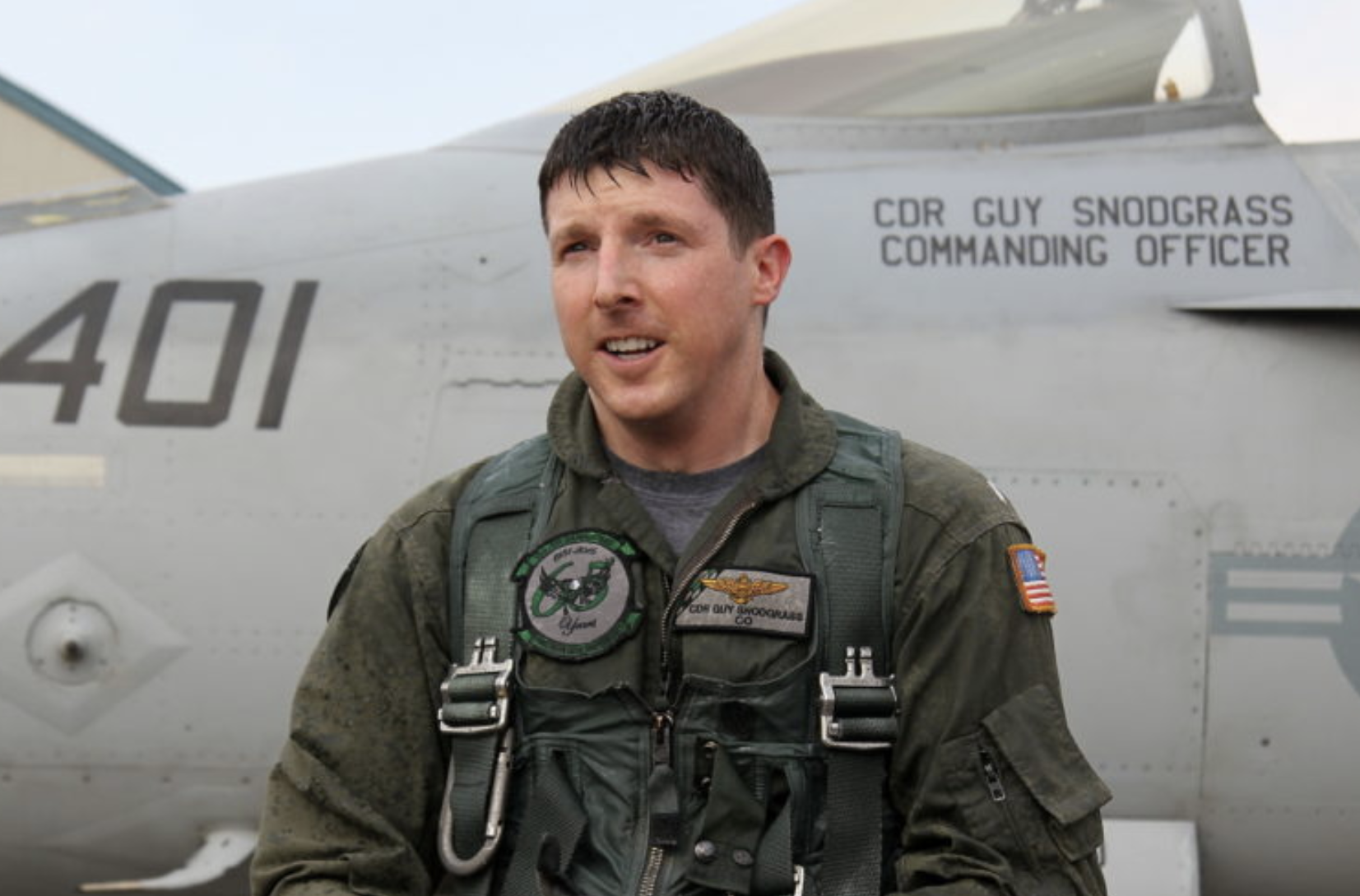
Commander Guy M. Snodgrass (USN, Retired), author of Holding the Line: Inside Trump’s Pentagon with Secretary Mattis.
In the process of writing my review of his excellent book, Holding the Line: Inside Trump’s Pentagon with Secretary Mattis, I got in touch with Commander Guy M. Snodgrass (USN, Retired), asking if he would agree to respond to a few questions for my readers. Despite a busy schedule and numerous media requests in relation with his book, he kindly accepted. I’m both grateful and impatient to put my hands on his upcoming book.
Commander Snodgrass, what’s your favorite political memoir, apart from Peggy Noonan’s (I assume it’s on the top of your list)?
All Too Human: A Political Education by George Stephanopoulos.
His favorite bios are the ones written about Henry Kissinger and George H. W. Bush
What’s your favorite biography? (My little finger tells me it might be “Kissinger” by Walter Isaacson).
Either Kissinger by Walter Isaacson (for it’s no-holds portrayal of Kissinger) or Power and Destiny by Jon Meacham (the biography of former President George H. W. Bush).
Given your past career, you certainly nourish an interest in military history? What’s your favorite book in that category?
I’ll give you the standard TOPGUN answer to your question: it depends. I have a lot of ‘favorites’ depending on the application or topic at hand. Top three are: Eisenhower At War by David Eisenhower, The Nightingale’s Song by Robert Timberg, and The Encyclopedia of Military History by Ernest and Trevor Dupuy. For fun I’ll throw in Robin Olds’s Fighter Pilot.
NATO Secretary General Jen Stoltenberg is largely unflappable, calm under pressure, and a gifted politician who never seemed to be a loss for words during a press conference.
During your tenure with Secretary Mattis, which international personality (military or political) left the best impression on you and why?
Jen Stoltenberg, Secretary General of NATO. He is largely unflappable, calm under pressure, and a gifted politician who never seemed to be a loss for words during a press conference.
The U.S. must find ways to coexist with both nations (Russia and China) on the world stage while holding the line with regards to U.S. interests.
I’d be very curious to know if you share Henry Kissinger’s vision about Russia and China? (I would have loved to read more about it in your book, but I understand it was not its scope)
No, at least not the way Kissinger views them now. Russia and China actively work to subvert U.S. influence around the world. Kissinger is far too eager to rush into their arms from what I’ve seen from him in recent years. Regardless, the U.S. must find ways to coexist with both nations on the world stage while holding the line with regards to U.S. interests.
Are you working on another book or is it something you are planning?
I was raised to put service before self, which is why a military career was so satisfying. I’m certainly open to pursuing a pathway that leads to a return to public service.
Would you consider a run for political office in the future?
Would I? Possibly. Both U.S. political parties are incredibly unsettled at the moment, so I have a hard time determining if recent shifts in platforms are permanent or merely a reaction to President Trump. I was raised to put service before self, which is why a military career was so satisfying. I’m certainly open to pursuing a pathway that leads to a return to public service. In the meantime, it’s an honor to be able to publish and make a positive impact in the lives of others.


 BookMarc