The best books, their authors and the great people who inspire these stories / Les meilleurs livres, leurs auteurs et les grand.e.s de l'histoire qui les inspirent.
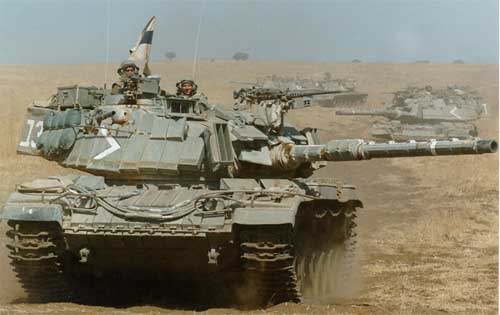
Of particular interest in these news is the fact that the M60’s upgrade would be realized using Israeli expertise, marking “the first Turkish-Israeli defense deal after the two former allies froze their diplomatic ties in 2010 but agreed on détente recently.” But it would not be a first, since a previous upgrade realized by Israeli Military Industries occurred in the 1990s.
Those who follow military affairs and the Middle East will also remember that, last April, a Turkish M60T tank – “[…] a version of the US-made tank upgraded by Israeli Military Industries (IMI)” – survived an anti-tank attack launched by soldiers of the Islamic State using a 9K129 Kornet ATGW.
It goes without saying that Ankara’s decision to use Israeli military expertise in its upgrading of the Armed forces is not only savvy to contribute to a better political climate in the region but also wise in terms of providing its troops with the best possible equipment.
I’m always happy when The Journal of Slavic Military Studies releases a new issue. Since 80% of the Wehrmacht losses occurred on the Eastern Front, I’ve always thought it is primordial to be interested in that vital aspect of World War 2.
The current issue of the JSMS features a very interesting article by Valerii Nikolaevich Zamulin about the difficulties related to the supply services before the battle of Kursk.
Since the soldier of the Red Army was the one who carried the burden of fighting the Germans, it is astonishing to read about those: “[…] tens of thousands of men each day who were under the stress of moral danger were unable to receive the most basic needs – a clean uniform and a decent meal.”
We can also refer to those commanders who “[…] bullied and mistreated subordinates, who were daily shoveling dozens of cubic meters of earth, erecting defensive lines, while being half-starved, unwashed for several weeks, and drenched in sweat in winter tunics and trousers.”
Wasn’t it Napoleon who declared that: “An army marches on its stomach”? Under those circumstances, the soldiers of the Red Army had a tall order.
General Nikolai Vatutin – commander-in-chief of the Voronezh front – had to find a solution to this situation and to other challenges, like lack of transport and replacement issues, encountered by the Red Army in that sector before the battle.
Against all odds, Vatutin succeeded.
Along with his subordinates, “[…] they managed to organize the system of rear services on an acceptable level”, they “[…] expanded the infrastructure of the territory where the Voronezh Front’s armies deployed and practically from scratch managed to create a logistics system that supplied the troops with everything necessary” and they ensured that “[…] all of the rifle divisions and the artillery and tank unites were not simply replenished but essentially brought back to table strength […].”
Under heavy duress, the Red Army soldier was therefore given the tools to fight with gallantry against his enemies.
Zamulin’s article is truly fascinating and deserves to be read by any student of the Eastern Front and the Red Army.
One of the things I love the most as a military history enthusiast is to read articles published in the British Journal of Military History.
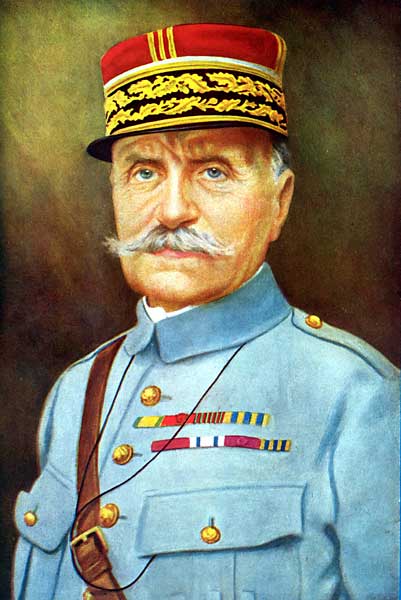
In its last issue, the Journal featured a fascinating article about Ferdinand Foch – the unsung hero of the First World War – by Australian historian and author Elizabeth Greenhalgh.
She writes that, in 1916, on the occasion of the Battle of the Somme, “Foch learned much about alliance warfare and worked hard to build a relationship with [Field Marshal Douglas] Haig that benefited him as Generalissimo in 1918.” Without question, that year was a difficult one for the French General. He was overruled by Joffre in his choice of the sector where he would intervene, he knew he did not possess the required resources to achieve success and the Battle of Verdun reduced the role of the French army on the Somme. To cap it all, he was sacked from his command of the Northern Army in the middle of the month of December. Things could hardly get worse. But what could have been the end of the road for many was a learning curve for the future Marshal. The success of 1918 was forged in the difficult moments of 1916.
In sum, a fascinating article that you can’t miss if you’re interested in military history or World War I.
And since the whole content of the Journal is free, you have no reason to miss it.
King and Country item NA256 resting on the second tome of Rory Muir’s biography of the Duke of Wellington, with the Union Jack flag in the background.
Happy Birthday to the Duke of Wellington, Arthur Wellesley,victor of Waterloo. An extraordinary figure whose unparalleled contribution helped saved Europe and the world from Napoleonic hegemony and tyranny. He would be 247 years old!
“Even though its influence tends to diminish, the army still occupies a central role in Israeli society. To better understand its importance, we must reiterate that more than 10% of the Jewish population either serves in the army or regularly serves in the army reserves, which makes Israel the most militarized country in the Middle East. (my translation)” (p. 8).
For that reason, many important military figures also played a dominant role in public life. The names of Moshe Dayan, Yitzhak Rabin, Ehud Barak and Ariel Sharon are the better known in that category and easily come to mind in any discussion on that topic. All in all, few other countries can count on so many military figures in key civil leadership positions.
Which inevitably brings us to politics. Commenting on the results of the recent legislative elections for the Israeli left, Arik Henig perceptively wrote: “Since the 1977 political upheaval, Labor won the elections only twice, when it was headed by two former IDF chiefs of staff: Yitzhak Rabin in 1992 and Ehud Barak in 1999. […] When will [the people of the Labor party] they learn that the Israeli public prefers to be led by chiefs of staff?”
In other words, the Israel left needs a former IDF chief of staff if it wants to expect to return to success on the electoral battlefield.
Many will be tempted to perceive this observation as military fetishism. But it’s not the case. In a post-election analysis, Daniel Kurtzer, an academic who served as US Ambassador to Israel from 2001 to 2005, summarized the three challenges that must be met by the Labor party, if it wants to leave the opposition benches in the near future:
“First, it must persuade Israeli voters, especially those of Russian origin, that it can handle Israel’s security challenges at least as well as, if not better than, the right. (Former military intelligence director Amos Yadlin was recruited by Herzog’s party to be its security face, but his voice was almost inaudible during the campaign.) Second, the left must induce the Sephardim to put past grievances behind and to vote with their pocketbooks. And, third, it must overcome the perception that support for peace with the Palestinians is akin to appeasement and therefore endangers Israel.”
The Prime ministership of Likud leader Benjamin Netanyahu will not last forever and the opposition will inevitably become tired enough with loosing elections that they will decide to introduce a new figure whose presence, values and positions will fill the gap between the expectations of Israelis and the Labor party.
Much like Catholics like to observe various Cardinals to try to find out who might become the next Pope, anybody who’s minimally interested in Israeli politics and its future would be well-advised to keep an eye in the ranks of former IDF chiefs of staff to spot who might trade the image of the olive green military outfit general for the statesman persona.
Tsahal has always been an integral part of Israel’s history. And it will continue to play a determinant role in its future.



 BookMarc