
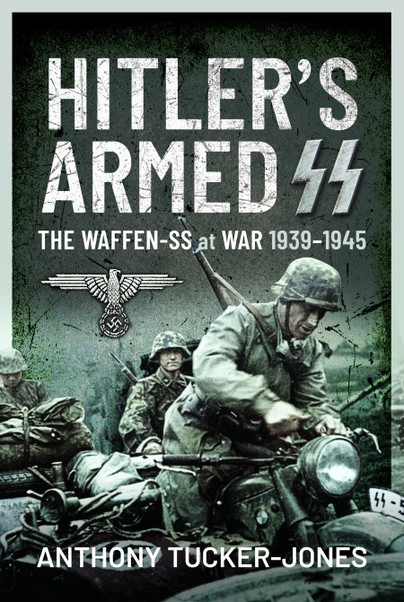
The SS are still claiming victims to this day. Not on the battlefield, of course, but because of their nefarious legacy. Their ghosts have been sighted last week in the Canadian parliament when a former member of the Waffen-SS 14th (Galician) Division was hailed as a hero. The Speaker of the House of Commons, Anthony Rota, had no choice but to resign because of the storm his praise about 98 years old Ukrainian SS veteran Yaroslav Hunka generated. Truth be told, all those applauding were most certainly unaware of his past military service in Hitler’s elite troops.
Which brings back the crucial notion of education and awareness.
The events in Canada’s Nation Capital and the storm it legitimately generated occurred as I was completing my reading of Anthony Tucker-Jones’ book Hitler’s Armed SS: The Waffen-SS at War 1939-1945 (Pen & Sword Military).
One of Hitler’s main traits was that he fostered rivalry around himself. Loathsome of the military establishment, notably because it regrouped several characters born into the German aristocracy, the founder of the Third Reich created the Schutzstaffel as a counterweight. His investment would prove worthy. The members of the SS – who fought even after the Führer rendered his last breath after committing suicide in his bunker – had been his most committed and fanatical fighters.
Continue reading “The Devil’s Servants”
 BookMarc