How Bill Slim Turned the Tide

Any passerby on Whitehall in London walks in front of three statues representing towering British military figures of World War II. The most iconic one is naturally the one representing Viscount Montgomery, the victor of Alamein. Then there’s one of Viscount Alanbrooke, who headed the British Army during the conflict. The third and last one along the way – if you come from the House of Commons – depicts Viscount Slim, the victor of Burma. While I have devoured countless articles and books about Monty and read many things on Alanbrooke, my knowledge about the last member of the trio is scant at best. Mea culpa.

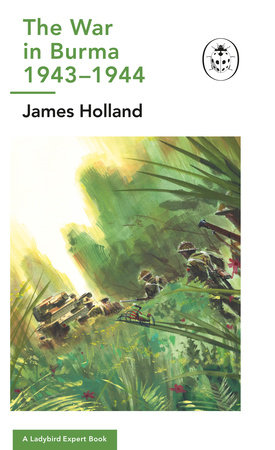
A few weeks ago, The War in Burma 1943-1944 by renowned military historian James Holland came to my attention. I dove right into it with delight. True to his eloquence and unparalleled expertise (I’m a huge fan of his documentaries and I have another book of his on my shelves), this engaging historian broadened my horizons about an aspect and a figure of World War II about which I knew too little.

Published as part of the Ladybird Expert Book collection, the most recent addition to James Holland series is beautifully enhanced by Keith Burns’ stunning and evocative illustrations summarizes the significance of the much too unknown South-East Asian theatre of World War II. Northwest Burma, the prolific historian writes, was “one of the most inhospitable places to fight in the world.” By the end of 1944, the Japanese were on the move to smash British troops on their way to India, hopefully end the British Raj and thwart the delivery of essential supplies to Chiang Kai-shek’s Nationalists in China who were also fighting the Japanese toe and nails. The stakes were unparalleled, and the British couldn’t afford to lose any ground. Outnumbered and demoralized, how could they reverse the tide?

Continue reading “How Bill Slim Turned the Tide”

Patton was Destined for War

“Battle is the most magnificent competition in which a human being can indulge”, said General George S. Patton. Within four years, the famous World War II warlord went from soul-searching about his future in the profession of arms to being one of the main pugilists who brought Nazi Germany on its knees in 1945.

The full measure of Patton’s greatness and vanity are brought to life in Martin Dugard’s last book Taking Berlin: The Bloody Race to Defeat the Third Reich (Caliber), between the covers of which the author doesn’t hide his admiration for the legendary soldier who believed he was the reincarnation of a Roman legionnaire. Full disclosure, I think we can easily forgive this inclination, because it is all too easy to admire the character, a feeling to which I willingly plead guilty.

In the same manner as in his previous book Taking Paris, the author – who collaborated with journalist Bill O’Reilly to write several books – calls upon an army of pertinent details to bring his narrative to life. I personally discovered that the meaning of the Belgian town of Spa’s name “is an acronym of the Latin Salus per Aquam, meaning “health from water” or that the word “Roger” pronounced on the radio means “received”, but is also an acronym for “Received Order Given, Expect Results”.

Continue reading “Patton was Destined for War”

The Indomitable Prisoners of Colditz

Since I was a kid, The Great Escape featuring Steve McQueen, James Garner, Charles Bronson, and Richard Attenborough (in the role of the legendary Roger Bartlett – the legendary Roger Bushell in real life) has been one of my favorite movies. In 2015, when I lived in Poland, I visited the Stalag Luft III Prisoner Camp Museum in Zagan – 5 hours west of Warsaw. That memorable visit was a real pilgrimage in the footsteps of those gallant men who refused to remain behind German barbed wired.

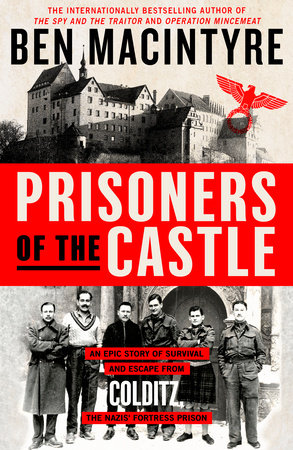
I was therefore overjoyed to read bestselling author Ben Macintyre’s book Prisoners of the Castle: An Epic Story of Survival and Escape from Colditz, the Nazis’ Fortress Prison (Signal).

I often say that Ben Macintyre would find a way of making the history of the can of Coke enthralling. His book Rogue Heroes features among my very favorites. I, therefore, did not doubt that I was in for quite a treat when I opened Prisoners of the Castle. Even those high expectations were surpassed because the author brings the reader to a new understanding of the war experience.

Continue reading “The Indomitable Prisoners of Colditz”

The Source of JFK’s Greatness

For as long as I can remember, November 22 has always been a sobering date on my calendar. My late father, like many of his generation, revered John F. Kennedy. He owned several pieces of memorabilia. He also vividly remembered where he was and what he was doing on that fateful day when his favorite statesman tragically fell under the bullets. Before the Roosevelts, Truman, LBJ, Reagan and both Presidents Bush – commanders in chief for whom I have tons of admiration – JFK was the first one who piqued my intellectual curiosity.

I cannot proclaim that I have read every book regarding the main figure of contemporary Camelot, but I always make a point of skimming the pages of as many as I can. Mark K. Updegrove is a presidential historian whose work I have always been interested in. I was, therefore, impatient to grab a copy of his recent book Incomparable Grace: JFK in the Presidency. I was expecting a good read because the author has an enthralling writing style. But I got much more than that.

Continue reading “The Source of JFK’s Greatness”

Planet Strongman

In his 2020 bestseller Rage, Washington legendary journalist and author Bob Woodward recalls discussing the direction of the Trump administration’s foreign policy with the President. Mentioning his dealings with Turkish President Recep Tayyip Erdogan regarding the war in Syria, the commander-in-chief said: “I get along very well with Erdogan, even though you’re not supposed to because everyone says ‘What a horrible guy’. But for me it works out good. It’s funny the relationships I have, the tougher and meaner they are, the better I get along with them. You know?”

In his captivating recent book The Age of the Strongman (Other Press), Financial Times foreign affairs commentator Gideon Rachman quotes former National Security Affairs specialist Fiona Hill when she declared that her former boss was seduced by “autocrat envy”. From Jair Bolsonaro (in Brazil) to Vladimir Putin, as well as Saudi Crown Prince Mohammed bin Salman (MBS), the 45th President got along quite well with those whom he perceived as being strong, an expression easily interchangeable with being autocratic. This trend was confirmed early last month when Hungarian Prime Minister Viktor Orbán took the stage at the Conservative Political Action Committee (CPAC) gathering in Dallas, Texas.

Continue reading “Planet Strongman”

True heroism can’t be found in the absence of risk

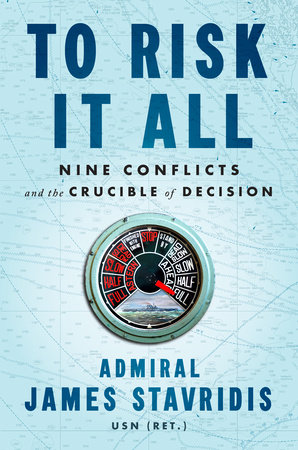
I discovered Admiral (US Navy – retired) James Stavridis as an author at the beginning of the pandemic two years ago. This warrior-intellectual always amazes me by the depth of his thought and the finesse of his writing style. His last book, To Risk It All: Nine Conflicts and the Crucible of Decision (Penguin Press) depicts nine characters – 8 men and 1 woman – who left their mark on US military history.

You can almost hear the lyrics of the US Marines hymn and its reference to the shores of Tripoli when you read about Lieutenant Stephen Decatur’s expedition in North Africa to save US Navy comrades detained by pirates and you want to watch Captain Philips with Tom Hanks another time after completing the chapter devoted to Rear Admiral Michelle Howard who was in command of the successful rescue operation in the Gulf of Aden.

But my favorite – by far – was Cook Third Class Doris “Dorie” Miller. If there is one chapter I would love to see the author expand in a whole book, the life and lessons of that exceptional warrior would be my choice. Think about it for a moment. You’re an African-American and you enlist in the US Navy to better support your family, seeking advancement out of the segregationist South. But you must still endure sanctioned racism. Admiral Stavridis reminds the reader that “the high-tech specialties of communication, gunnery, navigation, and engineering were closed to African Americans; in fact, the only jobs they were permitted to do were cooking, cleaning, and serving as valets for the senior officers in the ships.”

Continue reading “True heroism can’t be found in the absence of risk”

One man can change the course of a battle

“The vast majority of men receiving the Medal of Honor in World War II belonged to the infantry but the American public was fixated on marines and the glamour boys in the air corps with their nice blue uniforms”, writes acclaimed author and historian Alex Kershaw in his recent book Against All Odds: A True Story of Ultimate Courage and Survival in World War II (Caliber).

Undoubtedly, Alex Kershaw is the master of the battle narrative. His books always remind me of Sir John Keegan’s classic The Face of Battle, in detailing the reality and sacrifices of fighting soldiers. Between the covers, he details the courageous and selfless feats of Maurice “Footsie” Britt, Michael Daly, Audie Murphy and Keith Ware. All these men were part of the “[…] 3rd Division, the legendary “Rock of the Marne” outfit that had saved Paris in July 1918 by blocking the last great German offensive of World War I.” The men of that Division were sent on the first line to absorb a strong German attack along the Marne River in April 1918. The stubbornness of their defense earned them the famous nickname. Their successors in World War II would be no different.

Continue reading “One man can change the course of a battle”

“Putin is clearly trying to ignite a larger conflict” – Martin Dugard

Author Martin Dugard (source: MartinDugard.com)

After the publication of my review of his excellent book Taking Paris: The Epic Battle for the City of Lights (Caliber), Martin Dugard kindly accepted to answer some questions for this blog. I feel privileged for the interview with an excellent and engaging author, who is also the coauthor of Bill O’Reilly’s Killing Series.

Here is the content of our exchange.

____________

Mr. Dugard, where did the idea of writing Taking Paris originate from?

The book actually started as Taking Rome but as the research expanded it became obvious that the story of Rome worked more nicely as a small section in the larger context of the 1940 fall of Paris and 1944 liberation.

Continue reading ““Putin is clearly trying to ignite a larger conflict” – Martin Dugard”

A striking parallel between Zelensky and de Gaulle

I initially wanted to review Taking Paris: The Epic Battle for the City of Lights by Martin Dugard last February, but then Vladimir Putin launched his troops against Ukraine and I had to shuffle my publications calendar. As you will see, there are fascinating parallels between the fate of France in World War II and the current situation in Ukraine, if only at the leadership level.

After the invasion of France by the Germans in May 1940, the country is in disarray and its statesmen have given up. In the ashes of defeat, a temporary brigadier general will rise to the occasion. Fleeing his homeland on board an airplane provided by British Prime Minister Winston Churchill, Charles de Gaulle left with a “[…] hastily packed suitcase contain[ing] four shirts, one pair of pants, and a single photograph of Yvonne and the children, whose current whereabouts he does not know.” I couldn’t help but think of the same predicament in which Ukrainian President Volodymyr Zelensky found himself on February 24th. As did de Gaulle, he chose to fight, but from home.

Continue reading “A striking parallel between Zelensky and de Gaulle”

Zelensky is living up to what Churchill called “the level of events”

Source: Michael de Adder (@deAdder) / Twitter

Andrew Roberts is the contemporary authority on Winston Churchill. He gave an interview yesterday to Michael Crick for the Mail Online about the similarities between the Greatest Briton and Ukrainian President Volodymyr Zelensky, his contemporary disciple.

Here are a few lines from this insightful article:

“Not only has Zelenskyy stayed in Kyiv, as Churchill did in wartime London, but he is seen on the streets, rallying his people with speeches, and recognizes all the perils and risks.

‘It’s straight out of the Churchill playbook,’ Roberts tells Mail+. And Zelenskyy is showing extraordinary bravery when a team of Russian assassins dressed in Ukrainian army uniforms is said to be out to kill him. That’s not a hazard Churchill faced.”

Continue reading “Zelensky is living up to what Churchill called “the level of events””