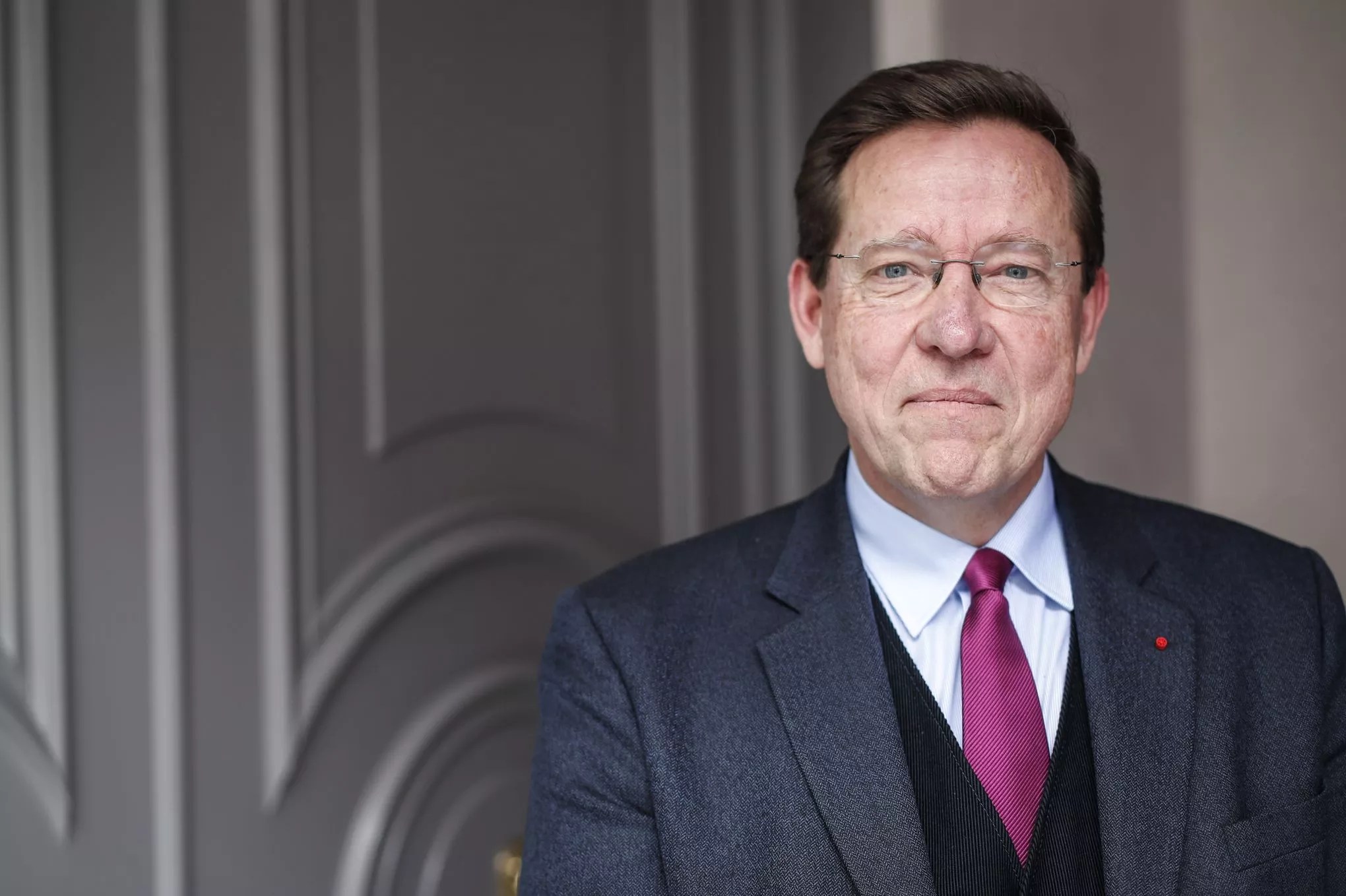
Vladimir Poutine dans les pas de Nicholas II?

Le géopoliticien Pierre Servent (Le Figaro)

Dans la foulée de ma recension de son interpellant livre Le monde de demain, le spécialiste de la géopolitique, historien et auteur Pierre Servent a accepté de m’accorder une entrevue en début de semaine. Le lendemain de l’entrevue, on dévoilait qu’il était lauréat du Prix du livre de géopolitique 2023 – prix spécial du jury – pour cet ouvrage saisissant d’actualité.

Nous l’en félicitons chaleureusement et le remercions vivement pour la générosité de son temps.

______

M. Servent, nous avons trop souvent l’impression en Occident que Vladimir Poutine est une anomalie de l’histoire. Dans votre livre, vous donnez des clés instructives pour comprendre que ce n’est pas le cas. Est-ce qu’il a le sens de l’histoire?

Il n’est pas connu pour être un féru d’histoire dans le sens où il n’a pas fait d’études en ce sens. On peut être féru d’histoire sans avoir fait des études universitaires ou autre, mais on ne note pas dans sa carrière de témoignages de ses compagnons, de ses proches, de toute l’équipe qu’on peut appeler aussi le gang de Saint-Pétersbourg à l’époque à l’effet que Vladimir se plonge dans un livre d’histoire. Il n’est pas connu pour être un passionné d’histoire.

Dans la période plus contemporaine, on trouve des indications intéressantes dans le livre notamment de Michel Eltchaninoff qui a été publié il y a quelques années qui s’intitule Dans la tête de Vladimir Poutine. Là, il semble qu’un certain nombre de personnages ayant eu des connaissances historiques approfondies mais dans un sens très particulier par rapport à l’histoire de la Russie et notamment sur son versant asiatique. La Russie est une puissance euro-asiatique et il y a toujours eu dans l’histoire du pays des tensions entre les pro-occidentaux et ceux qui, au contraire, considéraient que la Russie était une puissance asiatique.

poursuivre la lecture

Planet Strongman

In his 2020 bestseller Rage, Washington legendary journalist and author Bob Woodward recalls discussing the direction of the Trump administration’s foreign policy with the President. Mentioning his dealings with Turkish President Recep Tayyip Erdogan regarding the war in Syria, the commander-in-chief said: “I get along very well with Erdogan, even though you’re not supposed to because everyone says ‘What a horrible guy’. But for me it works out good. It’s funny the relationships I have, the tougher and meaner they are, the better I get along with them. You know?”

In his captivating recent book The Age of the Strongman (Other Press), Financial Times foreign affairs commentator Gideon Rachman quotes former National Security Affairs specialist Fiona Hill when she declared that her former boss was seduced by “autocrat envy”. From Jair Bolsonaro (in Brazil) to Vladimir Putin, as well as Saudi Crown Prince Mohammed bin Salman (MBS), the 45th President got along quite well with those whom he perceived as being strong, an expression easily interchangeable with being autocratic. This trend was confirmed early last month when Hungarian Prime Minister Viktor Orbán took the stage at the Conservative Political Action Committee (CPAC) gathering in Dallas, Texas.

Continue reading “Planet Strongman”

Drone Wars: The Poor Man’s Air Force

A few years ago, I was intrigued to read that President Barack Obama ordered 10 times more drone strikes than his predecessor, President George W. Bush. Since their appearance, drones have become omnipresent on the battlefield and not a week goes by without a news article about their feats.

Incidentally, drones have played a role in the war of aggression launched against Ukraine by Russia in the last few weeks. They are also used in several theaters around the world. In a nutshell, “the drones developed by Israel and then revolutionized by America have now proliferated everywhere”, writes Seth J. Frantzman in Drone Wars: Pioneers, Killing Machines, Artificial Intelligence, and the Battle for the Future (Bombardier Books).

The author writes that everyone wants drones, notably because they are cheaper than airplanes and reduce the potential for human casualties. They have become the “poor man’s air force”. Hence, their use by Houthi rebels in Yemen in the cross-fight between Iran and Saudi Arabia.About this conflict, the Jerusalem Post correspondent and analyst reminds us of a chilling episode when Houthi drones attacked an Aramco facility in Saudi Arabia – “some 1,000 kilometers from Houthi frontlines in Yemen” – in August 2019. The kingdom which ranked in 6th place in terms of military expenditures in the world in 2020 was defenseless in front of this incursion. A real military representation of the biblical tale of David versus Goliath and a manifestation that superpowers are not immune from an attack performed by a “poor man’s air force”.

Continue reading “Drone Wars: The Poor Man’s Air Force”