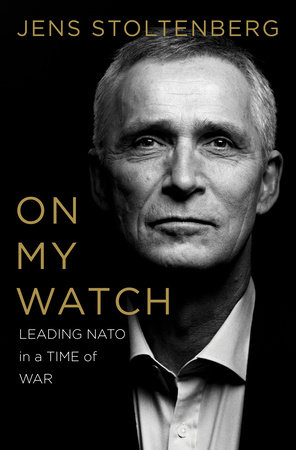
Jens Stoltenberg and the “Trump Effect”

Prima facie, the relationship between President Donald Trump and NATO is delicate. The role of Secretary General of the organization is anything but a sinecure. Yet the relationship between the resident of Avenue Louise in Brussels and the occupant of 1600 Pennsylvania Avenue in Washington stands out for its closeness. In Le Figaro, the astute journalist Florentin Collomp even wrote that Mark Rutte “is probably the only European capable of influencing the will of the President of the United States.” And as Collomp notes, it was following a meeting with NATO’s Secretary General at the Davos Forum that Donald Trump announced his dramatic reversals on Greenland and tariffs. Personal relationships are clearly crucial in international relations—especially with the US President. We could even say any US President.


This may come as a surprise to some, yet the closeness between the American statesman and the captain of the NATO ship fits within a clear continuum. In his memoirs, Jens Stoltenberg—former Norwegian Labour Prime Minister and current Finance Minister—describes a relationship that, exhausting as it may have been, proved beneficial. Stoltenberg, who accepted the post at Barack Obama’s invitation and had his term renewed under both Donald Trump and Joe Biden, candidly admits in his memoir, On My Watch: Leading NATO in a Time of War (Norton) to having adopted a strongly critical stance toward the United States in his youth. He also confesses to underestimating the chances of victory of the real estate mogul. Jens Stoltenberg is certainly no MAGA sympathizer—but his assessment is unambiguous: “When Donald Trump’s first term as President came to an end, NATO was stronger than it had been when he took office.” Intriguing, isn’t it?

Continue reading “Jens Stoltenberg and the “Trump Effect””

USSR and Red Army contributions were essential in defeating Hitler

With the risk of sounding repetitive, I feel it is important to stress the contribution of the USSR to WW2. With the Western countries’ voluntary amnesia when the time comes to commemorate and express gratitude for the sacrifices endured by the Soviet people, I strongly believe certain truths need to be reminded, often. I came upon these very interesting graphics yesterday on Twitter, which led me to the following blog. Even though they are in French, the images speak for themselves.

High and low estimations of war casualties, in the millions. source: www.les-crises.fr
High and low estimations of war casualties, in the millions. source: http://www.les-crises.fr

For every American soldier killed, 60 Soviet soldiers were killed. source: www.les-crises.fr
For every American soldier killed, 60 Soviet soldiers were killed. source: http://www.les-crises.fr

Without the Red Army, winning World War II would have been just impossible. True, Winston Churchill provided with the moral courage to carry on during the darkest hours of the conflict, notably at the very beginning and the United States provided essential material through the lend-lease agreements. But, when you look at these two very eloquent graphics, you cannot fail – if you are intellectually honest – to realize that the Soviet boots were essential to win the war on the ground.

I use the word sad, but I should write shameful. You can’t rewrite history with the blood of those who fell and the sweat of those who fought.

Merci, soldat soviétique!

Dans le contexte actuel de confrontation entre l’Occident et le monde russe, il est facile de sombrer dans un sentiment anti-Moscou primaire et dénué d’une profondeur dépassant les grandes lignes du discours ambiant.

Mais éloignons-nous un instant des lignes éditoriales, des ateliers de rédaction de discours de chefs de gouvernement occidentaux ou des analyses des prétendus « experts » perchés dans leurs tours d’ivoire académiques à cent lieues de la réalité sur le terrain, pour nous pencher sur un fait indéniable.

Il y a de cela 70 ans, le monde était à la veille de vaincre le péril hitlérien. Sans les troupes soviétiques, nous n’aurions pu accomplir cette besogne.

Je prends à témoin l’historien militaire Jean Lopez qui, dans son excellent livre Opération Bagration : La revanche de Staline (été 1944) cite l’historien Rüdiger Overmans lorsqu’il évoque le fait suivant :

« Rappelons que, par année de guerre, les Occidentaux éliminent en moyenne 200 000 soldats allemands (tous fronts et toutes armes confondus), les Soviétiques presque 1 200 000. » (page 3).

Si les hordes nazies ont pu être stoppées, ce sont les soldats qui se battaient sous l’emblème du marteau et de la faucille qui en ont payé le plus lourd tribut.

Tâchons de ne pas l’oublier, alors que nous nous apprêtons à commémorer le 70e anniversaire de la victoire de 1945.

Si vous n’êtes pas familier avec la langue russe ou encore l’anglais, vous ne comprendrez peut-être pas les paroles de cette chanson dédiée aux anciens combattants soviétiques (russes), mais vous pourrez sans doute en deviner le sens, celui de la reconnaissance et du souvenir.