The best books, their authors and the great people who inspire these stories / Les meilleurs livres, leurs auteurs et les grand.e.s de l'histoire qui les inspirent.
In the Gregorian calendar, which we Catholics use, May 14th marks the anniversary of the rebirth of Israel. On that day, in 1948, David Ben-Gurion proclaimed the State of Israel at Dizengoff House (now known as Independence Hall) on Rothschild Boulevard in Tel Aviv.
Few years ago, I had the privilege of visiting this historical building. For any friend and supporter of Israel, this is a very humbling and profound experience. Mostly when you understand that, from there, Israel directly went to war against the Arab armies to guarantee its very survival.
Whatever your political inclinations (he was a left-winger and I’m a conservative), you can’t be indifferent to that giant of history. Ben-Gurion certainly was not the only one who contributed to the rebirth of Israel. But he was the man who paved the way to Independence Hall.
Permit me to come back on the subject of Victory Day celebrations and Russian (Soviet) veterans. I’m coming back on it because this is a neglected aspect of World War II history.
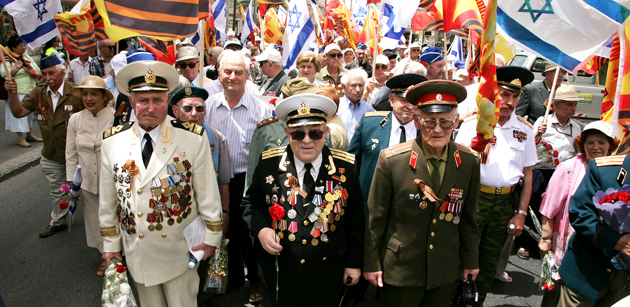
When I watched those Jewish-Israeli Soviet veterans marching in Israel last week-end, I started looking for some books or articles on this subject. After all, this blog is not called “Books and Bayonets” for nothing.
And I found an excellent article by historian Kiril Feferman about the “’The Jews’ War’: Attitudes of Soviet Jewish Soldiers and Officers Toward USSR in 1940-41” in The Journal of Slavic Military Studies(vol.27, no 4, 2014), which is edited by none other than military historian David M. Glantz.
This article covers the attitudes and motivations of Jewish soldiers who fought under the hammer and the sickle banner during WW2. Before the Nazi invasion of June 22, 1941, “[…] a minority of the Jewish military men held indifferent or even hostile attitudes toward the Bolshevik regime.” But that was to change.
The German attack against the USSR “[…] promptly transformed all Jewish soldiers and officers into the staunchest anti-Nazi force and hence, probably one of the most reliable groups in the Red Army. This occurred even before the knowledge of the Holocaust became widespread.”
What motivated them to act in such a way? A combination of the desire to be fully recognized as citizens of the Soviet Union, of avenging the persecution of the Jewish people by Nazis or even the fact that they simply had no alternative because they knew what would happen if they fell into the hands of the Nazis.
All in all and based on the works of other academics, Feferman observes that “[…] the Jewish contribution to the Soviet victory over Germany was not lower but probably even exceeded in relative terms that of other Soviet peoples.”
It is unfortunate, in the context of the Western discourse, that the essential contribution of the Red Army to the victory of 1945 is overlooked or undermined. It is also a fact that the Jewish soldiers contribution on the battlefield is a neglected area of collective memory.
It would be an act of legitimate and deserved gratefulness not to restrict this remembrance to a couple of days in May or in the few pages of an excellent academic journal.
When you talk or read about the Holocaust nowadays, there is a despicable tendency, among many people, including historians, of putting the blame solely on the back of the Nazis. As if they had accomplished their evil business alone. But the truth is different, for they had willing collaborators and executioners.
An article written by historian Yuri Radchenko and published in the most recent issue of Yad Vashem Studies provides a sad but revealing example of that situation, detailing the collaboration of the Ukrainian Auxiliary Police with the Nazi hordes. After detailing the various aspects of this deadly collaboration, the author concludes:
“[…] the involvement of the Ukrainian police in the Holocaust was not limited to the purely “technical” roles of escorting and guarding the Jews, as had been claimed by several modern Ukrainian historians. The Ukrainian police proved its effectiveness in the task of exterminating Jews, both under German control and on their own. Obviously, the German military and security bodies bear the primary responsibility for killing the Jews. However, without the cooperation of the Ukrainian policemen, who were familiar with the lay of the land, knew the local language and dialect, and had frequently lived in close proximity to Jews in the prewar years, the Nazis would have been unable to carry out their genocidal project on such a vast scale.”
Very revealing, notably in light of the revisionist currents who seek to downplay or deny the role of various local populations in the execution of the Holocaust.
Martin Sieff just wrote a brilliant book review in the Jerusalem Post about Monty’s Men, a reappraisal of the contribution of Marshal Montgomery’s forces during WW2 by British military historian John Buckley.
In my opinion, the most significant and insightful passage of that piece is the following:
“In addition to these stunning achievements, Israelis have never woken up to the crucial fact that Montgomery twice played a central, critical role in protecting the Yishuv, the Jewish community in Palestine in the pre-state years. Firstly, he saved them from massacre by suppressing the 1936-39 Arab uprising, the first true intifada. Then he rescued them from total genocidal extermination by annihilating the Nazi drive to conquer the entire Middle East at the Battle of Alamein, in November 1942.”
You can understand why the book review is titled “The Yishuv’s unlikely guardian angel”.
Even though I’m a huge fan on Monty, I have to admit that my knowledge about this part of his career is lacking. And I gather I’m not the only one.
In his recent book about Orde Wingate – who is held in very high esteem in Israel for his role forming the Special Night Squads (SNS), a unit in which Wingate recruited future legends like like Yigal Allon and Moshe Dayan – Simon Anglim briefly refers to Montgomery and his involvement in the military affairs of the Mandate:
“The other major factor [in fighting the Arab uprising] was the arrival in Northern Palestine’s of the British Army’s most capable and ruthless senior commander, Major General Bernard Montgomery, assuming command of the 8th Division, including the 16th Brigade, in December 1938. Montgomery’s favoured pattern of operations could have been lifted straight from Calwell or Simson: the British were ‘definitely at war’ and any return to civilian control could only follow the complete destruction of the rebels in battle. There was a resumption of cordon and sweep operations by mobile columns, with the specific aim of killing insurgents, and greater use than before of night-time raids on villages suspected of harbouring guerrillas , now involving all units, not just the Night Squads.” (p. 85).
Of course, this is not sufficient to quench my curiosity about Monty’s military role during the British Mandate in Palestine. But it’s a pretty good starting point.
And knowing that many – not to say most – of the British officials in Jerusalem were then harboring if not anti-Semitism at least a relatively high level of resentment towards the Jewish people, it’s good to know that Orde Wingate has company in Monty as friends of the Yishuv.
With the risk of sounding repetitive, I feel it is important to stress the contribution of the USSR to WW2. With the Western countries’ voluntary amnesia when the time comes to commemorate and express gratitude for the sacrifices endured by the Soviet people, I strongly believe certain truths need to be reminded, often. I came upon these very interesting graphics yesterday on Twitter, which led me to the following blog. Even though they are in French, the images speak for themselves.
High and low estimations of war casualties, in the millions. source: http://www.les-crises.frFor every American soldier killed, 60 Soviet soldiers were killed. source: http://www.les-crises.fr
Without the Red Army, winning World War II would have been just impossible. True, Winston Churchill provided with the moral courage to carry on during the darkest hours of the conflict, notably at the very beginning and the United States provided essential material through the lend-lease agreements. But, when you look at these two very eloquent graphics, you cannot fail – if you are intellectually honest – to realize that the Soviet boots were essential to win the war on the ground.
I use the word sad, but I should write shameful. You can’t rewrite history with the blood of those who fell and the sweat of those who fought.
Today, I wish I was in Moscow, most probably on Tverskaya street, to watch the impressive parade that is now unfolding to mark the 70th anniversary of the victory over the Nazi hordes – a victory made possible by the huge sacrifices consented by the Soviet people and the Red Army.
But since I’m not there, I’m watching victory parades of the past. Understandably, I’m more interested in the one that was organized in 1945. So it’s a pleasure for me to share these images with you!
For those of you who might have a bit more time on a Saturday, the second video (below) is much longer but no less interesting. As for the first one, the most powerful moment comes at 10 minutes when the Nazi flags and banners are laid down on the ground. Nobody could have marched on that day anywhere in Europe, if millions of Soviet and Allied soldiers had not fallen or poured their hearts into battle.
There is a sad tendency, these days, to rewrite history for political purposes.
In a recent book, French historian Philippe Richardot writes in his introduction: “The deciding factor of World War II is what occurred on the Eastern front” (my translation). And there is ample academic evidence to support this statement.
Alas, because of the current geopolitical context, in which many world leaders are opposed to Russian President Vladimir Putin, it is hard for many to resist the temptation to equate this situation with the intention of rewriting history.
Fortunately, there are people who are holding these revisionists to account.
“Most of the Holocaust survivors were saved by the Red Army. And they are live witnesses up until now. So it never happened in Israel anything like in Europe, nothing undermining the Russian part in the Second World War.
[…]
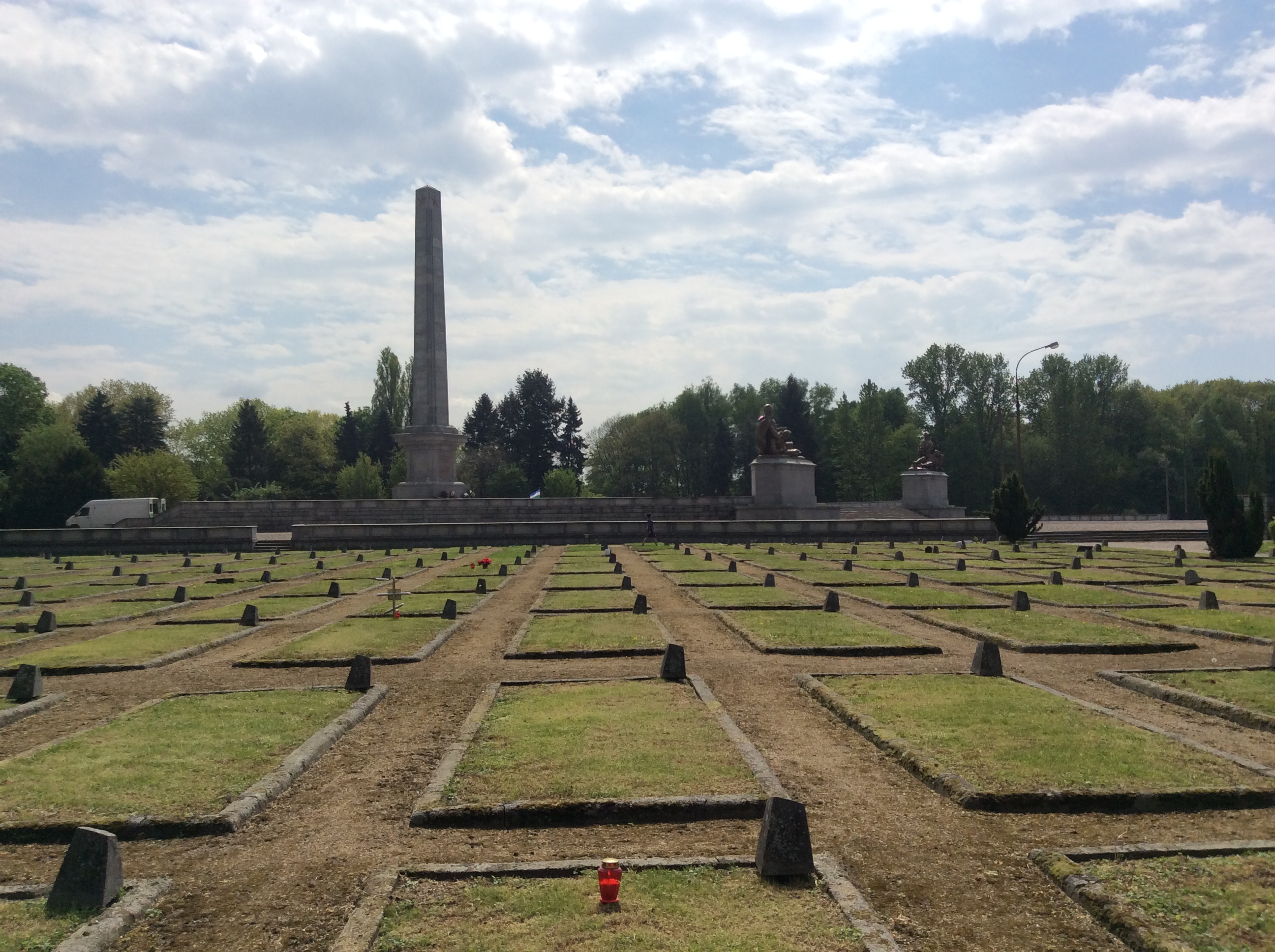
There are 39 memorials commemorating those who were responsible for this great victory, 39 memorials for the soldiers of the Red Army primarily. You don’t have anything like this in any other parts of the world. So today together with the Holocaust there is a memory of the great victory in Israel combined together.”
Scoring easy political points on the back of a leader you dislike is one thing, distorting history and betraying the memory of those who fell to ensure victory of barbarism and Nazism is another one. And it is unacceptable.
The Red Army deserves credit for the 1945 victory and we should never shy away from being grateful.
Jane’s is a gem of a resource for anybody interested in military affairs and analysis.
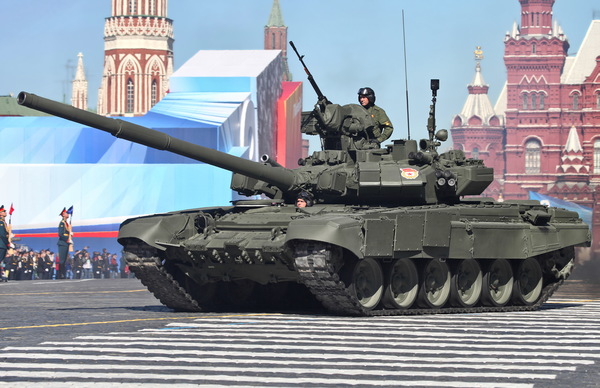
This video shows that, with new acquisitions for its land forces, the Russian army will benefit from a big increase in capability.
Watching it reminded me of a very interesting and revealing quote in Mark Urban’s new (and honestly excellent and impossible to put down) book, The Edge:
“But even if his [President Putin’s] planned military buildup cannot now be funded, Russia has already taken its forces to the point where it is the global leader in several areas. Equally important, given the need of any aspiring military power to match capability with intent, the Kremlin has shown the willingness to use them.” (p. 89).
And this disposition will only benefit from economic recovery.
While the countries in the West continue to play cheap political games with cutbacks in military resources.
According to a very interesting story published in the Jerusalem Post today, almost half of the Israelis polled are in favor of making May 9th, which is the day when Soviet Victory over Nazism is commemorated in Russia, a national holiday in Israel, too. Even more interesting is the fact that Yad Vashem (the Memorial and Museum to the memory of the victims of the Holocaust in Jerusalem) evaluates that no less than 1,5 million Jews took arms and fought barbarism during World War II. Here’s the eloquent example reported by the JPost:
“Anatoli Shapiro, for example, a Red Army officer who commanded the division that liberated Auschwitz, was the first man to open the gates and inform its prisoners ‘the Red army has come to liberate you.’ His story reflects most of all the essence of the Jewish fighters, fighters who didn’t just ask to bring freedom to Europe, but fighters who fought to save their brothers and sisters.”
There is ample academic research (you could fill a few bookshelves of books about that subject) supporting the fact that, without the USSR, it is doubtful that the Allies would have crushed Hitler’s hordes. It is no less significant to recognize the service of Jewish soldiers who were part of the Red army. On May 9th, we not only salute the Soviet (Russians, Ukrainians and others) men and women who made tremendous sacrifices, the ultimate one in the case of several millions, but also these Jewish and Israeli people who also carry that involvement as a badge of honor. A national holiday is not an exaggerated way to say: Thank you!


 BookMarc