The Devil’s Servants

The SS are still claiming victims to this day. Not on the battlefield, of course, but because of their nefarious legacy. Their ghosts have been sighted last week in the Canadian parliament when a former member of the Waffen-SS 14th (Galician) Division was hailed as a hero. The Speaker of the House of Commons, Anthony Rota, had no choice but to resign because of the storm his praise about 98 years old Ukrainian SS veteran Yaroslav Hunka generated. Truth be told, all those applauding were most certainly unaware of his past military service in Hitler’s elite troops.

Which brings back the crucial notion of education and awareness.

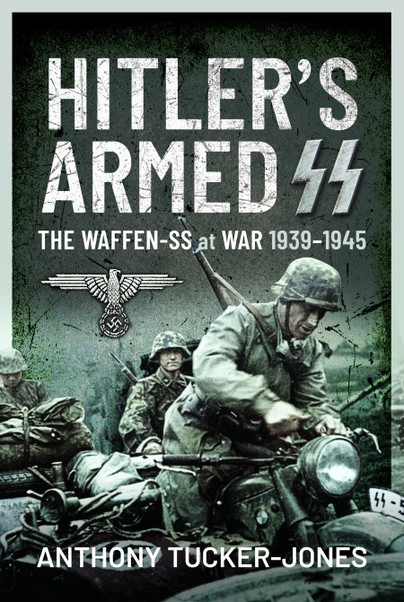
The events in Canada’s Nation Capital and the storm it legitimately generated occurred as I was completing my reading of Anthony Tucker-Jones’ book Hitler’s Armed SS: The Waffen-SS at War 1939-1945 (Pen & Sword Military).

One of Hitler’s main traits was that he fostered rivalry around himself. Loathsome of the military establishment, notably because it regrouped several characters born into the German aristocracy, the founder of the Third Reich created the Schutzstaffel as a counterweight. His investment would prove worthy. The members of the SS – who fought even after the Führer rendered his last breath after committing suicide in his bunker – had been his most committed and fanatical fighters.

Continue reading “The Devil’s Servants”
Le majordome du diable

« J’étais toutefois convaincu que grâce au Führer, je pourrais marcher d’un pas assuré dans la vie et vivre sans trop de soucis le reste de mes jours, une fois quitté mon service. » Tel est l’aveu livré par Heinz Linge, qui fut le majordome d’Hitler et qui vécut dans son intimité pendant une décennie, dans ses mémoires intitulées Jusqu’à la chute (Éditions Perrin). Le destin et le sort des armes eurent cependant pour effet de contredire cette conviction. La décennie suivante de son existence se passa dans les geôles soviétiques, après sa capture à proximité du bunker de la Chancellerie où son ancien maître s’était donné la mort le 30 avril 1945.

D’entrée de jeu, j’admets ne pas être friand des mémoires. Rarement y assiste-t-on à de véritables prises de conscience, puisque l’exercice se veut généralement une tentative de justification ou de réhabilitation devant la postérité. Je ne m’attendais donc pas à un mea culpa à propos de l’Holocauste. Heinz Linge balaie à cet égard toute responsabilité. À propos de son patron, il écrit : « Tout ce qu’on lui a imputé, écrit-il, je ne l’ai appris qu’après la guerre – car le Führer ne parlait qu’en tête à tête avec lui [Heinrich Himmler, proche collaborateur du Führer et architecte de l’Holocauste] de choses que je ne lui aurais jamais attribuées, comme l’extermination massive des Juifs. » Difficile à croire, puisqu’il avoue candidement que personne d’autre qu’Eva Braun n’était plus proche du dictateur que lui.

Mais là ne repose pas l’intérêt principal de son témoignage.

poursuivre la lecture

How Bill Slim Turned the Tide

Any passerby on Whitehall in London walks in front of three statues representing towering British military figures of World War II. The most iconic one is naturally the one representing Viscount Montgomery, the victor of Alamein. Then there’s one of Viscount Alanbrooke, who headed the British Army during the conflict. The third and last one along the way – if you come from the House of Commons – depicts Viscount Slim, the victor of Burma. While I have devoured countless articles and books about Monty and read many things on Alanbrooke, my knowledge about the last member of the trio is scant at best. Mea culpa.

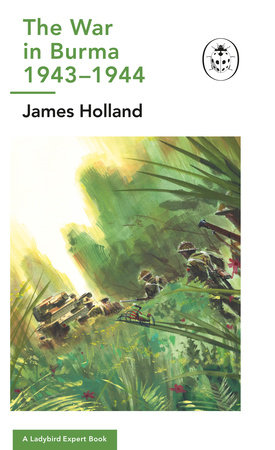
A few weeks ago, The War in Burma 1943-1944 by renowned military historian James Holland came to my attention. I dove right into it with delight. True to his eloquence and unparalleled expertise (I’m a huge fan of his documentaries and I have another book of his on my shelves), this engaging historian broadened my horizons about an aspect and a figure of World War II about which I knew too little.

Published as part of the Ladybird Expert Book collection, the most recent addition to James Holland series is beautifully enhanced by Keith Burns’ stunning and evocative illustrations summarizes the significance of the much too unknown South-East Asian theatre of World War II. Northwest Burma, the prolific historian writes, was “one of the most inhospitable places to fight in the world.” By the end of 1944, the Japanese were on the move to smash British troops on their way to India, hopefully end the British Raj and thwart the delivery of essential supplies to Chiang Kai-shek’s Nationalists in China who were also fighting the Japanese toe and nails. The stakes were unparalleled, and the British couldn’t afford to lose any ground. Outnumbered and demoralized, how could they reverse the tide?

Continue reading “How Bill Slim Turned the Tide”