
On January 3, the United States conducted an operation in Venezuela that resulted in the capture of its dictator. On the same day, The New York Times detailed that the CIA had been directly involved in—and contributed to—the operation to remove Nicolás Maduro from power. In momentous times, when American foreign policy needs boots on the ground to implement decisions, the men and women who report to Langley are on the front line of action.
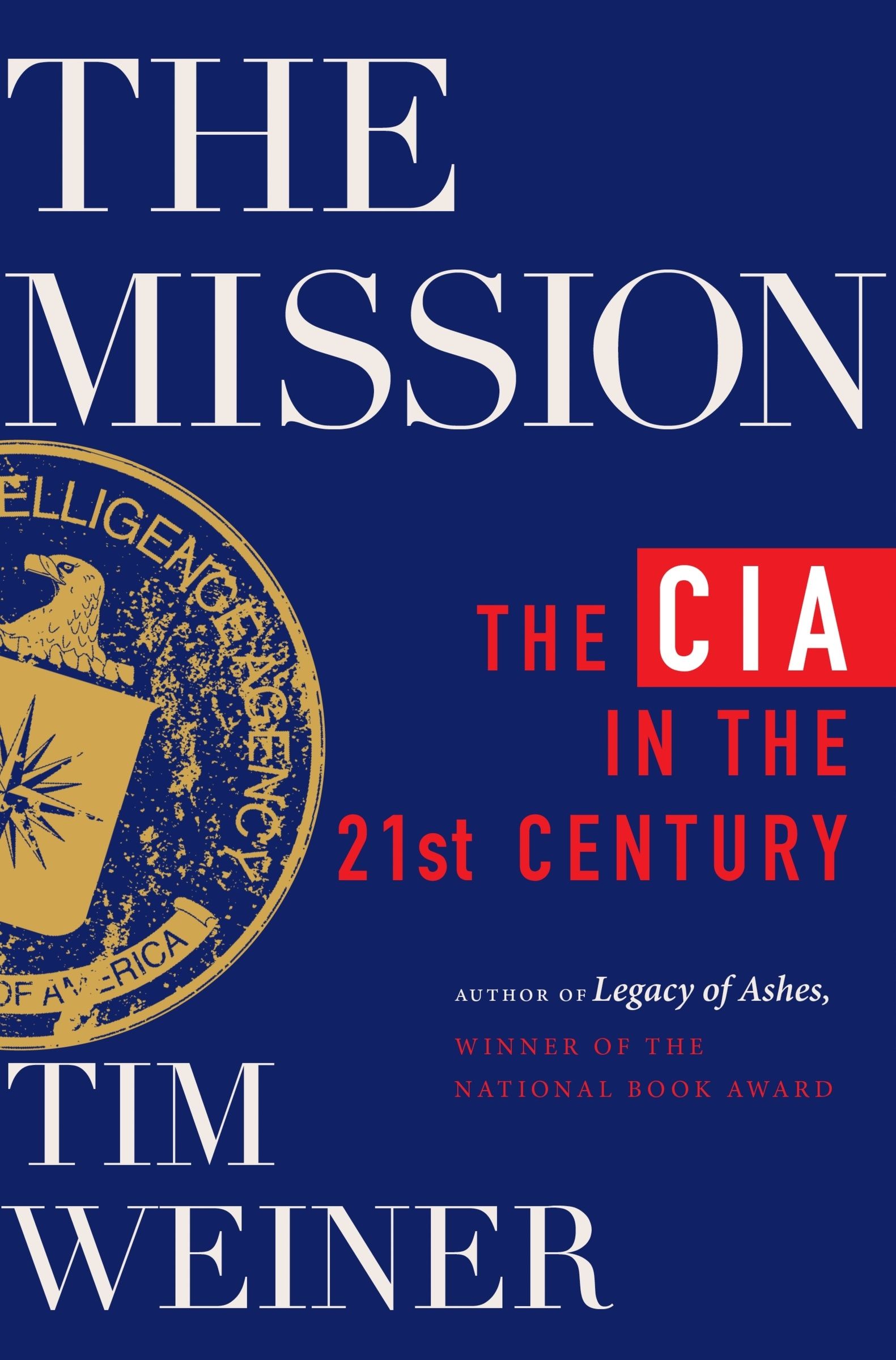
The Mission: The CIA in the 21st Century (Mariner Books) by Tim Weiner offers the riveting story of the Company’s actions from the shock of 9/11 to the doorstep of the second Trump administration. Intelligence insights do not guarantee success, but the author makes it clear that moving forward without them comes at a steep price, as when the entourage of George W. Bush pushed for the war in Iraq on flawed information. “He [Director George Tenet] never admitted to Bush, or to himself, how little the CIA really knew.” The rest, as they say, is history. Intelligence misfortunes would go on to cloud the legacy of the 43rd President.
Much the same happened a few years later during the Obama administration, on the occasion of the Arab Spring, for which CIA Director Leon Panetta would later admit that they “missed the boat”, owing to a context in which POTUS “overruled his elders and took heed of his younger aides, who had warned against his being on the side of history.” By heeding the street, Obama played a part as Washington contributed to breaking the back of Hosni Mubarak’s rule. A “sigh of relief” was felt at Langley when General Sisi – an ally – took control of the country two years later.
Let’s now have a look at the brighter side of Barack Obama’s intelligence record. During his two mandates, “he gave the execute orders for 540 more attacks, ten times the number Bush had launched”, leading Tim Weiner to depict him as a warlord who “chose to incinerate America’s enemies rather than incarcerate them.” And let’s not forget Operation Neptune Spear, when bin Laden was escorted by Navy SEALs on his way to meet his creator. Reading about CIA Director Leon Panetta running the rosary through his fingers during these crucial moments is one of my favourite passages in the book.
Time and again, the CIA and its workforce proved that “intelligence, and intelligence alone, could destroy an existential threat”. In a way, that was the case when Washington warned Ukraine about the incoming full-scale invasion of February 2022. In all of this, the Pulitzer Prize winner stresses that the essential ingredient to success is “human interactions”. Despite the advances and multiple benefits of AI, no gadget can replace what we call HUMINT, because the software of the human heart and mind can’t be divined. Encouragingly, pressing the flesh and having a cup of coffee will never lose its pertinence.
On the impact of personal relations, two of the most revealing episodes shared by the author relate to the proximity between Washington and Israel. This manifested itself when legendary Mossad Director Meir Dagan went to Langley to show pictures of the nuclear reactor being built in Syria, which posed an evident threat to Jerusalem. It was taken out during Operation Orchard with the tacit approval of the White House. A few months later, Hezbollah’s military commander Imad Mughniyeh was neutralized with “a shaped explosive charge in the rear-mounted spare tire of [his] SUV.” That special relationship appears to be flourishing under President Trump.
Tim Weiner’s work may also help explain current events in the context of the purges carried out by Chinese President Xi Jinping and his entourage. After ascending to power in 2012, the Red Emperor “had learned that the corruption of the party, where bribery was the means of ascent, had been the key to the CIA’s penetration of its ranks.” To counter it, the occupant of the Zhongnanhai compound can notably rely on his Ministry of State Security, which has evolved to become “twelve times the size of the CIA” since its establishment as a “global spy agency in 1998”. There’s a new tough kid in the schoolyard, and he would be underestimated at the peril of his opponents. Beijing also wants to write history.
Away from the lecterns of international gatherings and the wonkish assessments of think tanks and commentators, the contours of the world are also shaped in the shadows where intelligence takes form. It’s messy, but essential. With its fair share of gut-wrenching moments—such as the catastrophic disintegration of Afghanistan in August 2021 under the eyes of officials who didn’t see it coming—and its inspiring and less inspiring characters, The Mission offers plenty of ammunition for those who affirm that the CIA remains “the infantry of [America’s] ideology”. Intelligence operations have been ongoing since the beginning of mankind, and the practitioners of cloak-and-dagger trade won’t be out of work anytime soon. As I conclude this review, new chapters in the history of the CIA are being written in several theatres around the world. It remains an essential tool in the hands of every President.
_____
Tim Weiner, The Mission: The CIA in the 21st Century, New York, Mariner Books, 2025, 464 pages.
 BookMarc