When Homer Meets Jack Ryan

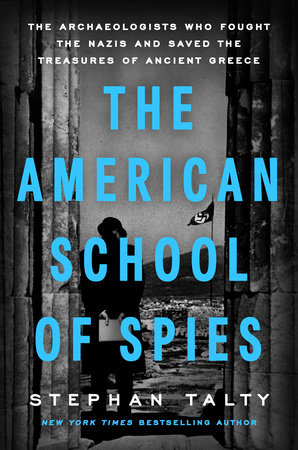
The pleasure of reading about World War II through the lens of the Greek theatre is seldom found on bookstore shelves. I was therefore thrilled to discover The American School of Spies: The Archaeologists Who Fought the Nazis and Saved the Treasures of Ancient Greece (Dutton) by Stephan Talty. Little did I know when I started that I was about to discover one of the most fascinating stories I have ever read about the convergence of history, academia, and espionage.

The author reminds us that Adolf Hitler’s chief theorist, Alfred Rosenberg, “was hopeful that his men, led by the famous Nazi archaeologist Hans Reinerth, would pull from the ground “pre- and protohistoric Germanic and Slavic finds” that would at long last prove the connection between ancient Greece and the early Germans.” The occupation of Greece proved to be anything but pleasant. According to the author, approximately 5 percent of the population would not survive it. It would also provide the Feldgrau Horde with ample opportunities to seek out the alleged—and entirely imaginary—bridge between the civilization that gave birth to democracy and the warped minds that sought to appropriate its legacy for their own purposes.

Enter William “Wild Bill” Donovan, the former Wall Street lawyer and larger-than-life character whom President Franklin Delano Roosevelt tasked with creating the Office of Strategic Services (OSS), the ancestor of the CIA, an intelligence organization designed to help win the war in the shadows. In 1942, Rodney Young, an archaeologist in his thirties who had been assistant director of the American School in Athens, was given a mission. He knew the Greek landscape well, not least from his wartime efforts to reach and assist local populations: following the German invasion, he had found a way to acquire an ambulance to help those in need. As head of the Greek Desk, he would recruit classicists and teach them the art of spycraft “in order to save Greece and its ancient relics”. A Herculean task.

Continue reading “When Homer Meets Jack Ryan”
“The infantry of our ideology”

On January 3, the United States conducted an operation in Venezuela that resulted in the capture of its dictator. On the same day, The New York Times detailed that the CIA had been directly involved in—and contributed to—the operation to remove Nicolás Maduro from power. In momentous times, when American foreign policy needs boots on the ground to implement decisions, the men and women who report to Langley are on the front line of action.

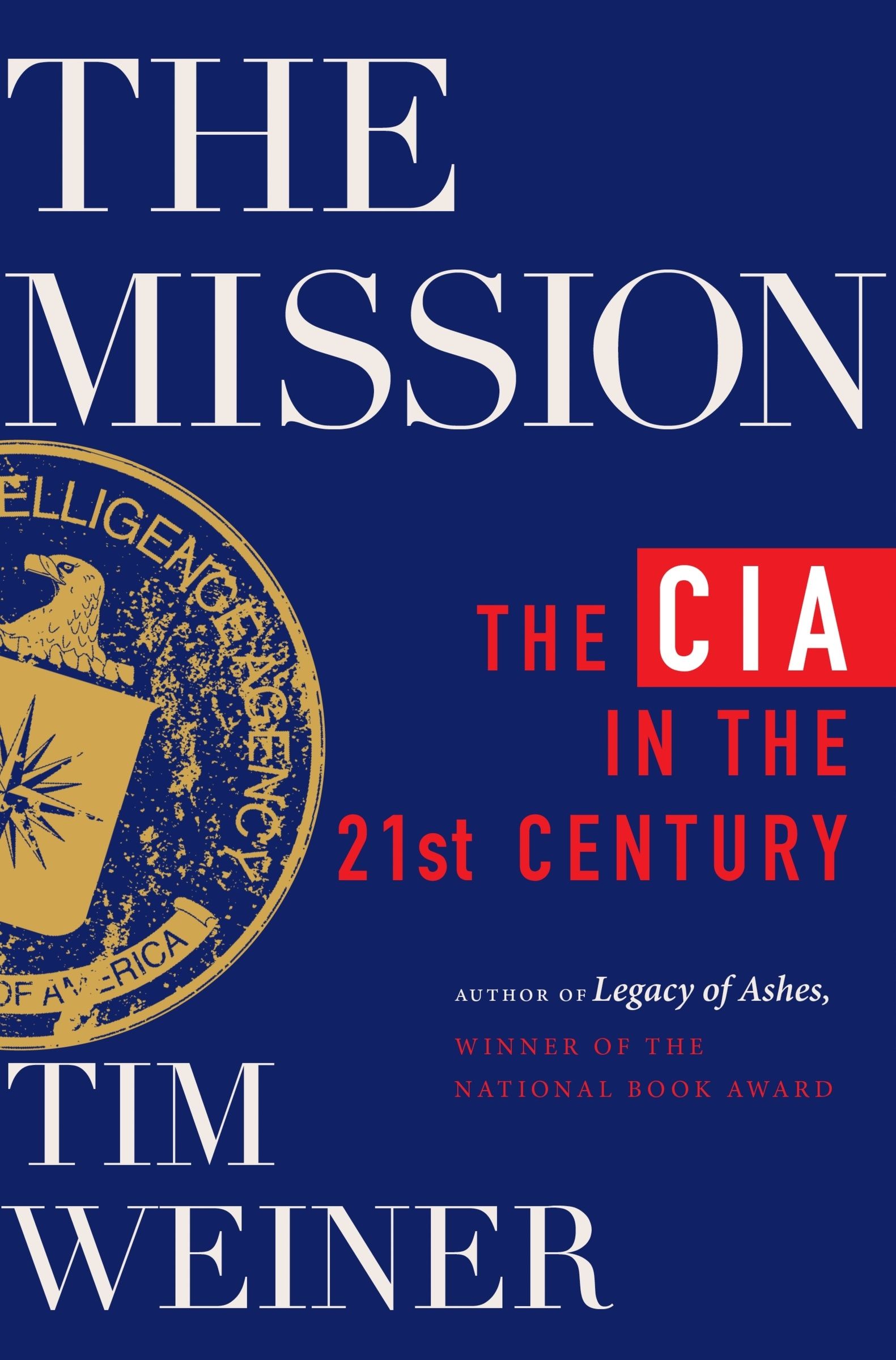
The Mission: The CIA in the 21st Century (Mariner Books) by Tim Weiner offers the riveting story of the Company’s actions from the shock of 9/11 to the doorstep of the second Trump administration. Intelligence insights do not guarantee success, but the author makes it clear that moving forward without them comes at a steep price, as when the entourage of George W. Bush pushed for the war in Iraq on flawed information. “He [Director George Tenet] never admitted to Bush, or to himself, how little the CIA really knew.” The rest, as they say, is history. Intelligence misfortunes would go on to cloud the legacy of the 43rd President.

Much the same happened a few years later during the Obama administration, on the occasion of the Arab Spring, for which CIA Director Leon Panetta would later admit that they “missed the boat”, owing to a context in which POTUS “overruled his elders and took heed of his younger aides, who had warned against his being on the side of history.” By heeding the street, Obama played a part as Washington contributed to breaking the back of Hosni Mubarak’s rule. A “sigh of relief” was felt at Langley when General Sisi – an ally – took control of the country two years later.

Continue reading ““The infantry of our ideology””

Countdown bin Laden

Twenty years ago this morning, our hearts crumbled simultaneously with New York’s Twin Towers. Osama bin Laden orchestrated an attack that would scar the face of the Earth and change history forever. After the heartless attacks that left 2977 people dead and countless families grieving, it was inevitable that the terrorist leader would be brought to face justice.

In his new book, Fox News Sunday anchor Chris Wallace offers the gripping story of this historic manhunt and the commendable sacrifices made by those who planned and executed it over a period of 9 months.

In the same manner he wrote his authoritative Countdown 1945, the renowned journalist (with Mitch Weiss) details the nitty-gritty of what will certainly be remembered as one of the most famous and consequential special operation in the history of warfare in Countdown bin Laden: The Untold Story of the 247-Day Hunt to Bring the Mastermind of 9/11 to Justice. Tremendous sacrifices were consented by these intelligence officials who sacrificed their family lives. SEAL Team 6 operators faced their own mortality as they were ordered to descend in the Devil’s Den at the Abbottabad compound where bin Laden had taken refuge between 2005 and May 1st, 2011.

More than the military aspects of the mission to bring back OBL dead or alive, what impressed me most in this book was the decision-making process of the operation. It is easy to associate the warlord tag to President George W. Bush for his decision to launch a war against Al Qaida in Afghanistan and Saddam Hussein in Iraq. His successor, Barack Obama, appears as a more dovish character, at least in the public’s perception.

Continue reading “Countdown bin Laden”

Ian Fleming et James Bond: tel père, tel fils

Dans Skyfall (le meilleur film de James Bond à mon humble avis), il y a une scène où 007 fausse compagnie aux mercenaires de Silva en empruntant un tunnel secret dissimulé dans la maison de son enfance. Au moment de s’y engouffrer, le mythique agent secret déclare : « j’ai toujours détesté cet endroit ». Cette déclaration se veut non seulement emblématique des sentiments du personnage, mais aussi de son créateur, Ian Fleming.

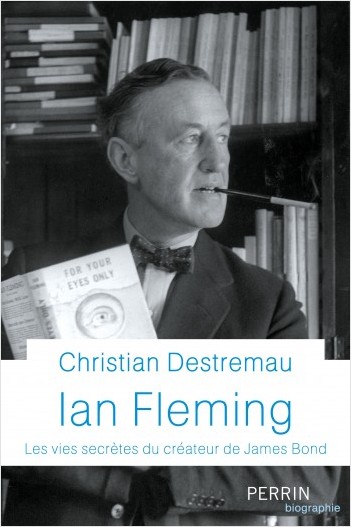
Dans l’enlevante biographie qu’il consacre au père de James Bond (Perrin), l’historien Christian Destremau permet au lecteur de constater à quel point le père et le fils littéraire partagent le même ADN. Amour des voitures, de la vitesse, des douches à l’eau chaude, des montagnes, caractères irrévérencieux et vie sexuelle bien assumée, voilà autant de traits donnés par Fleming à son emblématique personnage. Et j’oubliais que la mère de l’agent du MI6 est Helvète, tout comme celle de Fleming. Je laisserai aux psychologues le plaisir d’épiloguer sur la parenté entre les deux hommes, mais je peux facilement imaginer que l’auteur aurait rêvé de vivre les aventures de son héros. Après tout, n’est-ce pas là le but de la fiction?

Cela dit, n’importe quel amateur des questions de renseignement, aussi novice soit-il, aura tôt fait de constater que M. Bond détonne de manière très exubérante par rapport à la discrétion élémentaire requise de la part des manœuvriers de cet univers ombrageux. Rares doivent être ceux et celles qui raffolent d’attirer l’attention. Il n’est donc guère étonnant que le biographe écrive que « […] James Bond est pour une large part l’héritier des braves du SOE » (Special Operations Executive) – les légendaires services spéciaux créés par Churchill quelques semaines après son arrivée aux commandes en juillet 1940.

poursuivre la lecture

“The CIA Director is ultimately the person we depend on to prevent another 9/11 or lethal pandemic.” – Exclusive interview with Chris Whipple

Chris Wh

In the aftermath of my review of The Spymasters, author Chris Whipple was very generous in accepting to respond to a few questions. If you have not read the book already, I trust this interview will provide you with an additional incentive to do so.

The content of our exchange follows.

Mr. Whipple, in light of the nomination of Ambassador William J. Burns as Director of the CIA (pending his confirmation), could you tell us in what direction the relationship between the President and the Director will lead things?

Given his breadth of knowledge in the national security field, and his hands-on experience with CIA operations when he was ambassador to Jordan, William Burns will have a short learning curve as CIA director. As an outsider, Ambassador Burns is very much in the Leon Panetta mold. And like Panetta, he is grounded and confident—essential qualities for a great CIA director. His congenial relationship with President Joe Biden is also a tremendous advantage.    

Continue reading ““The CIA Director is ultimately the person we depend on to prevent another 9/11 or lethal pandemic.” – Exclusive interview with Chris Whipple”