The best books, their authors and the great people who inspire these stories / Les meilleurs livres, leurs auteurs et les grand.e.s de l'histoire qui les inspirent.
Let’s talk about an Israeli Prime Minister who is “an accomplished player in the rough-and-tumble world” of Jewish politics. An extremely talented communicator who can excite supporters and who plays on the American public scene like a virtuoso. At the same time, that leader generates strong feelings – positive and negative – among certain groups, particularly at home. This is a head of government whose political survival is threatened by an existential war launched against the country while its defenders are caught off guard.
Reading these lines, the image of Benjamin Netanyahu will certainly come to your mind. That is, if you are interested in current Israeli political history.
Considering the similarities quoted above, one could argue that the current Prime Minister walks in the footsteps of Golda Meir, in whose care the country was entrusted between 1969 and 1974.
I am fully aware that drawing parallels is a road on which one must tread carefully – after all these two leaders belong in two opposite ideological and partisan camps – but I could not avoid mentioning these striking parallels.
The life and career of the fourth Prime Minister of Israel – and only woman to occupy that function – have piqued my curiosity for quite a long time now. Thanks to the expertise and talent of Professor Deborah E. Lipstadt, who currently serves as the U.S State Department’s Special Envoy for Monitoring and Combating Antisemitism, an excellent opportunity has been granted me through Yale University Press’ excellent Jewish Lives Collection.
The SS are still claiming victims to this day. Not on the battlefield, of course, but because of their nefarious legacy. Their ghosts have been sighted last week in the Canadian parliament when a former member of the Waffen-SS 14th (Galician) Division was hailed as a hero. The Speaker of the House of Commons, Anthony Rota, had no choice but to resign because of the storm his praise about 98 years old Ukrainian SS veteran Yaroslav Hunka generated. Truth be told, all those applauding were most certainly unaware of his past military service in Hitler’s elite troops.
Which brings back the crucial notion of education and awareness.
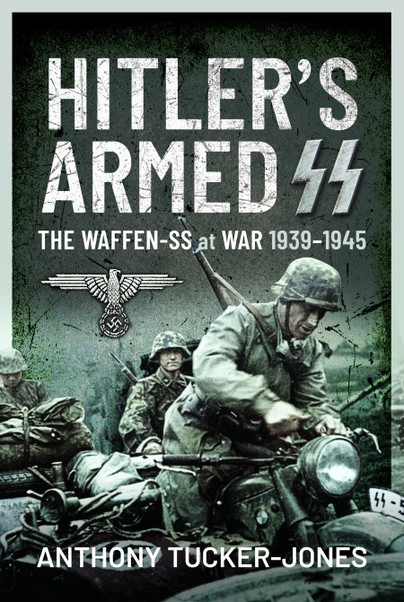
The events in Canada’s Nation Capital and the storm it legitimately generated occurred as I was completing my reading of Anthony Tucker-Jones’ book Hitler’s Armed SS: The Waffen-SS at War 1939-1945(Pen & Sword Military).
One of Hitler’s main traits was that he fostered rivalry around himself. Loathsome of the military establishment, notably because it regrouped several characters born into the German aristocracy, the founder of the Third Reich created the Schutzstaffel as a counterweight. His investment would prove worthy. The members of the SS – who fought even after the Führer rendered his last breath after committing suicide in his bunker – had been his most committed and fanatical fighters.
The cover of Prince Harry’s memoir was released last week, in mounting anticipation of the day it hits the shelves next January. Since their wedding in May 2018, Harry and Meghan have proven to be distracting – to say the least – for the Royal Family. Their staunch desire to center everything around their desires, feelings and intentions goes against the grain of an institution based on selflessness and duty.
Even though the revelations contained in his book will probably rock and ruffle Buckingham Palace, Prince Harry’s fifth position in the line of succession to the throne render his tribulations much less catastrophic than those posed by his late grandmother’s uncle, King Edward VIII. On December 10, 1936, this Monarch deposed the scepter and the orb for the sake of marrying the Queen of his heart, the American-born divorcee Wallis Simpson.
His brother, George VI, was left to pick up the pieces. He was neither supposed nor prepared to accede the throne. The reputation of the institution was severely tarnished, but the history of the world can be grateful that George Windsor was tasked with this mission because his brother David (Edward VIII)’s presence on the throne would have proved catastrophic in the period leading to and during World War II.
There are lots of historic and major diplomatic announcements between Israel and Arab countries (UAE and Bahrain) these days, a development in which the United States are directly associated. In the last couple of years, we have observed the existence of another well-frequented diplomatic channel between Moscow and Jerusalem and I was very glad when acclaimed author Professor Mark Galeotti – author of an excellent biography of Vladimir Putin and more recently of A Short History of Russia – accepted to respond to a few questions about the subject a few weeks ago. Here is the content of our exchange.
Putin tends to respond well to tough interlocutors.
Do you think the election of pro-Russian Ariel Sharon as Prime Minister in 2001 played a role in President Putin’s stance about Israel?
I think it certainly helped in that Putin tends to respond well to tough interlocutors.
Israel is in many ways a Russian ally, despite some inevitable points of contention […].
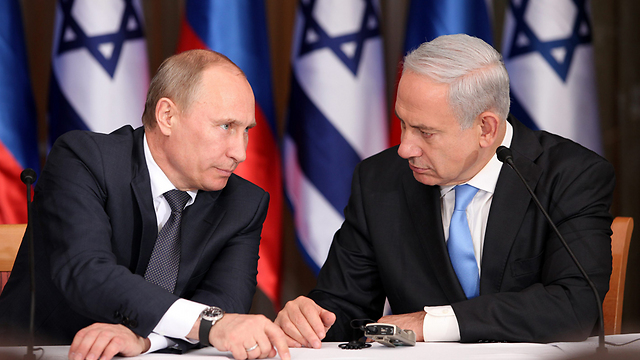
Judging by the number of meetings between Prime Minister Netanyahu and President Putin (10 visits by Benjamin Netanyahu in Moscow since 2013 and 2 visits by Vladimir Putin in Israel since 2012), one could think that there is a notable rapprochement between Moscow and Jerusalem. How important is this relationship for the Russian president?
It’s important for both Putin and Russia. Israel is in many ways a Russian ally, despite some inevitable points of contention – when the IAF bombs Hezbollah positions in Syria, for example, the Russian air defense system there is not activated and clearly they have been forewarned. Likewise, Russia at times shares intelligence with Israel about Iran.
How important are the Middle East issues in Russian domestic politics? Is there a link between Russian domestic politics and President Putin’s relationship with Israel?
Honestly, it’s not really a factor – neither a plus, nor a minus.
Some observers are of the opinion that Israel is just a pawn on Russia’s chessboard. Could Russia become a key strategic ally of Israel in the near future?
That gives Israel too little credit. Yes, it has good relations with Russia (the first drones the Russians fielded were bought from Israel, for example), but it is not going to be anyone’s pawn.
Putin sends the signal that anti-Semitism is not acceptable.
You mention it briefly in your book (on page 75), when you mention that President Putin demonstrates “[…] no hint of anti-Semitism”, but could you tell us more about where he stands on the issue and what he does to confront this trend?
One can’t say that he has especially actively fought against it, but his evidently good relations with Israel and also the Chief Rabbi of Moscow are certainly powerful symbols to powerful and ambitious Russians that anti-Semitism is not acceptable.
Compared to the trend observable in other East European countries (like Poland for example), what is the current status of anti-Semitism in Russia?
It’s present, of course, but subjectively it feels in decline – in the 1990s one could often see anti-Semitic graffiti on the walls or slurs in the media, but both are much less evident today. In some ways an interesting development is that the extreme nationalists, from whom one might expect some prejudice, actually express respect for Israel in terms of its willingness to stand up for its own interests, with force if need be.
Apart from the President and the Prime Minister, who are the engineers of the relationship between the two countries? Is there any track II diplomacy involved in your opinion?
Pinchas Goldschmidt, the Chief Rabbi of Moscow, has been a very significant player in this respect – and, of course, there are many oligarchs and minigarchs of Jewish origins and often dual Russian-Israeli citizenship who act as connectors.
__________________
(version française)
Poutine et Israël
On assiste ces jours-ci à plusieurs annonces diplomatiques historiques et majeures entre Israël et des pays arabes (les Émirats arabes unis et le Bahreïn), un développement auquel les États-Unis sont directement associés. Dans les dernières années, nous avons observé l’existence d’un autre canal diplomatique très fréquenté entre Moscou et Jérusalem et j’étais très heureux que le Professeur Mark Galeotti – auteur réputé d’une excellente biographie de Vladimir Poutine et plus récemment du livre A Short History of Russia – accepte de répondre à quelques questions à ce sujet il y a quelques semaines. Voici le contenu de cet échange.
Poutine a tendance à bien réagir face à des interlocuteurs coriaces.
Pensez-vous que l’élection d’Ariel Sharon, qui était notoirement pro-russe, au poste de Premier ministre en 2001 a joué un rôle dans la position du président Poutine sur Israël?
Je pense que cela a certainement aidé, dans la mesure où Poutine a tendance à bien réagir face à des interlocuteurs coriaces.
Israël est, à bien des égards, un allié de la Russie, et ce, malgré certains points de frictions inévitables.
À en juger par le nombre de rencontres entre le Premier ministre Netanyahu et le président Poutine (10 visites de Benjamin Netanyahu à Moscou depuis 2013 et 2 visites de Vladimir Poutine en Israël depuis 2012), on pourrait penser qu’il y a un rapprochement notable entre Moscou et Jérusalem. Quelle est l’importance de cette relation pour le président russe?
C’est important pour Poutine et pour la Russie. Israël est, à bien des égards, un allié de la Russie, et ce, malgré certains points de frictions inévitables. Par exemple, lorsque l’IAF (les forces aériennes israéliennes) bombarde les positions du Hezbollah en Syrie, le système de défense aérienne russe n’est pas activé et les Russes ont clairement été prévenus. De même, la Russie partage parfois des renseignements avec Israël au sujet de l’Iran.
Quelle est l’importance des questions moyen-orientales dans la politique intérieure russe? Existe-t-il un lien entre la politique intérieure russe et les relations du président Poutine avec Israël?
Honnêtement, ce n’est pas vraiment un facteur – ce n’est ni un avantage, ni un inconvénient.
Certains observateurs estiment qu’Israël n’est qu’un pion sur l’échiquier russe. La Russie pourrait-elle devenir un allié stratégique clé d’Israël dans un avenir prochain?
Ce serait accorder trop peu de crédit à Israël. Oui, ce pays entretient de bonnes relations avec la Russie (les premiers drones russes qui sont entrés en fonction avaient été achetés en Israël, par exemple), mais Jérusalem ne deviendra le pion de personne.
Vous mentionnez brièvement, à la page 75 de votre livre, que le président Poutine ne manifeste « […] pas une once d’antisémitisme », mais pourriez-vous nous en dire davantage à propos de sa position sur le sujet et ce qu’il fait pour lutter contre ce fléau?
Poutine envoie le message que l’antisémitisme est inacceptable.
On ne peut pas dire qu’il l’a particulièrement activement combattu, mais ses relations manifestement bonnes avec Israël et avec le grand rabbin de Moscou sont certainement des symboles puissants pour les Russes influents et ambitieux à l’effet que l’antisémitisme est inacceptable.
Par rapport à la tendance observable dans d’autres pays d’Europe de l’Est (comme la Pologne par exemple), quel est l’état actuel de l’antisémitisme en Russie?
Le phénomène est présent, bien sûr, mais subjectivement, il semble en déclin – dans les années 1990, on pouvait souvent voir des graffitis antisémites sur les murs ou des insultes proférées dans les médias, mais les deux manifestations sont beaucoup moins évidentes aujourd’hui. À certains égards, une évolution intéressante est observable à l’effet que les nationalistes extrémistes, de qui on peut s’attendre à des préjugés, expriment en fait leur respect pour Israël, au niveau de sa volonté de défendre ses propres intérêts, avec force si nécessaire.
À part le président et le premier ministre, qui sont les architectes des relations entre les deux pays? À votre avis, y a-t-il une diplomatie parallèle à l’œuvre?
Pinchas Goldschmidt, le grand rabbin de Moscou, a été un acteur très important à cet égard – et, bien sûr, il existe de nombreux oligarques et minigarques d’origine juive et souvent détenteurs de la double nationalité russo-israélienne qui agissent comme entremetteurs.



 BookMarc