300 jours fatidiques

Chaque fois qu’un livre paraît sur la Seconde Guerre mondiale, on s’interroge sur ce qu’il peut réellement apporter à la compréhension de cette déflagration qui a consumé le monde il y a bientôt neuf décennies. Éric Branca fait partie de ces historiens sur lesquels on peut compter pour ouvrir de nouvelles perspectives.

Le 300 Jours – 13 juillet 1944 – 9 mai 1945 : dix mois pour en finir avec Hitler qu’il publie aux Éditions Perrin, offre une lecture richement documentée et portée par un style magistral, tout en brossant le portrait des principaux personnages qui marquent le chapitre ultime du dernier conflit mondial.

D’entrée de jeu, l’auteur ne cache pas le sentiment qui l’habite à l’égard du maréchal Montgomery, « qui ne s’affirme qu’en s’opposant et manque d’oxygène quand il n’a pas d’ennemis ». La messe est dite. Son de cloche tout à fait différent en ce qui concerne l’illustre adversaire de Monty, le Renard du désert, un autre maréchal : Erwin Rommel.

poursuivre la lecture
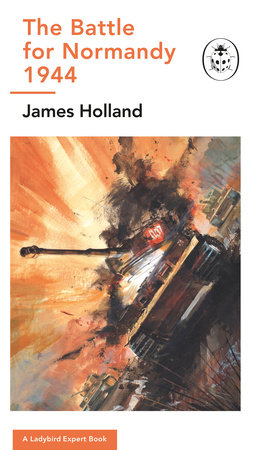
The Ferocious Battle for Normandy

In less than 60 days, we will commemorate the 80th anniversary of D-Day, the Allied landing in Normandy on June 6th, 1944. The celebrations surrounding that event are already under way. In the last hours, the French Ambassador to Canada travelled to Regina, the capital of Saskatchewan, to present the Légion d’honneur – France’s highest distinction established by Napoleon in 1802 – to a 104-year-old veteran who set foot on the beach on that fateful morning.

As we salute these men and prepare to sadly see the last ones depart for eternity, the need for remembrance becomes ever more crucial. Historians play an essential role on that score. Plenty of great books have been written about the longest day and the campaign that followed.

I just finished reading James Holland’s contribution to that impressive list, through the Ladybird Expert Book series. For anyone wanting to grasp the development of the Battle for Normandy in a summarized and vividly written style, this book is a must.

Continue reading “The Ferocious Battle for Normandy”

Le majordome du diable

« J’étais toutefois convaincu que grâce au Führer, je pourrais marcher d’un pas assuré dans la vie et vivre sans trop de soucis le reste de mes jours, une fois quitté mon service. » Tel est l’aveu livré par Heinz Linge, qui fut le majordome d’Hitler et qui vécut dans son intimité pendant une décennie, dans ses mémoires intitulées Jusqu’à la chute (Éditions Perrin). Le destin et le sort des armes eurent cependant pour effet de contredire cette conviction. La décennie suivante de son existence se passa dans les geôles soviétiques, après sa capture à proximité du bunker de la Chancellerie où son ancien maître s’était donné la mort le 30 avril 1945.

D’entrée de jeu, j’admets ne pas être friand des mémoires. Rarement y assiste-t-on à de véritables prises de conscience, puisque l’exercice se veut généralement une tentative de justification ou de réhabilitation devant la postérité. Je ne m’attendais donc pas à un mea culpa à propos de l’Holocauste. Heinz Linge balaie à cet égard toute responsabilité. À propos de son patron, il écrit : « Tout ce qu’on lui a imputé, écrit-il, je ne l’ai appris qu’après la guerre – car le Führer ne parlait qu’en tête à tête avec lui [Heinrich Himmler, proche collaborateur du Führer et architecte de l’Holocauste] de choses que je ne lui aurais jamais attribuées, comme l’extermination massive des Juifs. » Difficile à croire, puisqu’il avoue candidement que personne d’autre qu’Eva Braun n’était plus proche du dictateur que lui.

Mais là ne repose pas l’intérêt principal de son témoignage.

poursuivre la lecture

Patton was Destined for War

“Battle is the most magnificent competition in which a human being can indulge”, said General George S. Patton. Within four years, the famous World War II warlord went from soul-searching about his future in the profession of arms to being one of the main pugilists who brought Nazi Germany on its knees in 1945.

The full measure of Patton’s greatness and vanity are brought to life in Martin Dugard’s last book Taking Berlin: The Bloody Race to Defeat the Third Reich (Caliber), between the covers of which the author doesn’t hide his admiration for the legendary soldier who believed he was the reincarnation of a Roman legionnaire. Full disclosure, I think we can easily forgive this inclination, because it is all too easy to admire the character, a feeling to which I willingly plead guilty.

In the same manner as in his previous book Taking Paris, the author – who collaborated with journalist Bill O’Reilly to write several books – calls upon an army of pertinent details to bring his narrative to life. I personally discovered that the meaning of the Belgian town of Spa’s name “is an acronym of the Latin Salus per Aquam, meaning “health from water” or that the word “Roger” pronounced on the radio means “received”, but is also an acronym for “Received Order Given, Expect Results”.

Continue reading “Patton was Destined for War”

Churchill was better at strategy than politics

Professor Simon J. Ball (University of Leeds)

I recently reviewed Professor Simon J. Ball’s revealing book about the battle of Alamein (The Folio Society). He generously accepted to answer few questions for this blog, and I take immense pleasure in sharing the content of our exchange with you today. I trust you will enjoy reading it.

_________

Professor Ball, I might be wrong, but I have a feeling that the Mediterranean theater during World War II has been overlooked. Why is it important to pay more attention to it? How crucial was it in the big picture of the conflict? 

SJB: The war in the Mediterranean was of central importance. It blew apart the idea of the Mediterranean as a unified zone, although all the major powers tried to engineer integration at some points. Oddly the idea of the Mediterranean as an integrated politico-economic-cultural area, “breathing with the same rhythms”, was popularized by Fernand Braudel in the late 1940s.

Continue reading “Churchill was better at strategy than politics”

The distorted memory of Alamein

British soldiers during the second battle of Alamein (The Times of Israel)

“History will be kind to me for I intend to write it”, declared Winston Churchill. That quote might reveal why the second battle of Alamein seems only to reach a limited audience of military history specialists and enthusiasts. In terms of visibility and shelf space, Alamein doesn’t rank with D-Day, Stalingrad, or Bastogne.

Knowing that the battle stopped Field Marshal Erwin Rommel’s advance on Egypt during the turning point year of 1942, one can reasonably wonder why that is so. In a nutshell, “the absence of the victors left plenty of room for the ‘losers’ to have their say. […] the British state’s insistence on not telling a national narrative over-represented the voices of its enemies”, explains historian Simon Ball in The Folio Society edition of his insightful history of the battle fought in the sands of North Africa in October and November 1942.

Material rather than manpower would have been the drivers of the Allied victory. In sum, “the Axis had lost the battle for four reasons: enemy air superiority; the poor performance of the Italian troops; the Eighth Army’s superiority in modern weapons; and their own lack of fuel.” Rommel became an icon – a phenomenon I observed on numerous occasions while visiting military museums in the United Kingdom – and his opponent, Field Marshall Bernard Montgomery drew flak from “old régime” figures who could not stomach the methods of this iconoclast figure who privileged meritocracy. The tenants of that school preferred to give way to Rommel rather than applaud the success and qualities of Montgomery. That phenomenon is regrettably still observable to this day.

Continue reading “The distorted memory of Alamein”