Yossi Cohen: From the Shadows to the Hustings

In the new world order that is taking shape, the special relationship between Israel and the United States remains paramount. To paraphrase Sir Winston Churchill’s description of his relationship with President Franklin D. Roosevelt, “No lover ever studied every whim of his mistress” as closely as Benjamin Netanyahu did those of President Donald Trump. It therefore came as no surprise that the Israeli Prime Minister celebrated the arrival of 2026 last week at Mar-a-Lago. No one can dispute that Bibi is unparalleled when it comes to possessing a keen sense of history. But no statesman is eternal, and some actors are already jockeying to succeed him.

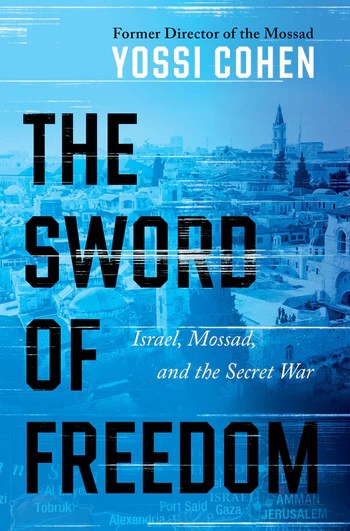
Former Mossad director Yossi Cohen is said to be among them, and the publication of his riveting memoir—The Sword of Freedom: Israel, Mossad, and the Secret War (Broadside Books)—will do little to calm speculation about a potential bid. The narrative spans forty-two years of service to Israel, at the heart of some of its most secret operations, including the iconic 2018 mission in which Mossad operatives seized Iran’s nuclear archives from a clandestine warehouse south of Tehran. Cohen notably served under the legendary Meir Dagan—who took him under his wing and is believed to have later recommended him to Prime Minister Netanyahu as a successor—and his aptitude for human relations, clearly a strength, naturally pointed him toward public life.

Continue reading “Yossi Cohen: From the Shadows to the Hustings”

As the Curtain Fell in 1945

War calls upon the best or the worst in human nature, and the final phases of World War II are no exception to that iron law. From Berlin to Tokyo, with stops in Italy and at Montgomery’s HQ, James Holland and Al Murray present a gallery of fascinating—though at times repugnant—figures in Victory ’45: The End of the War in Eight Surrenders (Grove Atlantic).

First, the courageous


On September 2, 1945, General Jonathan M. Wainwright stood on the deck of the USS Missouri—“the ship [that] look[ed] rather like a giant hedgehog”—for the signing of the official instrument of Japan’s surrender. General Douglas MacArthur handed him one of the five fountain pens he used to sign the documents. World War II thus ended for the commander who had been forced to raise the white flag in the Philippines in May 1942 and then endured three and a half years of harsh captivity at the hands of their cruel custodians. Even though Wainwright viewed the pen as “a wholly unexpected and very great gift”, it remained a modest compensation for enduring “one of the worst military defeats in American history,” for which MacArthur bore no small share of responsibility.

Continue reading “As the Curtain Fell in 1945”

The Caledonian Invasion

In early 1942, Winston Churchill faced a barrage of bad news. Kriegsmarine warships had escaped detection, sailing from occupied France to Germany, and Singapore had just fallen to the Japanese. The time for a large-scale offensive had not yet arrived, but Churchill desperately needed a victory. German radar technology – the Würzburg – was hindering British air operations, and one station, perched on the cliffs of Bruneval near Le Havre in Northern France, became the target of a daring raid. A successful breach of the Nazi fortress would offer much-needed relief during those harsh winter months.

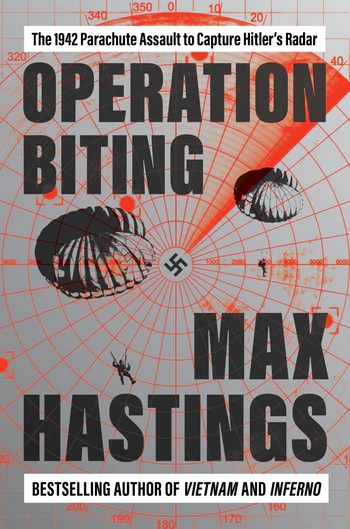
Thus, Operation Biting: The 1942 Parachute Assault to Capture Hitler’s Radar (Harper) vividly springs to life through Sir Max Hastings’ writing. Members of the Black Watch, the Cameron Highlanders, the King’s Own Scottish Borderers, and the Seaforth Highlanders took center stage among the British paratrooper units involved, demonstrating the martial prowess long associated with Caledonian regiments. Nemo me impune lacessit.

Unmistakably, Churchill is the story’s central figure. During the Boer War, which he covered as a young war correspondent, he admired the effectiveness of Afrikaner commandos. True to the British instinct of adapting enemy tactics, Churchill later founded the Special Operations Executive (SOE) in 1940, followed by the formation of the Special Air Service (SAS) the next year. As Hastings notes, the recruits manning these units “were seldom the sort of people to make docile household pets.” The deployment of paratroopers for Operation Biting naturally stemmed from this evolution.

Continue reading “The Caledonian Invasion”

With God on his side

“Patton is a problem child, but he is a great fighting leader in pursuit and exploration”, said General Dwight D. Eisenhower about his unconventional subordinate. That quote is in Alex Kershaw’s last book Patton’s Prayer: A True Story of Courage, Faith, and Victory in World War II (Dutton).

I have been a longtime fan of this author’s books. I have reviewed some here. I initially wanted to publish this review before Christmas in commemoration of the start of the iconic Battle of the Bulge, “the greatest ever fought, in terms of the number of US troops involved, in US military history” and “the deadliest for the US in World War II”. However, events dictated otherwise, and I told myself I had until the end of January, when the battle officially ended, to move forward with my intention.

But then came President Donald Trump’s inauguration earlier this week, and the words pronounced by Cardinal Timothy Dolan, blessing the incoming administration. The Catholic Archbishop of New York mentioned “General George Patton’s instructions to his soldiers as they began the Battle of the Bulge eight decades ago: “Pray! Pray when fighting. Pray alone. Pray with others. Pray by night. Pray by day.””

Continue reading “With God on his side”

Waking up the American giant

Yesterday, December 7th, marked the infamous 83rd anniversary of the Japanese air raid against Pearl Harbor. This reckless decision would provoke the evaporation of the last isolationist emanations in American public life and pave the way to the Allied victory four years later. But before we got there, a war would need to be fought and waged against a determined and “extremely inflexible” enemy – to use the words of renowned historian James Holland – a favourite of this blog, in case you haven’t noticed.

A few years ago, he wrote a very insightful book in the Ladybird Expert Series about The Pacific War 1941-1943 (Penguin Random House), and I told myself this weekend would be the ideal time to write a few lines about it.

The morning of December 7 was a shocking experience resulting from their underestimation of a lethal nemesis. The Americans took the hit and bounced back. Ultimately, their victory was the result of three crucial ingredients. First, men and resources, which they had in abundance. Second, they had a second-to-none capacity in terms of intelligence, which notably thwarted Admiral Yamamoto’s plan and would ultimately cost him his life. Third, the incomparable leadership of military figures like Admirals Chester Nimitz and William “Bull” Halsey Jr. About the latter, the author evokes that he “gelled immediately” with General Douglas MacArthur – the latter being traditionally a hard-to-get-along figure. Together, “they planned a series of leapfrogging operations, drawing on hard-won experience already gained in the Pacific and on the United States’ burgeoning military might.” Finally, “they were quick to absorb the lessons of war.”

Continue reading “Waking up the American giant”

The Making of Trump 2.0

Historically, the main task of any President-elect in the United States is to form a cabinet. In the last weeks, we have seen a cascade of announcements that have raised some eyebrows. Donald Trump’s picks for key positions in his second administration might seem odd to many.

Not so much if you grab a copy of retired Lieutenant General H. R. McMaster’s insightful book At War with Ourselves: My Tour of Duty in the Trump White House (Harper).

Upon his selection as National Security Advisor by the 45th President, the military general wanted to give his boss the best of his expertise. After consulting with one of his notorious predecessors, Lieutenant General Brent Scowcroft, who masterfully seconded President George H. W. Bush, McMaster understood his role as “making the policy process work and developing options for the president; and second, advising the president with views unalloyed by the departments and their bureaucracies.” The only person that mattered to him was the President, whose foreign policy should be well served. He also perceived his role as being above partisanship. His goodwill would be rewarded with disappointment.

Continue reading “The Making of Trump 2.0”

Behind the scenes in the Sit Room

From Pearl Harbor to the neutralization of Osama bin Laden, every US President is confronted with crises. Any one of them also needs to manage relations with foreign leaders. Hence, a need for an organized mechanism and apparatus to navigate the traffic and make sure that POTUS can take the pulse of the world at a moment’s notice. This is made possible thanks to a vital institution, whose history is brilliantly recounted by former Clinton administration official and ABC host George Stephanopoulos in The Situation Room: The Inside Story of Presidents in Crisis (Grand Central).

Before its establishment, Presidents monitored world events on an ad hoc basis. For any military history enthusiast, the depiction of Franklin D. Roosevelt’s wheelchair being pushed in a former billiard room to consult maps pinned on the walls to monitor developments unfolding during World War II is captivating. Like so many other things, John F. Kennedy would be an innovator by creating the Situation Room in light of the 1961 Bay of Pigs disaster. Every one of his successors would rely on this evolving institution to accompany the United States’ presence on the world scene.

The most important takeaway from the book relates to the notion of the “three Ps”. The Situation Room is: 1) a place where information is gathered, processed, analyzed and decided upon; 2) it regroups people who serve the Presidency in a selfless and non-partisan way and; 3) a process revealing how every commander in chief manages the affairs of the world.

Continue reading “Behind the scenes in the Sit Room”

How Churchill and Dowding saved Britain and the World

“Nothing great will ever be achieved without great men, and men are great only if they are determined to be so”, said Charles de Gaulle – Winston Churchill’s brother in arm during World War II. Resilience is the common thread of Martin Dugard’s new book Taking London: Winston Churchill and the Fight to Save Civilization (Dutton).

While de Gaulle escaped France with only 2 suitcases aboard the RAF plane that flew him into history on June 17, 1940, Churchill wasn’t much more gifted politically when he was asked to become Prime Minister a month earlier. The author reminds the reader that he was the second choice to occupy the role and that he had “no political currency beyond his words and beliefs.”

Yet, he had to keep the country – and the free world – safe from the claws of Nazism. Alone. A longtime admirer and promoter of the Royal Navy – which ruled the waves for centuries – Churchill had no choice but to realize that Nelson’s heirs couldn’t save Britain. Along with his legendary courage, the Royal Air Force was his only asset.

Continue reading “How Churchill and Dowding saved Britain and the World”

Coca-Cola and ice cream to defeat Japan

In their seminal book Conflict, which was reviewed here recently, General Petraeus and Lord Roberts posit that, in warfare, “the side that learns and adapts the fastest typically prevails.” An ageless lesson, throughout military history.

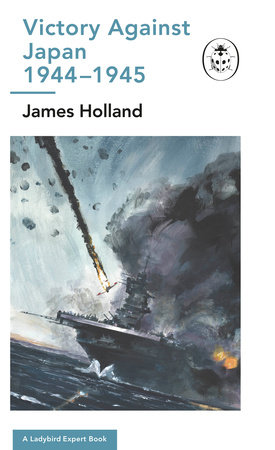
As geopolitics evolves, my interest in the Pacific theatre during World War II has increased significantly lately. To prevail against the Empire of the Rising Sun, the US Navy needed to destroy its crucial naval power, which dominated its sphere of influence for five decades. Curtailing Japanese supply lines, notably to deprive its fleet and troops of oil, was instrumental. To that end, American forces would be attacking the islands it occupied. “Capturing these outposts in the middle of the ocean would not only deny them to the Japanese, it would bring the Allied forces closer to Japan itself”, writes renowned military historian James Holland in Victory against Japan 1944-1945, published as part of his insightful contribution to the Ladybird Expert Series (Penguin Random House).

The author also evokes the military ineffectiveness of Chinese Nationalist warlord Chiang Kai-Shek “despite the United States’ two years of ceaseless supplies”, the inestimable contribution of future Marshal Bill Slim and Special Operations Executive (SOE) teams in Burma and the appearance of the B-29 “Superfortress” in the Pacific, “the most expensive single weapons system ever built” up to that point.

Continue reading “Coca-Cola and ice cream to defeat Japan”

Conflict: The study of warfare at its best

I was impatient to dive between the covers of General David Petraeus (retired) and Lord Roberts book, Conflict: The Evolution of Warfare from 1945 to Ukraine and saying I’m happy I did is a euphemism.

The best way for me to review this enthralling book is to get off the beaten path and summarize the 10 main takeaways that strike me the most.

1. Whatever you think of it, “war is still very much worth studying.” That’s the common thread of the book.

2. Totalitarian régimes have an easier time launching, conducting and bearing the brunt of war. The rise of autocracies throughout the world is therefore a challenge for democracies not accustomed with the pugilistic mindset.

3. Don’t cut military spending. “Money saved in piecemeal defense cuts often costs more in the long run.” The authors mention Great Britain’s decision to axe HMS Endurance before the Falklands War as a case in point. They also refer to Israel’s defense cuts after the Six Days War, with the consequences that followed six years later on the fateful morning of Kippur. Deterrence is cheap compared to war’s tribute in blood and treasure.

Continue reading “Conflict: The study of warfare at its best”