Behind the scenes in the Sit Room

From Pearl Harbor to the neutralization of Osama bin Laden, every US President is confronted with crises. Any one of them also needs to manage relations with foreign leaders. Hence, a need for an organized mechanism and apparatus to navigate the traffic and make sure that POTUS can take the pulse of the world at a moment’s notice. This is made possible thanks to a vital institution, whose history is brilliantly recounted by former Clinton administration official and ABC host George Stephanopoulos in The Situation Room: The Inside Story of Presidents in Crisis (Grand Central).

Before its establishment, Presidents monitored world events on an ad hoc basis. For any military history enthusiast, the depiction of Franklin D. Roosevelt’s wheelchair being pushed in a former billiard room to consult maps pinned on the walls to monitor developments unfolding during World War II is captivating. Like so many other things, John F. Kennedy would be an innovator by creating the Situation Room in light of the 1961 Bay of Pigs disaster. Every one of his successors would rely on this evolving institution to accompany the United States’ presence on the world scene.

The most important takeaway from the book relates to the notion of the “three Ps”. The Situation Room is: 1) a place where information is gathered, processed, analyzed and decided upon; 2) it regroups people who serve the Presidency in a selfless and non-partisan way and; 3) a process revealing how every commander in chief manages the affairs of the world.

Continue reading “Behind the scenes in the Sit Room”
How Churchill and Dowding saved Britain and the World

“Nothing great will ever be achieved without great men, and men are great only if they are determined to be so”, said Charles de Gaulle – Winston Churchill’s brother in arm during World War II. Resilience is the common thread of Martin Dugard’s new book Taking London: Winston Churchill and the Fight to Save Civilization (Dutton).

While de Gaulle escaped France with only 2 suitcases aboard the RAF plane that flew him into history on June 17, 1940, Churchill wasn’t much more gifted politically when he was asked to become Prime Minister a month earlier. The author reminds the reader that he was the second choice to occupy the role and that he had “no political currency beyond his words and beliefs.”

Yet, he had to keep the country – and the free world – safe from the claws of Nazism. Alone. A longtime admirer and promoter of the Royal Navy – which ruled the waves for centuries – Churchill had no choice but to realize that Nelson’s heirs couldn’t save Britain. Along with his legendary courage, the Royal Air Force was his only asset.

Continue reading “How Churchill and Dowding saved Britain and the World”

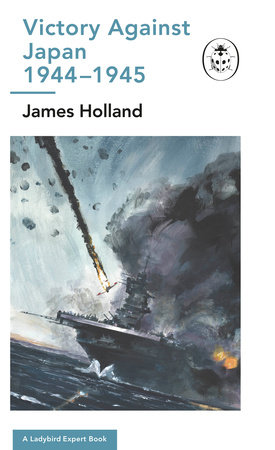
Coca-Cola and ice cream to defeat Japan

In their seminal book Conflict, which was reviewed here recently, General Petraeus and Lord Roberts posit that, in warfare, “the side that learns and adapts the fastest typically prevails.” An ageless lesson, throughout military history.

As geopolitics evolves, my interest in the Pacific theatre during World War II has increased significantly lately. To prevail against the Empire of the Rising Sun, the US Navy needed to destroy its crucial naval power, which dominated its sphere of influence for five decades. Curtailing Japanese supply lines, notably to deprive its fleet and troops of oil, was instrumental. To that end, American forces would be attacking the islands it occupied. “Capturing these outposts in the middle of the ocean would not only deny them to the Japanese, it would bring the Allied forces closer to Japan itself”, writes renowned military historian James Holland in Victory against Japan 1944-1945, published as part of his insightful contribution to the Ladybird Expert Series (Penguin Random House).

The author also evokes the military ineffectiveness of Chinese Nationalist warlord Chiang Kai-Shek “despite the United States’ two years of ceaseless supplies”, the inestimable contribution of future Marshal Bill Slim and Special Operations Executive (SOE) teams in Burma and the appearance of the B-29 “Superfortress” in the Pacific, “the most expensive single weapons system ever built” up to that point.

Continue reading “Coca-Cola and ice cream to defeat Japan”

Conflict: The study of warfare at its best

I was impatient to dive between the covers of General David Petraeus (retired) and Lord Roberts book, Conflict: The Evolution of Warfare from 1945 to Ukraine and saying I’m happy I did is a euphemism.

The best way for me to review this enthralling book is to get off the beaten path and summarize the 10 main takeaways that strike me the most.

1. Whatever you think of it, “war is still very much worth studying.” That’s the common thread of the book.

2. Totalitarian régimes have an easier time launching, conducting and bearing the brunt of war. The rise of autocracies throughout the world is therefore a challenge for democracies not accustomed with the pugilistic mindset.

3. Don’t cut military spending. “Money saved in piecemeal defense cuts often costs more in the long run.” The authors mention Great Britain’s decision to axe HMS Endurance before the Falklands War as a case in point. They also refer to Israel’s defense cuts after the Six Days War, with the consequences that followed six years later on the fateful morning of Kippur. Deterrence is cheap compared to war’s tribute in blood and treasure.

Continue reading “Conflict: The study of warfare at its best”

In the footsteps of Golda Meir

Let’s talk about an Israeli Prime Minister who is “an accomplished player in the rough-and-tumble world” of Jewish politics. An extremely talented communicator who can excite supporters and who plays on the American public scene like a virtuoso. At the same time, that leader generates strong feelings – positive and negative – among certain groups, particularly at home. This is a head of government whose political survival is threatened by an existential war launched against the country while its defenders are caught off guard.

Reading these lines, the image of Benjamin Netanyahu will certainly come to your mind. That is, if you are interested in current Israeli political history.

Considering the similarities quoted above, one could argue that the current Prime Minister walks in the footsteps of Golda Meir, in whose care the country was entrusted between 1969 and 1974.

I am fully aware that drawing parallels is a road on which one must tread carefully – after all these two leaders belong in two opposite ideological and partisan camps – but I could not avoid mentioning these striking parallels.

The life and career of the fourth Prime Minister of Israel – and only woman to occupy that function – have piqued my curiosity for quite a long time now. Thanks to the expertise and talent of Professor Deborah E. Lipstadt, who currently serves as the U.S State Department’s Special Envoy for Monitoring and Combating Antisemitism, an excellent opportunity has been granted me through Yale University Press’ excellent Jewish Lives Collection.

Continue reading “In the footsteps of Golda Meir”

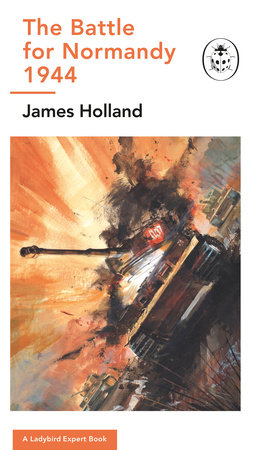
The Ferocious Battle for Normandy

In less than 60 days, we will commemorate the 80th anniversary of D-Day, the Allied landing in Normandy on June 6th, 1944. The celebrations surrounding that event are already under way. In the last hours, the French Ambassador to Canada travelled to Regina, the capital of Saskatchewan, to present the Légion d’honneur – France’s highest distinction established by Napoleon in 1802 – to a 104-year-old veteran who set foot on the beach on that fateful morning.

As we salute these men and prepare to sadly see the last ones depart for eternity, the need for remembrance becomes ever more crucial. Historians play an essential role on that score. Plenty of great books have been written about the longest day and the campaign that followed.

I just finished reading James Holland’s contribution to that impressive list, through the Ladybird Expert Book series. For anyone wanting to grasp the development of the Battle for Normandy in a summarized and vividly written style, this book is a must.

Continue reading “The Ferocious Battle for Normandy”

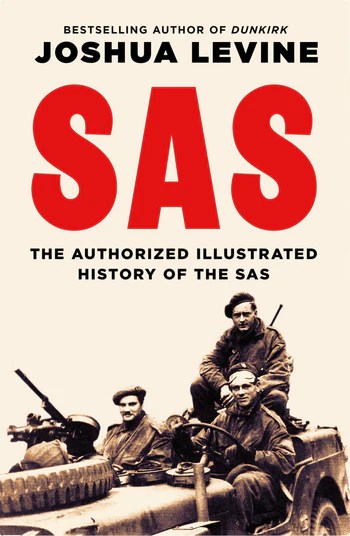
Churchill and the SAS

As a big fan of anything related to Special Forces, commandos, and covert operations, I enjoyed immensely reading Joshua Levine’s book SAS: The Authorized Illustrated History of the SAS (William Collins) during the Holidays. Incidentally, I finished reading it a few hours after I learnt that Mike Sadler, the last of the original members of the SAS (Special Air Service) had passed away.

Joshua Levine’s book is filled with breathtaking operations and incomparable characters, like Mike Sadler, David Stirling, Dudley Clarke, Paddy Mayne and Jock Lewes – among many who all played a crucial role in this inspiring chapter of World War II.

The main lesson I take from the author’s work is more political. History is full of fantastic ideas or projects that never lifted off the ground because they were not supported by the right people against all odds. The legendary SAS is not one of those. Bestselling author of Dunkirk, which was written in conjunction with the 2017 movie, Joshua Levine has a keen eye for military exploits.

Continue reading “Churchill and the SAS”

Morale: Determining Factor in the Desert War

“It was a combination of weight of arms and the grim determination of the men on the ground as well as air power that brought victory to the British”, writes historian James Holland in his book about The Desert War in the Ladybird Expert series.

The renowned author starts his book with an observation about the lack of enthusiasm among the crowd massed on the square facing the Palazzo Venezia when Italian dictator Benito Mussolini declared war on June 10, 1940. Italians were not fervent about fighting alongside the Germans. The feeling would have fateful consequences in the fight for the Mediterranean.

In October 1940, the Duce decided to invade Greece, probably motivated by the desire to prove his worth to his German ally. It was a bad decision that forced Hitler’s hand to send troops to the Mediterranean theatre. The Führer became obsessed with his southern flank and devoted considerable resources to beef it up.

Continue reading “Morale: Determining Factor in the Desert War”

“It’s hard to be a Jew”

Mark Twain declared that “history doesn’t repeat itself, but it often rhymes.” Any student of Israel’s history certainly had that feeling on October 7, when the country was attacked the day after the festival of Sukkot, a significant moment in the Jewish calendar. Historians will undoubtedly spend lots of time and expertise drawing similarities between the surprise attack that marked the start of the Yom Kippur War on October 6, 1973, and the latest murderous incursions launched by Hamas terrorists last month.

Few weeks prior to that “date which will live in infamy” to borrow FDR’s words, author Uri Kaufman released an enthralling book, Eighteen Days in October: The Yom Kippur War and How It Created the Modern Middle East (St. Martin’s Press). From cover to cover, this book details the very existential nature of this war – or any armed conflict – for Israel’s survival. On several occasions, Israel could have lost, marking the end of the Jewish State.

Continue reading ““It’s hard to be a Jew””

The Netanyahu Rules

For several reasons, I have never really been a big fan of memoirs. As a student of Israeli Prime Minister Benjamin Netanyahu’s political vocation, I was nevertheless to dive enthusiastically into his autobiography, whose title is simply Bibi: My Story (Threshold Editions). I was not disappointed, because “Bibi” marshalled all his legendary talent as a communicator to convey the chapters of his life.

I could evoke his conservative philosophy – notably expressed in his revulsion when confronted with the “absurd bureaucracy” preventing the Prime Minister’s Office from getting a new Nespresso coffee machine for six months – his numerous dealings with world leaders from Ronald Reagan to Vladimir Putin and Donald Trump or even the Herculean task of overcoming his detractors and would-be political assassins. I could also mention his admirable historical knowledge and his significant affinity with the Bible and its landscape. Or the care he took to maintain a deep and lasting relationship with the Likud members – an essential ingredient in his political longevity. Maybe I should also have taken the time to explore the influence of Ze’ev Jabotinsky’s “Theory of Public Pressure” on his career. However, the focus of this review is to extract the main lessons – we could call them rules – from his absorbing journey.

Continue reading “The Netanyahu Rules”