
Happy Birthday to the Duke of Wellington, Arthur Wellesley, victor of Waterloo. An extraordinary figure whose unparalleled contribution helped saved Europe and the world from Napoleonic hegemony and tyranny. He would be 247 years old!
The best books, their authors and the great people who inspire these stories / Les meilleurs livres, leurs auteurs et les grand.e.s de l'histoire qui les inspirent.

Happy Birthday to the Duke of Wellington, Arthur Wellesley, victor of Waterloo. An extraordinary figure whose unparalleled contribution helped saved Europe and the world from Napoleonic hegemony and tyranny. He would be 247 years old!

When you talk or read about the Holocaust nowadays, there is a despicable tendency, among many people, including historians, of putting the blame solely on the back of the Nazis. As if they had accomplished their evil business alone. But the truth is different, for they had willing collaborators and executioners.
An article written by historian Yuri Radchenko and published in the most recent issue of Yad Vashem Studies provides a sad but revealing example of that situation, detailing the collaboration of the Ukrainian Auxiliary Police with the Nazi hordes. After detailing the various aspects of this deadly collaboration, the author concludes:
“[…] the involvement of the Ukrainian police in the Holocaust was not limited to the purely “technical” roles of escorting and guarding the Jews, as had been claimed by several modern Ukrainian historians. The Ukrainian police proved its effectiveness in the task of exterminating Jews, both under German control and on their own. Obviously, the German military and security bodies bear the primary responsibility for killing the Jews. However, without the cooperation of the Ukrainian policemen, who were familiar with the lay of the land, knew the local language and dialect, and had frequently lived in close proximity to Jews in the prewar years, the Nazis would have been unable to carry out their genocidal project on such a vast scale.”
Very revealing, notably in light of the revisionist currents who seek to downplay or deny the role of various local populations in the execution of the Holocaust.
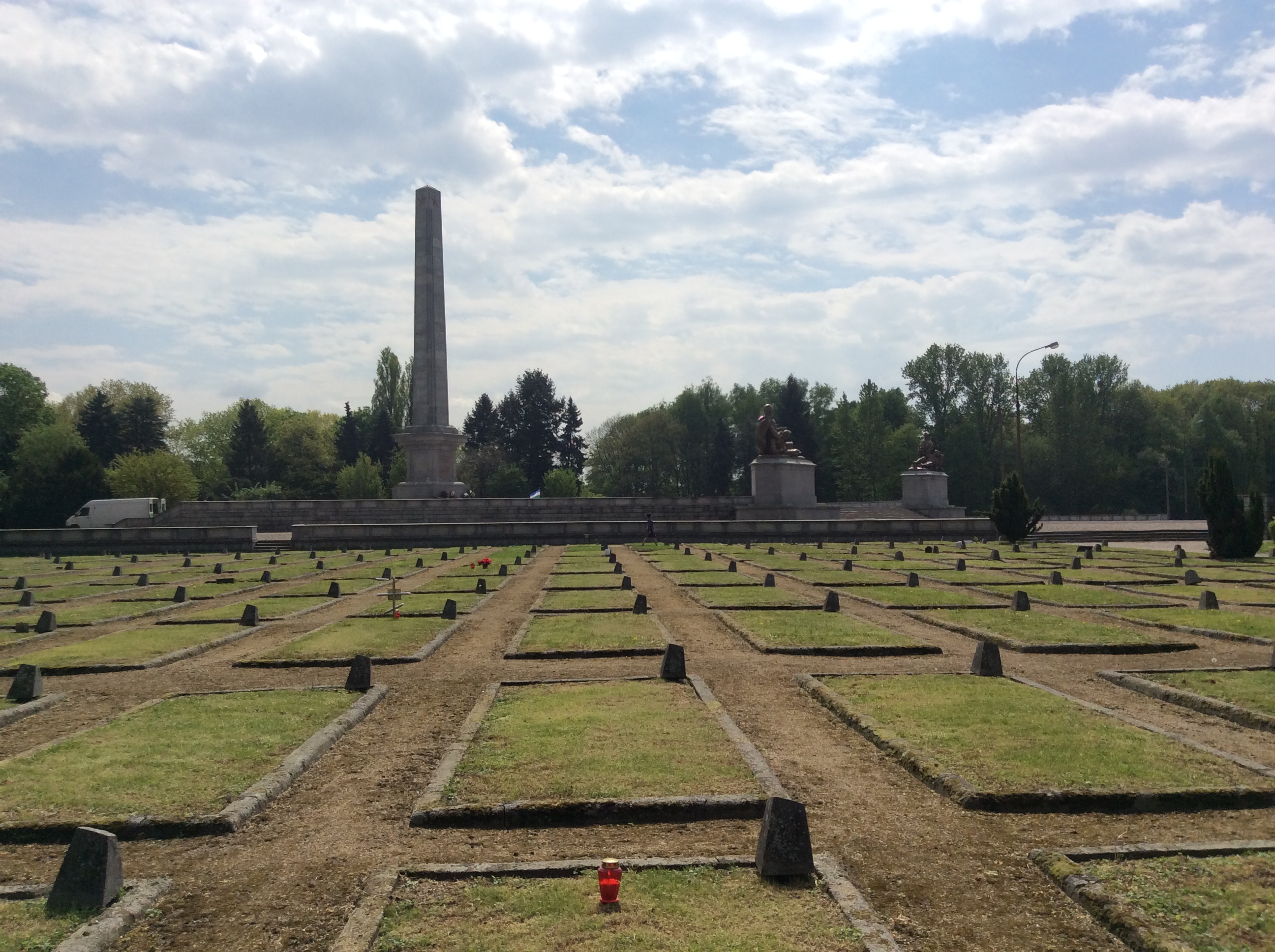
There is a sad tendency, these days, to rewrite history for political purposes.
In a recent book, French historian Philippe Richardot writes in his introduction: “The deciding factor of World War II is what occurred on the Eastern front” (my translation). And there is ample academic evidence to support this statement.
Alas, because of the current geopolitical context, in which many world leaders are opposed to Russian President Vladimir Putin, it is hard for many to resist the temptation to equate this situation with the intention of rewriting history.
Fortunately, there are people who are holding these revisionists to account.
Take for example this Israeli man who was interviewed by the Russian radio.
Here are two revealing excerpts of his interview:
“Most of the Holocaust survivors were saved by the Red Army. And they are live witnesses up until now. So it never happened in Israel anything like in Europe, nothing undermining the Russian part in the Second World War.
[…]
There are 39 memorials commemorating those who were responsible for this great victory, 39 memorials for the soldiers of the Red Army primarily. You don’t have anything like this in any other parts of the world. So today together with the Holocaust there is a memory of the great victory in Israel combined together.”
Scoring easy political points on the back of a leader you dislike is one thing, distorting history and betraying the memory of those who fell to ensure victory of barbarism and Nazism is another one. And it is unacceptable.
The Red Army deserves credit for the 1945 victory and we should never shy away from being grateful.
Probably one the best ways to summarize the birth of Israel, on May 14th, 1948. There’s not much I can add, except that it is just excellent.
Thanks to the Jerusalem Center for Public Affairs (@JerusalemCenter on Twitter) for sharing this.

Coming from the man who made sure that Soviet soldiers fired no bullets when the Iron Curtain came down, it is worth heeding the lessons given by Mikhail Gorbachev about the current situation. Without this man and his interlocutor, US President Ronald Reagan, the world might be a much worse place today.
Gorbachev’s advice reminds me of what Winston Churchill said in the British House of Commons on May 2nd, 1935:
“When the situation was manageable it was neglected, and now that it is thoroughly out of hand we apply too late the remedies which then might have effected a cure. There is nothing new in the story. It is as old as the sibylline books. It falls into that long, dismal catalogue of the fruitlessness of experience and the confirmed unteachability of mankind. Want of foresight, unwillingness to act when action would be simple and effective, lack of clear thinking, confusion of counsel until the emergency comes, until self-preservation strikes its jarring gong–these are the features which constitute the endless repetition of history.”
We might not agree with everything the former Soviet leader says. And I certainly don’t. But the more time we will spend listening to people like Gorbachev who were on the brink and who made sure we would not fall into the abyss, the less we will regret we did not.
 BookMarc