How Putin Saved Zelensky

The world “would hardly have heard about [Volodymyr] Zelensky if he had become an engineer, gone into the military, or became a doctor”, writes political commentator Serhii Rudenko in a recent biography of the Ukrainian President (Polity Books). Thanks to the political reality crafted by Servant of the People in which he played the role of a history teacher elected against the odds to lead the country, fiction turned into reality in 2019. And thanks to Russian President Vladimir Putin’s decision to start a war on Ukraine before sunrise on February 24th, the actor turned President has become an icon of resilience in defense of freedom and democracy.

Serhii Rudenko paints the portrait of a leader who was not on sure footing before the war intervened.

After his election, Zelensky broke his promise to distance himself from the nepotism espoused by his predecessor, Petro Poroshenko. “[…] A year after his election, the Poroshenko family was replaced by the Zelensky family – or, more precisely, by the Kvartal 95 Studio.” In other words, those who accompanied him in his showbusiness career, including in his role as President Vasily Petrovych Goloborodko on television.

Continue reading “How Putin Saved Zelensky”
“Justin Trudeau inspired me to enter politics” – Volodymyr Zelensky

I’m not the type who runs after books of quotations in bookstores. But I have two exceptions to that rule: Winston Churchill and Volodymyr Zelensky. Because both men decided to face the adverse winds of history at a most crucial time.

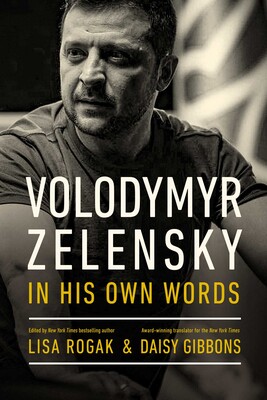
Bestselling author Liza Rogak, assisted by translator Daisy Gibbons, opens a window into the Ukrainian President’s worldview in a new book Volodymyr Zelensky in His Own Words (Pegasus Books). “You’ve never seen someone like me”, declared the statesman in April 2019. Coupled with his staunch determination to hold his ground in front of Russian President Vladimir Putin, this might be one of the reasons why he is so popular. “I don’t trust anyone at all” he said a few months later. Who could blame him, when you imagine allies hedging their bets at the beginning of the war to see if he stood a chance or not.

Continue reading ““Justin Trudeau inspired me to enter politics” – Volodymyr Zelensky”

The financier who exposed Vladimir Putin

Six years ago this week, Turkish President Recep Tayyip Erdogan survived a coup launched by a faction of the Armed Forces. The statesman mobilized his supporters, enjoining them to resist the coup, by using the FaceTime app on his iPhone. At the time, I was impressed by the powerful impact of such a small tool in creating such a momentous outcome.

I was reminded of that story while reading Bill Browder’s book Freezing Order: A True Story of Money Laundering, Murder and Surviving Vladimir Putin’s Wrath (Simon & Schuster), not only because of the cruciality of knowing how to use the modern tools of communications, but also because there is a huge price to pay when you confront an autocrat.

Bill Browder can attest to that.

The author of Freezing Order is an American-born financier (now living in the UK) and founder of Hermitage Capital Management who has been active in Russia between 1996 and 2008. In June 2008, one of his lawyers, “[…] Sergei Magnitsky, discovered that […] criminals had used our stolen companies and their fake claims to apply for a fraudulent $230 million tax refund.” That’s where the roller coaster ride that is this book begins.

Continue reading “The financier who exposed Vladimir Putin”

“Putin is clearly trying to ignite a larger conflict” – Martin Dugard

Author Martin Dugard (source: MartinDugard.com)

After the publication of my review of his excellent book Taking Paris: The Epic Battle for the City of Lights (Caliber), Martin Dugard kindly accepted to answer some questions for this blog. I feel privileged for the interview with an excellent and engaging author, who is also the coauthor of Bill O’Reilly’s Killing Series.

Here is the content of our exchange.

____________

Mr. Dugard, where did the idea of writing Taking Paris originate from?

The book actually started as Taking Rome but as the research expanded it became obvious that the story of Rome worked more nicely as a small section in the larger context of the 1940 fall of Paris and 1944 liberation.

Continue reading ““Putin is clearly trying to ignite a larger conflict” – Martin Dugard”

Moscow has no discernible exit strategy in Ukraine

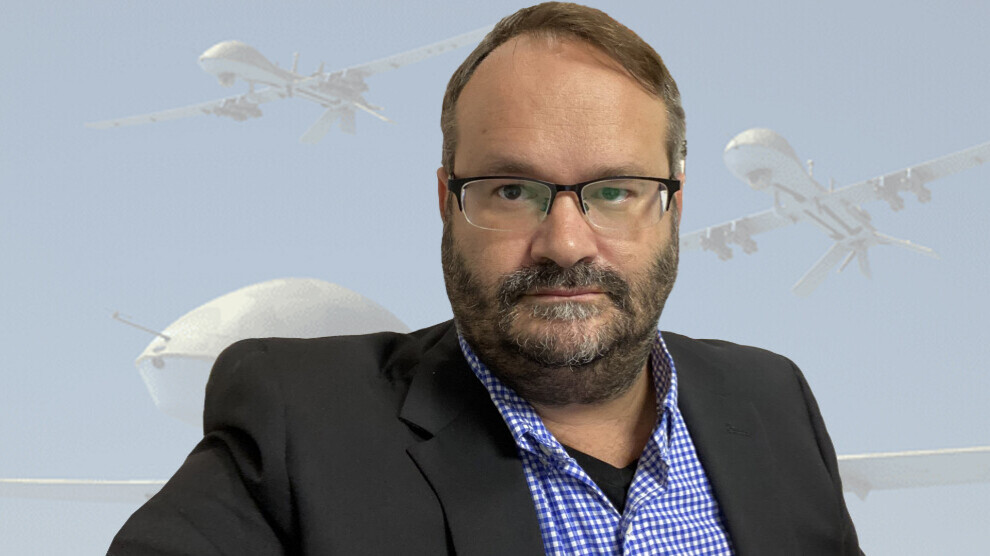
Professor Bettina Renz (source: YouTube)

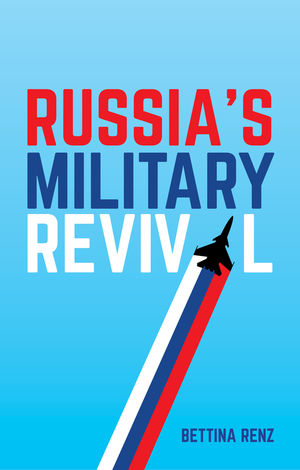
In the aftermath of my review of her timely and absorbing book Russia’s Miltiary Revival (Polity), author and University of Nottingham Professor of International Security Bettina Renz granted me an interview. I am extremely grateful for her insights, one week from Victory Day parade in Moscow.

Below is the content of our exchange.

_________

The situation is now a war of attrition with no immediate end in sight.

Professor Renz, considering the last 9 weeks, what is your assessment of the performance of the Russian army in Ukraine? Are you surprised by the way the situation evolved?

Knowing what we know now, the poor performance of the Russian armed forces in Ukraine is no surprise. On the one hand, the Russian military is numerically and technologically superior to their Ukrainian counterpart. On the other hand, the history of warfare has demonstrated repeatedly that superiority in numbers and kit cannot make up for poor strategy.

Continue reading “Moscow has no discernible exit strategy in Ukraine”

Putin thought he could get away with the invasion of Ukraine

Giles Milton (source: Macmillan)

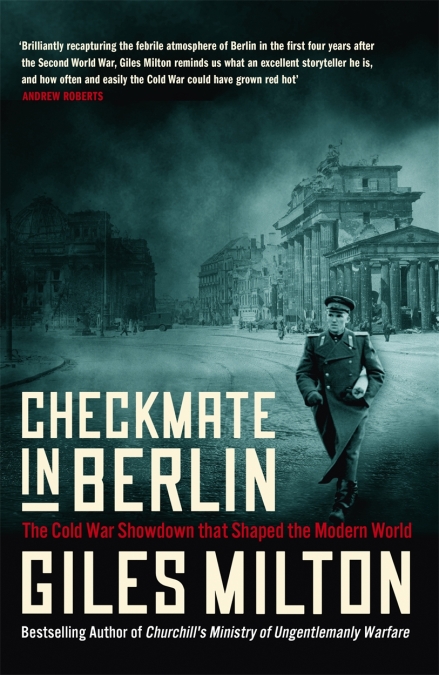
Giles Milton is one of my favorite authors. And it’s always a real pleasure to be in touch with him. Even before I wrote my review of his last book, he agreed to answer some questions for this blog. If you haven’t read his book yet, run to the bookstore or get it online. This is a must, in the context of the aggression war conducted against Ukraine. For the time being, I trust you will enjoy this interview.

Mr. Milton, Checkmate in Berlin is a brilliant lecture about American and British innovation in adversity, mainly in organizing the Berlin airlift. Do you see the same attitude these days towards Ukraine?

Nothing on the scale of the Berlin Airlift had ever been attempted before. True, the Americans had airlifted vast quantities of weapons to the Chinese during the Second World War, but the Berlin Airlift was supporting (and keeping alive) several million Berliners.

Continue reading “Putin thought he could get away with the invasion of Ukraine”

How Yeltsin Paved Putin’s Way

The Russian army and soldiers are all over the news since the invasion of Ukraine on February 24. It is therefore crucial to understand the military machine that is supposed to serve Vladimir Putin’s foreign policy. In her insightful book, Russia’s Military Revival (Polity), University of Nottingham Professor Bettina Renz quotes a fellow academic who observed that “by the end of the 1990s, Russia had largely been written off as a global military force as it was generally assumed that its armed forces stood ‘perilously close to ruin.’” While Putin’s 2008 modernization program proved instrumental in giving the Russian army its pride and means, the main argument of the author is that this development “did not occur in a vacuum.”

Since the reigns of the Tsars, “[…] having a strong military has always been important to Russia”, mainly to ensure régime stability, its presence in the world as a great power and the necessity – in the Kremlin’s perspective – of keeping a buffer zone against real or imagined potential invasion. Continuity is the main theme developed by Bettina Renz in her book.

Continue reading “How Yeltsin Paved Putin’s Way”

Turkish Drones Over Ukraine

Seth J. Frantzman (source ANF News)

Seth J. Frantzman is a senior correspondent and analyst at The Jerusalem Post, one of the world’s leading newspapers. He’s also a defence expert on anything related to drones in warfare. He recently published an insightful book on the subject, Drones Wars. Since the beginning of the invasion of Ukraine by Russians forces on 24 February, drones have played a role on the frontline as videos have circulated about their performance or the devastation and atrocities they permit to observe first-hand. Despite a grueling schedule, Mr. Frantzman, whose book I will review here soon, has kindly accepted to answer a few questions for me. I am sincerely grateful for that.

Here is the content of our exchange.

It does not seem the drones are playing a major role, but if they can show that Ukraine can still operate in their airspace, even when contested by Russian air defense and Russian warplanes, it will be an important accomplishment for armed drones.

Mr. Frantzman, I have watched with amazement the images of the Turkish-made drone attacking the Russian military in Ukraine. What place are the drones occupying in this conflict? 

There is a lot we don’t know about how Ukraine is using the Bayraktar drones it has acquired from Turkey. Basic information about how many are still flying and where they are operating appears to be lacking from most reports. Nevertheless, there have been several videos claiming to show the UAVs targeting the Russian military. It does not seem the drones are playing a major role, but if they can show that Ukraine can still operate in their airspace, even when contested by Russian air defense and Russian warplanes, it will be an important accomplishment for armed drones. 

Continue reading “Turkish Drones Over Ukraine”

Putin’s Soviet Playbook

As I grow older, I realize that history is one of the surest guides to navigate the present. While many adhered to Francis Fukuyama’s theory that the demise of Soviet Union on December 26, 1991, represented the end of history, others lamented what they perceived as “the greatest geopolitical catastrophe of the century”.

Old habits die hard and Giles Milton’s Checkmate in Berlin: The Cold War Showdown That Shaped the Modern World is an excellent representation of that idiom. “”America is now the primary enemy,” said one of Marshal’s Zhukov’s general at the time of the capture of Berlin. “We have destroyed the base of Fascism. Now we must destroy the base of Capitalism – America.”” Things haven’t changed much in the last 77 years.

Continue reading “Putin’s Soviet Playbook”

Putin is following Hitler’s blueprint

I started reading Poland 1939: The Outbreak of World War II by historian Roger Moorhouse last summer, with the intention of reviewing it on the 82nd anniversary of the tragic events that unfolded in September of that fateful year. But life caught up with me and the book remained unfinished on my desk for several months. That was until Vladimir Putin decided to invade Ukraine.

Let me start with an observation. Not much – not enough I should say – is written in English about Polish military history. I remember reading Adam Zamoyski’s Warsaw 1920 in 2012, when I first visited Poland. During that trip, I also visited the Field Cathedral of the Polish Army and the Warsaw Uprising Museum, both located in the capital city. Notwithstanding these contacts with Polish military history, I always have the image of Polish lancers attacking the mighty Wehrmacht in a useless charge.

Continue reading “Putin is following Hitler’s blueprint”