“Grit, determination and sacrifice”

In a recent book about FDR and Churchill, historian James B. Conroy recounts how the iconic British Prime Minister convinced the US President to choose the option of attacking the underbelly of the Axis, namely North Africa and Italy, rather than an early landing in France. But more about it later.

Any traveler from Rome disembarking the train at Monte Cassino is granted the unique spectacle of the breathtaking view of the iconic 6th Century Benedictine monastery overlooking the town. Only then can you fully grasp the magnitude of what Allied soldiers endured on their way to Rome.

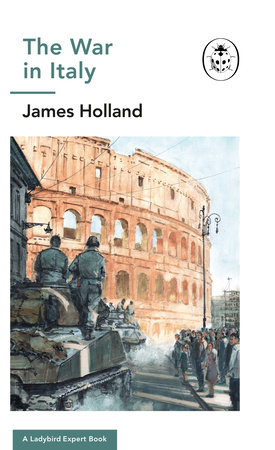
Yet, despite its cruciality, the Italian front is a poor cousin of World War II history. Renowned historian James Holland’s work contributes to correcting that perception. He notably does so in a brief but evocative book he devotes to The War in Italy as part of the excellent Ladybird Expert series. Between the covers, James Holland notably illustrates that, far from disengaging the enemy, German troops did everything they could to block its way North. For instance, he writes that the bombing of the Monte Cassino Abbey made the position stronger for the 1st Fallschirmjäger paratroopers who reinforced the Gustav Line in that sector. British General Harold Alexander’s 15th Army Group would not be celebrating Christmas 1943 in the Eternal City. Hitler’s troops were anything but a spent force. They would stubbornly defend their positions “for over a year and a half”. On the Allied side, the landings at Salerno (Sicily) were “very nearly a catastrophic failure”, foreshadowing hardships to come.

Continue reading ““Grit, determination and sacrifice””
The Devil’s Servants

The SS are still claiming victims to this day. Not on the battlefield, of course, but because of their nefarious legacy. Their ghosts have been sighted last week in the Canadian parliament when a former member of the Waffen-SS 14th (Galician) Division was hailed as a hero. The Speaker of the House of Commons, Anthony Rota, had no choice but to resign because of the storm his praise about 98 years old Ukrainian SS veteran Yaroslav Hunka generated. Truth be told, all those applauding were most certainly unaware of his past military service in Hitler’s elite troops.

Which brings back the crucial notion of education and awareness.

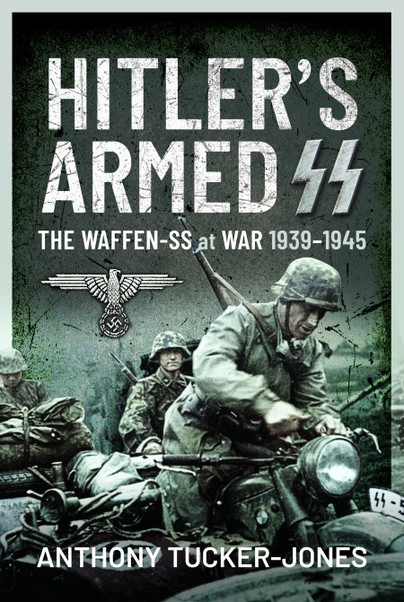
The events in Canada’s Nation Capital and the storm it legitimately generated occurred as I was completing my reading of Anthony Tucker-Jones’ book Hitler’s Armed SS: The Waffen-SS at War 1939-1945 (Pen & Sword Military).

One of Hitler’s main traits was that he fostered rivalry around himself. Loathsome of the military establishment, notably because it regrouped several characters born into the German aristocracy, the founder of the Third Reich created the Schutzstaffel as a counterweight. His investment would prove worthy. The members of the SS – who fought even after the Führer rendered his last breath after committing suicide in his bunker – had been his most committed and fanatical fighters.

Continue reading “The Devil’s Servants”

How Bill Slim Turned the Tide

Any passerby on Whitehall in London walks in front of three statues representing towering British military figures of World War II. The most iconic one is naturally the one representing Viscount Montgomery, the victor of Alamein. Then there’s one of Viscount Alanbrooke, who headed the British Army during the conflict. The third and last one along the way – if you come from the House of Commons – depicts Viscount Slim, the victor of Burma. While I have devoured countless articles and books about Monty and read many things on Alanbrooke, my knowledge about the last member of the trio is scant at best. Mea culpa.

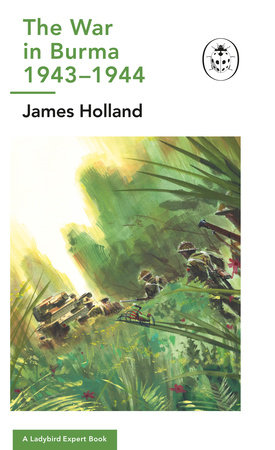
A few weeks ago, The War in Burma 1943-1944 by renowned military historian James Holland came to my attention. I dove right into it with delight. True to his eloquence and unparalleled expertise (I’m a huge fan of his documentaries and I have another book of his on my shelves), this engaging historian broadened my horizons about an aspect and a figure of World War II about which I knew too little.

Published as part of the Ladybird Expert Book collection, the most recent addition to James Holland series is beautifully enhanced by Keith Burns’ stunning and evocative illustrations summarizes the significance of the much too unknown South-East Asian theatre of World War II. Northwest Burma, the prolific historian writes, was “one of the most inhospitable places to fight in the world.” By the end of 1944, the Japanese were on the move to smash British troops on their way to India, hopefully end the British Raj and thwart the delivery of essential supplies to Chiang Kai-shek’s Nationalists in China who were also fighting the Japanese toe and nails. The stakes were unparalleled, and the British couldn’t afford to lose any ground. Outnumbered and demoralized, how could they reverse the tide?

Continue reading “How Bill Slim Turned the Tide”

Patton was Destined for War

“Battle is the most magnificent competition in which a human being can indulge”, said General George S. Patton. Within four years, the famous World War II warlord went from soul-searching about his future in the profession of arms to being one of the main pugilists who brought Nazi Germany on its knees in 1945.

The full measure of Patton’s greatness and vanity are brought to life in Martin Dugard’s last book Taking Berlin: The Bloody Race to Defeat the Third Reich (Caliber), between the covers of which the author doesn’t hide his admiration for the legendary soldier who believed he was the reincarnation of a Roman legionnaire. Full disclosure, I think we can easily forgive this inclination, because it is all too easy to admire the character, a feeling to which I willingly plead guilty.

In the same manner as in his previous book Taking Paris, the author – who collaborated with journalist Bill O’Reilly to write several books – calls upon an army of pertinent details to bring his narrative to life. I personally discovered that the meaning of the Belgian town of Spa’s name “is an acronym of the Latin Salus per Aquam, meaning “health from water” or that the word “Roger” pronounced on the radio means “received”, but is also an acronym for “Received Order Given, Expect Results”.

Continue reading “Patton was Destined for War”

Churchill was better at strategy than politics

Professor Simon J. Ball (University of Leeds)

I recently reviewed Professor Simon J. Ball’s revealing book about the battle of Alamein (The Folio Society). He generously accepted to answer few questions for this blog, and I take immense pleasure in sharing the content of our exchange with you today. I trust you will enjoy reading it.

_________

Professor Ball, I might be wrong, but I have a feeling that the Mediterranean theater during World War II has been overlooked. Why is it important to pay more attention to it? How crucial was it in the big picture of the conflict? 

SJB: The war in the Mediterranean was of central importance. It blew apart the idea of the Mediterranean as a unified zone, although all the major powers tried to engineer integration at some points. Oddly the idea of the Mediterranean as an integrated politico-economic-cultural area, “breathing with the same rhythms”, was popularized by Fernand Braudel in the late 1940s.

Continue reading “Churchill was better at strategy than politics”

The distorted memory of Alamein

British soldiers during the second battle of Alamein (The Times of Israel)

“History will be kind to me for I intend to write it”, declared Winston Churchill. That quote might reveal why the second battle of Alamein seems only to reach a limited audience of military history specialists and enthusiasts. In terms of visibility and shelf space, Alamein doesn’t rank with D-Day, Stalingrad, or Bastogne.

Knowing that the battle stopped Field Marshal Erwin Rommel’s advance on Egypt during the turning point year of 1942, one can reasonably wonder why that is so. In a nutshell, “the absence of the victors left plenty of room for the ‘losers’ to have their say. […] the British state’s insistence on not telling a national narrative over-represented the voices of its enemies”, explains historian Simon Ball in The Folio Society edition of his insightful history of the battle fought in the sands of North Africa in October and November 1942.

Material rather than manpower would have been the drivers of the Allied victory. In sum, “the Axis had lost the battle for four reasons: enemy air superiority; the poor performance of the Italian troops; the Eighth Army’s superiority in modern weapons; and their own lack of fuel.” Rommel became an icon – a phenomenon I observed on numerous occasions while visiting military museums in the United Kingdom – and his opponent, Field Marshall Bernard Montgomery drew flak from “old régime” figures who could not stomach the methods of this iconoclast figure who privileged meritocracy. The tenants of that school preferred to give way to Rommel rather than applaud the success and qualities of Montgomery. That phenomenon is regrettably still observable to this day.

Continue reading “The distorted memory of Alamein”

The Indomitable Prisoners of Colditz

Since I was a kid, The Great Escape featuring Steve McQueen, James Garner, Charles Bronson, and Richard Attenborough (in the role of the legendary Roger Bartlett – the legendary Roger Bushell in real life) has been one of my favorite movies. In 2015, when I lived in Poland, I visited the Stalag Luft III Prisoner Camp Museum in Zagan – 5 hours west of Warsaw. That memorable visit was a real pilgrimage in the footsteps of those gallant men who refused to remain behind German barbed wired.

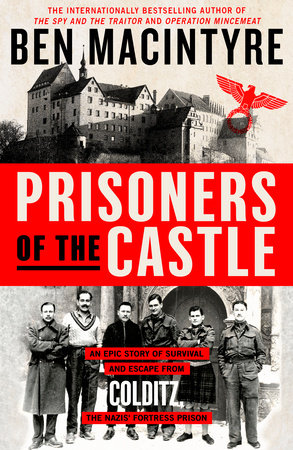
I was therefore overjoyed to read bestselling author Ben Macintyre’s book Prisoners of the Castle: An Epic Story of Survival and Escape from Colditz, the Nazis’ Fortress Prison (Signal).

I often say that Ben Macintyre would find a way of making the history of the can of Coke enthralling. His book Rogue Heroes features among my very favorites. I, therefore, did not doubt that I was in for quite a treat when I opened Prisoners of the Castle. Even those high expectations were surpassed because the author brings the reader to a new understanding of the war experience.

Continue reading “The Indomitable Prisoners of Colditz”

The Harry and Meghan episode is worse than the abdication crisis

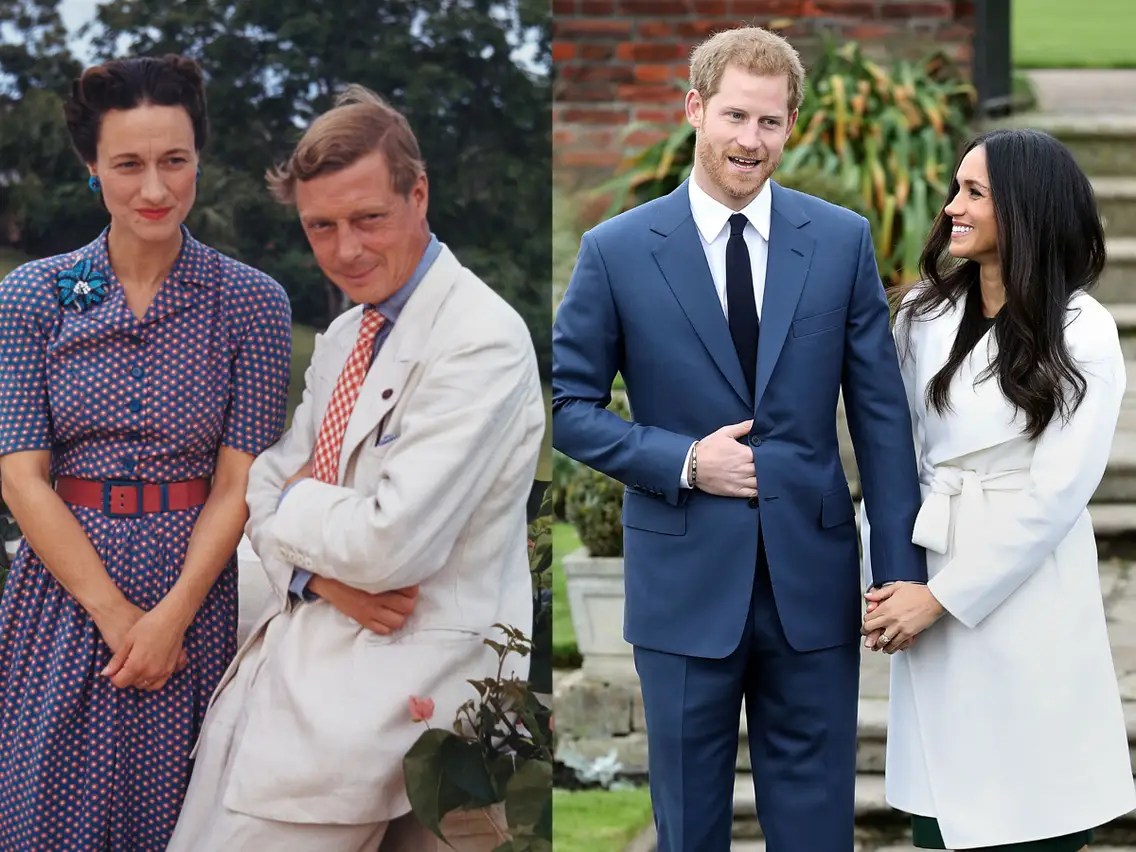
There are lots of parallels between Wallis Simpson and former King Edward VIII (left) and Prince Harry and Meghan Markle (right) (Insider)

Few weeks ago, I reviewed Andrew Lownie’s enthralling and fascinating book Traitor King: The Scandalous Exile of the Duke & Duchess of Windsor. The author – a disillusioned monarchist who believes in institution but feels let down by some members of it – generously accepted to answer a few questions for this blog. Below is the content of our discussion.

________

Mr. Lownie, while researching Traitor King, did you make any findings that surprised you?

Lots not least the extent of the Windsors’ dealings with the Nazis which can be found in documents, the knowledge that the Royal Family and Government had of their activities and the rather bizarre relationship the couple had and their bisexuality. Also, the degree of the attempted British cover up of his treachery.

Understandably, Winston Churchill is a frequent guest in the book. I might be wrong, but I didn’t get the sense that he became a tooth-and-nail opponent of the Duke of Windsor during the war. How would you describe the evolution of the relationship between the two men?

Churchill had been one of the Duke’s strongest supporters during the Abdication, mainly because of his romantic notion of the monarchy, but the scales fell when he saw the Duke’s duplicity over the financial settlement in 1937 and the disloyalty shown during the war when Churchill had to threaten him with court martial. The relationship then became more pragmatic with Churchill trying to find him a job after the war and suppressing the embarrassing captured German documents, but he refused to join a cruise when he learnt the Windsors would be present.

Continue reading “The Harry and Meghan episode is worse than the abdication crisis”

The Source of JFK’s Greatness

For as long as I can remember, November 22 has always been a sobering date on my calendar. My late father, like many of his generation, revered John F. Kennedy. He owned several pieces of memorabilia. He also vividly remembered where he was and what he was doing on that fateful day when his favorite statesman tragically fell under the bullets. Before the Roosevelts, Truman, LBJ, Reagan and both Presidents Bush – commanders in chief for whom I have tons of admiration – JFK was the first one who piqued my intellectual curiosity.

I cannot proclaim that I have read every book regarding the main figure of contemporary Camelot, but I always make a point of skimming the pages of as many as I can. Mark K. Updegrove is a presidential historian whose work I have always been interested in. I was, therefore, impatient to grab a copy of his recent book Incomparable Grace: JFK in the Presidency. I was expecting a good read because the author has an enthralling writing style. But I got much more than that.

Continue reading “The Source of JFK’s Greatness”

The King who jeopardized the Monarchy

The cover of Prince Harry’s memoir was released last week, in mounting anticipation of the day it hits the shelves next January. Since their wedding in May 2018, Harry and Meghan have proven to be distracting – to say the least – for the Royal Family. Their staunch desire to center everything around their desires, feelings and intentions goes against the grain of an institution based on selflessness and duty.

Even though the revelations contained in his book will probably rock and ruffle Buckingham Palace, Prince Harry’s fifth position in the line of succession to the throne render his tribulations much less catastrophic than those posed by his late grandmother’s uncle, King Edward VIII. On December 10, 1936, this Monarch deposed the scepter and the orb for the sake of marrying the Queen of his heart, the American-born divorcee Wallis Simpson.

His brother, George VI, was left to pick up the pieces. He was neither supposed nor prepared to accede the throne. The reputation of the institution was severely tarnished, but the history of the world can be grateful that George Windsor was tasked with this mission because his brother David (Edward VIII)’s presence on the throne would have proved catastrophic in the period leading to and during World War II.

Continue reading “The King who jeopardized the Monarchy”