“Grit, determination and sacrifice”

In a recent book about FDR and Churchill, historian James B. Conroy recounts how the iconic British Prime Minister convinced the US President to choose the option of attacking the underbelly of the Axis, namely North Africa and Italy, rather than an early landing in France. But more about it later.

Any traveler from Rome disembarking the train at Monte Cassino is granted the unique spectacle of the breathtaking view of the iconic 6th Century Benedictine monastery overlooking the town. Only then can you fully grasp the magnitude of what Allied soldiers endured on their way to Rome.

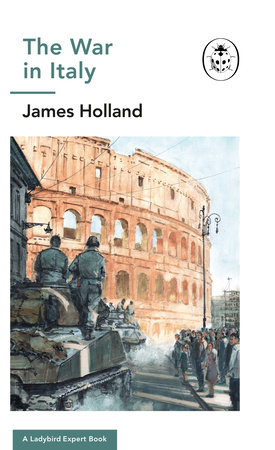
Yet, despite its cruciality, the Italian front is a poor cousin of World War II history. Renowned historian James Holland’s work contributes to correcting that perception. He notably does so in a brief but evocative book he devotes to The War in Italy as part of the excellent Ladybird Expert series. Between the covers, James Holland notably illustrates that, far from disengaging the enemy, German troops did everything they could to block its way North. For instance, he writes that the bombing of the Monte Cassino Abbey made the position stronger for the 1st Fallschirmjäger paratroopers who reinforced the Gustav Line in that sector. British General Harold Alexander’s 15th Army Group would not be celebrating Christmas 1943 in the Eternal City. Hitler’s troops were anything but a spent force. They would stubbornly defend their positions “for over a year and a half”. On the Allied side, the landings at Salerno (Sicily) were “very nearly a catastrophic failure”, foreshadowing hardships to come.

Continue reading ““Grit, determination and sacrifice””

Netanyahu Was Right

I had the privilege of meeting Israeli Prime Minister Benjamin Netanyahu years ago. During our discussion, he stressed the fact that it was crucial to support Israel because it is the first line of defense of the West and its values. As a commando soldier, diplomat and statesman, this man has accumulated a vast experience fighting extremism in its most brutal forms.

I was therefore not surprised to learn that he was the first world leader to make a congratulatory call to President Donald Trump, after the Americans liberated the world of the nefarious presence of Qasem Soleimani, the Iranian warlord in charge of the Revolutionary Guards who was a combination of “James Bond, Erwin Rommel, and Lady Gaga rolled into one” for his supporters.

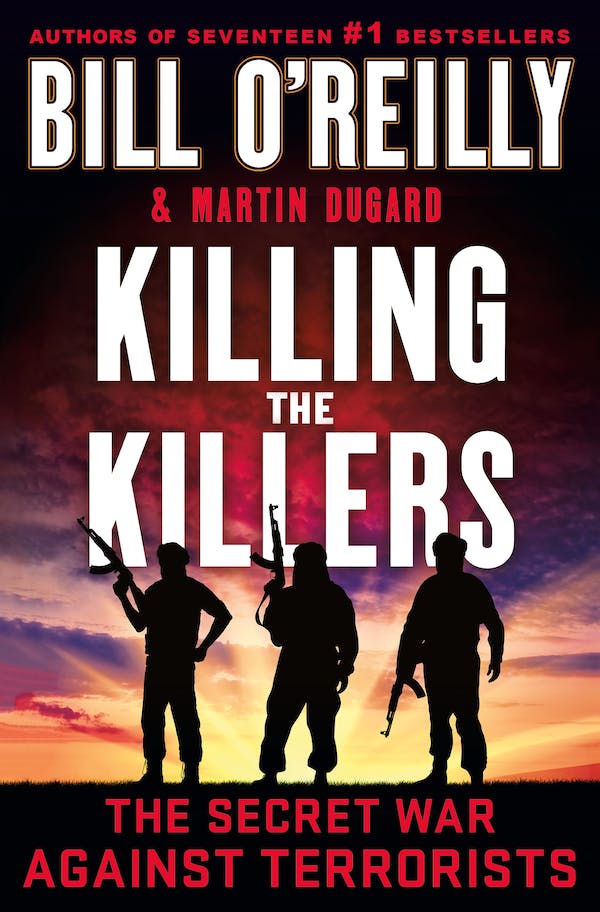
That information is revealed in Killing the Killers: The Secret War Against Terrorism (St. Martin’s Press) by veteran journalist Bill O’Reilly and acclaimed author Martin Dugard, whose books I reviewed on this blog.

Continue reading “Netanyahu Was Right”

The Devil’s Servants

The SS are still claiming victims to this day. Not on the battlefield, of course, but because of their nefarious legacy. Their ghosts have been sighted last week in the Canadian parliament when a former member of the Waffen-SS 14th (Galician) Division was hailed as a hero. The Speaker of the House of Commons, Anthony Rota, had no choice but to resign because of the storm his praise about 98 years old Ukrainian SS veteran Yaroslav Hunka generated. Truth be told, all those applauding were most certainly unaware of his past military service in Hitler’s elite troops.

Which brings back the crucial notion of education and awareness.

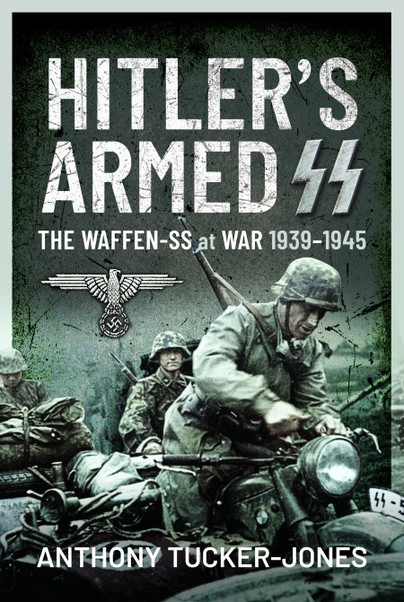
The events in Canada’s Nation Capital and the storm it legitimately generated occurred as I was completing my reading of Anthony Tucker-Jones’ book Hitler’s Armed SS: The Waffen-SS at War 1939-1945 (Pen & Sword Military).

One of Hitler’s main traits was that he fostered rivalry around himself. Loathsome of the military establishment, notably because it regrouped several characters born into the German aristocracy, the founder of the Third Reich created the Schutzstaffel as a counterweight. His investment would prove worthy. The members of the SS – who fought even after the Führer rendered his last breath after committing suicide in his bunker – had been his most committed and fanatical fighters.

Continue reading “The Devil’s Servants”

Le majordome du diable

« J’étais toutefois convaincu que grâce au Führer, je pourrais marcher d’un pas assuré dans la vie et vivre sans trop de soucis le reste de mes jours, une fois quitté mon service. » Tel est l’aveu livré par Heinz Linge, qui fut le majordome d’Hitler et qui vécut dans son intimité pendant une décennie, dans ses mémoires intitulées Jusqu’à la chute (Éditions Perrin). Le destin et le sort des armes eurent cependant pour effet de contredire cette conviction. La décennie suivante de son existence se passa dans les geôles soviétiques, après sa capture à proximité du bunker de la Chancellerie où son ancien maître s’était donné la mort le 30 avril 1945.

D’entrée de jeu, j’admets ne pas être friand des mémoires. Rarement y assiste-t-on à de véritables prises de conscience, puisque l’exercice se veut généralement une tentative de justification ou de réhabilitation devant la postérité. Je ne m’attendais donc pas à un mea culpa à propos de l’Holocauste. Heinz Linge balaie à cet égard toute responsabilité. À propos de son patron, il écrit : « Tout ce qu’on lui a imputé, écrit-il, je ne l’ai appris qu’après la guerre – car le Führer ne parlait qu’en tête à tête avec lui [Heinrich Himmler, proche collaborateur du Führer et architecte de l’Holocauste] de choses que je ne lui aurais jamais attribuées, comme l’extermination massive des Juifs. » Difficile à croire, puisqu’il avoue candidement que personne d’autre qu’Eva Braun n’était plus proche du dictateur que lui.

Mais là ne repose pas l’intérêt principal de son témoignage.

poursuivre la lecture

How Bill Slim Turned the Tide

Any passerby on Whitehall in London walks in front of three statues representing towering British military figures of World War II. The most iconic one is naturally the one representing Viscount Montgomery, the victor of Alamein. Then there’s one of Viscount Alanbrooke, who headed the British Army during the conflict. The third and last one along the way – if you come from the House of Commons – depicts Viscount Slim, the victor of Burma. While I have devoured countless articles and books about Monty and read many things on Alanbrooke, my knowledge about the last member of the trio is scant at best. Mea culpa.

A few weeks ago, The War in Burma 1943-1944 by renowned military historian James Holland came to my attention. I dove right into it with delight. True to his eloquence and unparalleled expertise (I’m a huge fan of his documentaries and I have another book of his on my shelves), this engaging historian broadened my horizons about an aspect and a figure of World War II about which I knew too little.

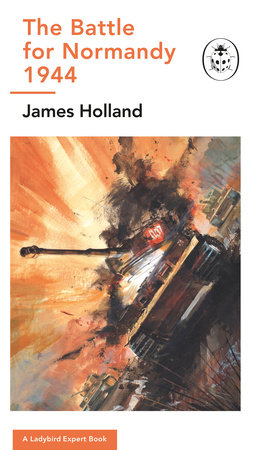
Published as part of the Ladybird Expert Book collection, the most recent addition to James Holland series is beautifully enhanced by Keith Burns’ stunning and evocative illustrations summarizes the significance of the much too unknown South-East Asian theatre of World War II. Northwest Burma, the prolific historian writes, was “one of the most inhospitable places to fight in the world.” By the end of 1944, the Japanese were on the move to smash British troops on their way to India, hopefully end the British Raj and thwart the delivery of essential supplies to Chiang Kai-shek’s Nationalists in China who were also fighting the Japanese toe and nails. The stakes were unparalleled, and the British couldn’t afford to lose any ground. Outnumbered and demoralized, how could they reverse the tide?

Continue reading “How Bill Slim Turned the Tide”

Patton was Destined for War

“Battle is the most magnificent competition in which a human being can indulge”, said General George S. Patton. Within four years, the famous World War II warlord went from soul-searching about his future in the profession of arms to being one of the main pugilists who brought Nazi Germany on its knees in 1945.

The full measure of Patton’s greatness and vanity are brought to life in Martin Dugard’s last book Taking Berlin: The Bloody Race to Defeat the Third Reich (Caliber), between the covers of which the author doesn’t hide his admiration for the legendary soldier who believed he was the reincarnation of a Roman legionnaire. Full disclosure, I think we can easily forgive this inclination, because it is all too easy to admire the character, a feeling to which I willingly plead guilty.

In the same manner as in his previous book Taking Paris, the author – who collaborated with journalist Bill O’Reilly to write several books – calls upon an army of pertinent details to bring his narrative to life. I personally discovered that the meaning of the Belgian town of Spa’s name “is an acronym of the Latin Salus per Aquam, meaning “health from water” or that the word “Roger” pronounced on the radio means “received”, but is also an acronym for “Received Order Given, Expect Results”.

Continue reading “Patton was Destined for War”

Quand Vladimir Poutine règle ses comptes

« Demain ce crétin [de Prigojine] nous sera préjudiciable, et représentera une menace. Sous peu, son attitude va remonter toutes les badernes de généraux de l’armée contre nous. Ici, Prigo se comporte en courtisan, mais dès que je lui tourne le dos, j’entends des choses désagréables… Il se prend pour quelqu’un qu’il n’est pas. Le cuisinier a pris la grosse tête. Je te chargerai de définitivement la dégonfler. »

C’est ainsi que le président russe Vladimir Poutine s’adresse à Medusa, la mystérieuse et impitoyable spadassine qui se fraie un chemin jusqu’à lui à travers les couloirs secrets du Kremlin. Il l’a chargée de prendre la tête de l’incarnation contemporaine de SMERSH – la terrifiante et sanguinaire unité de contre-espionnage militaire soviétique qui sévissait durant la Seconde Guerre mondiale et dont le nom signifie « mort aux traîtres »– dans les pages de l’époustouflant dernier roman de Viktor K. (Vincent Crouzet) Service Action – Louve Alpha (Robert Laffont).

À la lumière des événements des dernières heures qui ont vu l’ancien patron de Wagner et putschiste malheureux du 24 juin dernier rendre l’âme après que deux missiles ont eu provoqué l’écrasement de l’avion à bord duquel il prenait place, le récit de ce roman prend tout son sens. Il permet de constater que le président russe aime régler l’ardoise avec ceux et celles qui entravent sa route.

poursuivre la lecture

Churchill’s Jewish Commandos

“Winston Churchill was desperate to fight the Germans any way he could – including guerilla warfare”, writes Leah Garrett in a groundbreaking book about a secret unit created within the British Army during World War II. At one point, Lord Mountbatten suggested creating “a new special unit of commandos” formed by “displaced nationals such as Poles, Norwegians, and Frenchmen” among others. The idea thrilled the British Prime Minister. German-speaking refugees were to form the ranks of the X Troop that was born in 1942.

The unit was singular in the sense that the large majority of its 87 members were Jewish young men eager to bring the fight to Nazi Germany. Considered aliens and potential enemies when they reached Britain’s shores, these new commandos had to shun their real names and identities to perform their duty. One of them, George Lane (Lanyi György was his real name) even found himself in Marshal Rommel’s presence after his capture during a special mission leading up to D-Day.

Between the covers of X Troop: The Secret Jewish Commandos of World War II (Houghton Mifflin Harcourt), historian and author Leah Garrett traces the history of “one of the most selective unit” through the fate of these “highly intelligent, highly motivated, German-speaking commandos” whose knowledge of the enemy’s language would be crucial at many levels on the battlefield. They became Churchill’s brawns and brains.

Continue reading “Churchill’s Jewish Commandos”

Sayeret Matkal on the frontlines

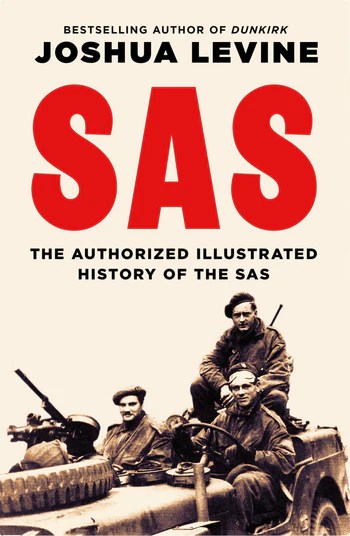
July 4th marked the 47th anniversary of the Entebbe operation, during which Israeli commandos rescued passengers held hostages by Palestinian terrorists and Ugandan soldiers after the hijacking of an Air France plane in Athens. Israel lost one soldier during the operation, Yoni Netanyahu, brother of the current Prime Minister of Israel. The audacious soldiers who appeared in the skies of Entebbe in the middle of the night belonged to Sayeret Matkal – Israel’s Defense Force’s General Staff Reconnaissance Unit. The unit was founded in 1957 by Avraham Arnan and was directly inspired by the iconic SAS (Special Air Service) warriors who served under the Union Jack during World War II.

I was too young to remember what happened at Entebbe. But another operation has captivated me since I was a teenager. I vividly remember hearing on the radio the news of Abu Jihad’s neutralization in April 1988 in Tunis. From memory, Israel was announced as having ordered this operation and I wondered how these intrepid operatives could perform their art so far away from the shores of their homeland.

I was therefore thrilled to read Sayeret Matkal: The Greatest Operations of Israel’s Elite Commandos (Skyhorse Publishing) by Avner Shur and Aviram Halevi, whose first chapter invites the reader to walk with the Israeli commandos to accomplish Operation Show of Force under the leadership of commander Moshe “Boogie” Ya’alon.

Continue reading “Sayeret Matkal on the frontlines”

Vladimir Poutine dans les pas de Nicholas II?

Le géopoliticien Pierre Servent (Le Figaro)

Dans la foulée de ma recension de son interpellant livre Le monde de demain, le spécialiste de la géopolitique, historien et auteur Pierre Servent a accepté de m’accorder une entrevue en début de semaine. Le lendemain de l’entrevue, on dévoilait qu’il était lauréat du Prix du livre de géopolitique 2023 – prix spécial du jury – pour cet ouvrage saisissant d’actualité.

Nous l’en félicitons chaleureusement et le remercions vivement pour la générosité de son temps.

______

M. Servent, nous avons trop souvent l’impression en Occident que Vladimir Poutine est une anomalie de l’histoire. Dans votre livre, vous donnez des clés instructives pour comprendre que ce n’est pas le cas. Est-ce qu’il a le sens de l’histoire?

Il n’est pas connu pour être un féru d’histoire dans le sens où il n’a pas fait d’études en ce sens. On peut être féru d’histoire sans avoir fait des études universitaires ou autre, mais on ne note pas dans sa carrière de témoignages de ses compagnons, de ses proches, de toute l’équipe qu’on peut appeler aussi le gang de Saint-Pétersbourg à l’époque à l’effet que Vladimir se plonge dans un livre d’histoire. Il n’est pas connu pour être un passionné d’histoire.

Dans la période plus contemporaine, on trouve des indications intéressantes dans le livre notamment de Michel Eltchaninoff qui a été publié il y a quelques années qui s’intitule Dans la tête de Vladimir Poutine. Là, il semble qu’un certain nombre de personnages ayant eu des connaissances historiques approfondies mais dans un sens très particulier par rapport à l’histoire de la Russie et notamment sur son versant asiatique. La Russie est une puissance euro-asiatique et il y a toujours eu dans l’histoire du pays des tensions entre les pro-occidentaux et ceux qui, au contraire, considéraient que la Russie était une puissance asiatique.

poursuivre la lecture