How Putin Saved Zelensky

The world “would hardly have heard about [Volodymyr] Zelensky if he had become an engineer, gone into the military, or became a doctor”, writes political commentator Serhii Rudenko in a recent biography of the Ukrainian President (Polity Books). Thanks to the political reality crafted by Servant of the People in which he played the role of a history teacher elected against the odds to lead the country, fiction turned into reality in 2019. And thanks to Russian President Vladimir Putin’s decision to start a war on Ukraine before sunrise on February 24th, the actor turned President has become an icon of resilience in defense of freedom and democracy.

Serhii Rudenko paints the portrait of a leader who was not on sure footing before the war intervened.

After his election, Zelensky broke his promise to distance himself from the nepotism espoused by his predecessor, Petro Poroshenko. “[…] A year after his election, the Poroshenko family was replaced by the Zelensky family – or, more precisely, by the Kvartal 95 Studio.” In other words, those who accompanied him in his showbusiness career, including in his role as President Vasily Petrovych Goloborodko on television.

Continue reading “How Putin Saved Zelensky”

The Gurkha Diaries

Any history buff strolling in Old Jerusalem can observe some vestiges of the British Empire. There’s the Mahane Yehuda police station on Jaffa Road, which served during the Mandate. Less than two hours from the capital city of Israel, on the Mediterranean Coast, one can visit the Acre prison where Jewish nationalists were imprisoned, including those who were condemned to death. At least, it was possible to do so when I visited back in 2008.

The rebirth of Israel in 1947-1948 was a direct consequence of the disappearance of the British Empire in the aftermath of World War II. The same year also witnessed the partition between India and Pakistan, a development that would give rise to population displacements and massacres. Robert Atkins, author of The Gurkha Diaries of Robert Atkins MC: India and Malaya 1944 – 1958 (Pen & Sword) and his fellow Gurkhas [the sturdy and legendary Nepalese soldiers who serve the Crown since the middle of the 19th century] were deployed on that theater and attempted “[…] to mitigate the massacres [between Hindus and Muslims] and stem the violence in the last days of a teetering Raj.” The magnitude of the violence perpetrated during that tragic chapter of contemporary history must have been staggering for the young soldiers, but they carried on with admirable bravery, nevertheless.

Continue reading “The Gurkha Diaries”

Stan Andrews and the birth of the Israeli Air Force

Seventy-five years ago, on November 27, 1947, the United Nations adopted Resolution 181 to partition the British mandate in Palestine into two states, one Jewish and one Arab. While the new Israelis were celebrating, the leaders of the Yishuv – the organized Jewish community – were scratching their heads. The neighboring Arab states of Lebanon, Syria, Iraq, Egypt and Jordan wanted to smother the newborn Jewish State in its cradle.

In their new book Fighting Back: Stan Andrew and the Birth of the Israeli Air Force (Wicked Son), authors Jeffrey and Craig Weiss write, “It became clear that a Jewish homeland would only be established by armed force. To defeat the Arabs, the Jews would need to build an army.”

Easier said than done. “On May 14, 1948, the day the government [of Israel] declared independence, Israel did not have a single combat aircraft, and all its fighter pilots were in Europe.” With ingenuity and determination, Prime Minister David Ben-Gurion and his team set upon the gigantic task of equipping their soldiers, notably against a U.S. embargo on weapons sales to the Middle East. At the same time, London presumably continued furnishing Egypt and Jordan.

Continue reading “Stan Andrews and the birth of the Israeli Air Force”

Planet Strongman

In his 2020 bestseller Rage, Washington legendary journalist and author Bob Woodward recalls discussing the direction of the Trump administration’s foreign policy with the President. Mentioning his dealings with Turkish President Recep Tayyip Erdogan regarding the war in Syria, the commander-in-chief said: “I get along very well with Erdogan, even though you’re not supposed to because everyone says ‘What a horrible guy’. But for me it works out good. It’s funny the relationships I have, the tougher and meaner they are, the better I get along with them. You know?”

In his captivating recent book The Age of the Strongman (Other Press), Financial Times foreign affairs commentator Gideon Rachman quotes former National Security Affairs specialist Fiona Hill when she declared that her former boss was seduced by “autocrat envy”. From Jair Bolsonaro (in Brazil) to Vladimir Putin, as well as Saudi Crown Prince Mohammed bin Salman (MBS), the 45th President got along quite well with those whom he perceived as being strong, an expression easily interchangeable with being autocratic. This trend was confirmed early last month when Hungarian Prime Minister Viktor Orbán took the stage at the Conservative Political Action Committee (CPAC) gathering in Dallas, Texas.

Continue reading “Planet Strongman”

True heroism can’t be found in the absence of risk

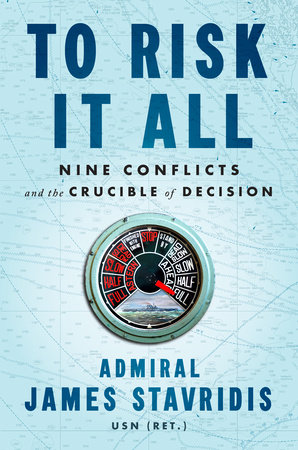
I discovered Admiral (US Navy – retired) James Stavridis as an author at the beginning of the pandemic two years ago. This warrior-intellectual always amazes me by the depth of his thought and the finesse of his writing style. His last book, To Risk It All: Nine Conflicts and the Crucible of Decision (Penguin Press) depicts nine characters – 8 men and 1 woman – who left their mark on US military history.

You can almost hear the lyrics of the US Marines hymn and its reference to the shores of Tripoli when you read about Lieutenant Stephen Decatur’s expedition in North Africa to save US Navy comrades detained by pirates and you want to watch Captain Philips with Tom Hanks another time after completing the chapter devoted to Rear Admiral Michelle Howard who was in command of the successful rescue operation in the Gulf of Aden.

But my favorite – by far – was Cook Third Class Doris “Dorie” Miller. If there is one chapter I would love to see the author expand in a whole book, the life and lessons of that exceptional warrior would be my choice. Think about it for a moment. You’re an African-American and you enlist in the US Navy to better support your family, seeking advancement out of the segregationist South. But you must still endure sanctioned racism. Admiral Stavridis reminds the reader that “the high-tech specialties of communication, gunnery, navigation, and engineering were closed to African Americans; in fact, the only jobs they were permitted to do were cooking, cleaning, and serving as valets for the senior officers in the ships.”

Continue reading “True heroism can’t be found in the absence of risk”

One man can change the course of a battle

“The vast majority of men receiving the Medal of Honor in World War II belonged to the infantry but the American public was fixated on marines and the glamour boys in the air corps with their nice blue uniforms”, writes acclaimed author and historian Alex Kershaw in his recent book Against All Odds: A True Story of Ultimate Courage and Survival in World War II (Caliber).

Undoubtedly, Alex Kershaw is the master of the battle narrative. His books always remind me of Sir John Keegan’s classic The Face of Battle, in detailing the reality and sacrifices of fighting soldiers. Between the covers, he details the courageous and selfless feats of Maurice “Footsie” Britt, Michael Daly, Audie Murphy and Keith Ware. All these men were part of the “[…] 3rd Division, the legendary “Rock of the Marne” outfit that had saved Paris in July 1918 by blocking the last great German offensive of World War I.” The men of that Division were sent on the first line to absorb a strong German attack along the Marne River in April 1918. The stubbornness of their defense earned them the famous nickname. Their successors in World War II would be no different.

Continue reading “One man can change the course of a battle”

“Putin is clearly trying to ignite a larger conflict” – Martin Dugard

Author Martin Dugard (source: MartinDugard.com)

After the publication of my review of his excellent book Taking Paris: The Epic Battle for the City of Lights (Caliber), Martin Dugard kindly accepted to answer some questions for this blog. I feel privileged for the interview with an excellent and engaging author, who is also the coauthor of Bill O’Reilly’s Killing Series.

Here is the content of our exchange.

____________

Mr. Dugard, where did the idea of writing Taking Paris originate from?

The book actually started as Taking Rome but as the research expanded it became obvious that the story of Rome worked more nicely as a small section in the larger context of the 1940 fall of Paris and 1944 liberation.

Continue reading ““Putin is clearly trying to ignite a larger conflict” – Martin Dugard”

A striking parallel between Zelensky and de Gaulle

I initially wanted to review Taking Paris: The Epic Battle for the City of Lights by Martin Dugard last February, but then Vladimir Putin launched his troops against Ukraine and I had to shuffle my publications calendar. As you will see, there are fascinating parallels between the fate of France in World War II and the current situation in Ukraine, if only at the leadership level.

After the invasion of France by the Germans in May 1940, the country is in disarray and its statesmen have given up. In the ashes of defeat, a temporary brigadier general will rise to the occasion. Fleeing his homeland on board an airplane provided by British Prime Minister Winston Churchill, Charles de Gaulle left with a “[…] hastily packed suitcase contain[ing] four shirts, one pair of pants, and a single photograph of Yvonne and the children, whose current whereabouts he does not know.” I couldn’t help but think of the same predicament in which Ukrainian President Volodymyr Zelensky found himself on February 24th. As did de Gaulle, he chose to fight, but from home.

Continue reading “A striking parallel between Zelensky and de Gaulle”

Putin’s Soviet Playbook

As I grow older, I realize that history is one of the surest guides to navigate the present. While many adhered to Francis Fukuyama’s theory that the demise of Soviet Union on December 26, 1991, represented the end of history, others lamented what they perceived as “the greatest geopolitical catastrophe of the century”.

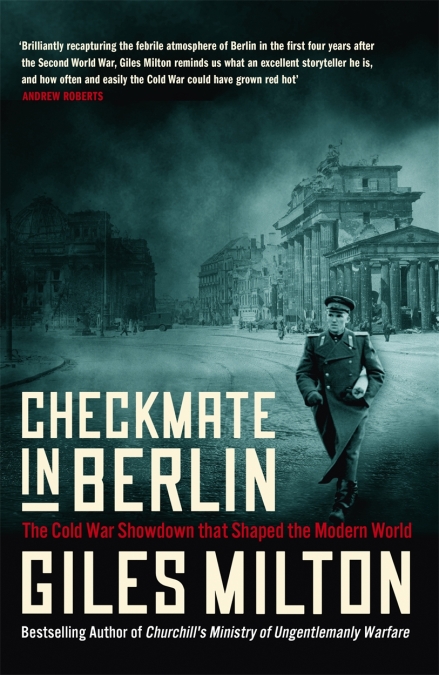
Old habits die hard and Giles Milton’s Checkmate in Berlin: The Cold War Showdown That Shaped the Modern World is an excellent representation of that idiom. “”America is now the primary enemy,” said one of Marshal’s Zhukov’s general at the time of the capture of Berlin. “We have destroyed the base of Fascism. Now we must destroy the base of Capitalism – America.”” Things haven’t changed much in the last 77 years.

Continue reading “Putin’s Soviet Playbook”

Zelensky shows us what’s worth defending

Author and historian Roger Moorhouse (source: Culture.pl)

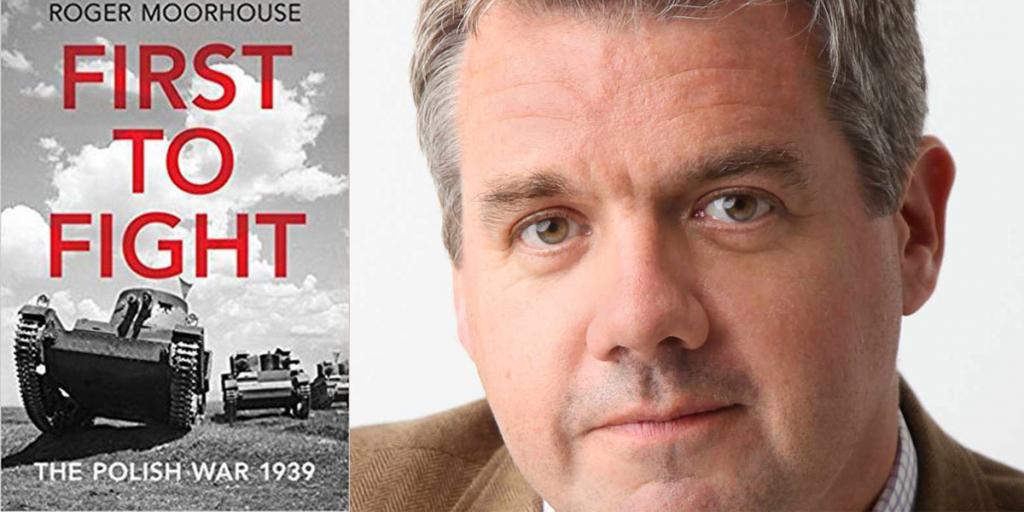
Acclaimed author and historian Roger Moorhouse, whose Poland 1939 I had the pleasure of reviewing on this blog last weekend, accepted to answer my questions about Polish military history, the war of aggression against Ukraine and the leadership of President Volodymyr Zelensky. Below is the content of our exchange.

Mr. Moorhouse, thank you very much for taking the time to answer my questions, despite your busy schedule. While reading Poland 1939, I kept wondering if and what Western countries did to help the government of Warsaw in the crucial weeks and months leading to World War 2. Could you tell us more about that?

Not enough, is the short answer. There were military alliances signed with both the British and the French – the French one in May 1939, and commitments were made – specific in the French case, more vague in the British – to assist in the event of an invasion. The French committed to send “the bulk” of their forces across the Rhine on Day 15 of mobilization, and the British talked vaguely about sending RAF squadrons to Poland. Little of it, of course, came to pass once Germany actually invaded. The French made a half-hearted advance across the Rhine, and the RAF dropped leaflets over Germany politely asking that the Germans cease and desist. They then shifted the narrative from one of defending Poland to one of promising to restore an independent Poland at some time in the future. It was driven by circumstances, of course, but it was also morally rather cowardly.

Continue reading “Zelensky shows us what’s worth defending”