Prigozhin’s failed putsch was essentially a sideshow

Russian President Vladimir Putin at the Kremlin on June 26, 2023 (Sputnik / Reuters)

I’m now at the age where I can say that I have observed, from afar, two coups initiated against a Russian ruler. The first one was plotted against Soviet President Mikhail Gorbachev in August 1991. The second one happened just a few days ago. I was glued to my Twitter account and CNN for most of last weekend, trying to keep abreast of developments between Rostov-on-Don and Moscow.

President Vladimir Putin being at the center of the events unfolding in these crucial hours, I believed it would be pertinent to reach out to the author of the best biography written about him to seek some insights. Philip Short, author of the seminal Putin (Holt), a book on which he worked for 8 years. Mr. Short generously agreed to answer a few questions, despite being buried under requests.

Here is the content of our discussion.

_________

Mr. Short, thank you very much for the generosity of your time.

I have a feeling that every time Vladimir Putin is referred to in the Western media, the analysis goes in the direction of his downfall – either by a coup, cancer or slipping on a banana peel. Would you tend to agree that this is wishful thinking disguised as analysis?

President Vladimir Putin’s biographer Philip Short (Macmillan)

I think we must recognize that we are in the middle of an information war that’s running parallel to the war on the ground in Ukraine. So, whether it’s wishful thinking or spin is arguable. Very often there are elements of both – added to which, western (and Russian) pundits have been pontificating very little hard information to go on, so there has been a lot of thumb-sucking of the ‘Putin’s finished’, ‘The end is nigh’, ‘Civil war beckons’, variety.

No one knows even exactly what Prigozhin was promised when he agreed to call off his mutiny. But certainly, the consensus in the Western media that Putin is severely weakened needs to be treated with skepticism. It’s just as plausible to make a case that his grip has in fact been strengthened because he found a way out which avoided the worst-case scenario of bloody fighting, and, to the elite, that is a signal that, even if he misjudged the situation early on, he hasn’t lost his touch, so ‘better to stick with the devil you know’.

Continue reading “Prigozhin’s failed putsch was essentially a sideshow”

Churchill was better at strategy than politics

Professor Simon J. Ball (University of Leeds)

I recently reviewed Professor Simon J. Ball’s revealing book about the battle of Alamein (The Folio Society). He generously accepted to answer few questions for this blog, and I take immense pleasure in sharing the content of our exchange with you today. I trust you will enjoy reading it.

_________

Professor Ball, I might be wrong, but I have a feeling that the Mediterranean theater during World War II has been overlooked. Why is it important to pay more attention to it? How crucial was it in the big picture of the conflict? 

SJB: The war in the Mediterranean was of central importance. It blew apart the idea of the Mediterranean as a unified zone, although all the major powers tried to engineer integration at some points. Oddly the idea of the Mediterranean as an integrated politico-economic-cultural area, “breathing with the same rhythms”, was popularized by Fernand Braudel in the late 1940s.

Continue reading “Churchill was better at strategy than politics”

Joe Biden: Leader of the Free World

“To every man there comes in his lifetime that special moment when he is figuratively tapped on the shoulder and offered a chance to do a very special thing, unique to him and fitted to his talents,” declared Winston Churchill. For many, that hour comes early. For some, like the heroic British Prime Minister, it comes later. For others, like US President Joe Biden, it comes even later in life.

As we commemorate today the tragic first anniversary of the murderous onslaught launched by Vladimir Putin against Ukraine, it seems fitting to write about one of the best political biographies I have read in a long time. The Fight of His Life: Inside Joe Biden’s White House (Scribner) is required reading for anyone seeking to understand the character of the 46th President of the United States.

In the summer of 2017, the events surrounding the extreme-right manifestations in the streets of Charlottesville convinced former Vice President Biden that Donald Trump “was giving evil a safe harbour”, thus contributing to the Democratic politician’s decision to run. The combat for 2020 was between good and evil. And no one was better equipped than Joe Biden to lead it.

Continue reading “Joe Biden: Leader of the Free World”

The distorted memory of Alamein

British soldiers during the second battle of Alamein (The Times of Israel)

“History will be kind to me for I intend to write it”, declared Winston Churchill. That quote might reveal why the second battle of Alamein seems only to reach a limited audience of military history specialists and enthusiasts. In terms of visibility and shelf space, Alamein doesn’t rank with D-Day, Stalingrad, or Bastogne.

Knowing that the battle stopped Field Marshal Erwin Rommel’s advance on Egypt during the turning point year of 1942, one can reasonably wonder why that is so. In a nutshell, “the absence of the victors left plenty of room for the ‘losers’ to have their say. […] the British state’s insistence on not telling a national narrative over-represented the voices of its enemies”, explains historian Simon Ball in The Folio Society edition of his insightful history of the battle fought in the sands of North Africa in October and November 1942.

Material rather than manpower would have been the drivers of the Allied victory. In sum, “the Axis had lost the battle for four reasons: enemy air superiority; the poor performance of the Italian troops; the Eighth Army’s superiority in modern weapons; and their own lack of fuel.” Rommel became an icon – a phenomenon I observed on numerous occasions while visiting military museums in the United Kingdom – and his opponent, Field Marshall Bernard Montgomery drew flak from “old régime” figures who could not stomach the methods of this iconoclast figure who privileged meritocracy. The tenants of that school preferred to give way to Rommel rather than applaud the success and qualities of Montgomery. That phenomenon is regrettably still observable to this day.

Continue reading “The distorted memory of Alamein”

The Indomitable Prisoners of Colditz

Since I was a kid, The Great Escape featuring Steve McQueen, James Garner, Charles Bronson, and Richard Attenborough (in the role of the legendary Roger Bartlett – the legendary Roger Bushell in real life) has been one of my favorite movies. In 2015, when I lived in Poland, I visited the Stalag Luft III Prisoner Camp Museum in Zagan – 5 hours west of Warsaw. That memorable visit was a real pilgrimage in the footsteps of those gallant men who refused to remain behind German barbed wired.

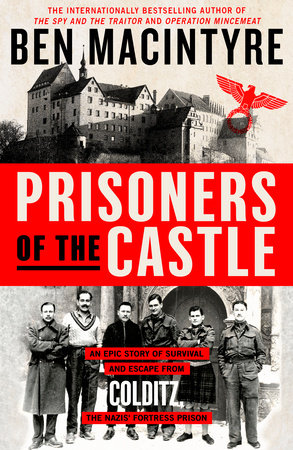
I was therefore overjoyed to read bestselling author Ben Macintyre’s book Prisoners of the Castle: An Epic Story of Survival and Escape from Colditz, the Nazis’ Fortress Prison (Signal).

I often say that Ben Macintyre would find a way of making the history of the can of Coke enthralling. His book Rogue Heroes features among my very favorites. I, therefore, did not doubt that I was in for quite a treat when I opened Prisoners of the Castle. Even those high expectations were surpassed because the author brings the reader to a new understanding of the war experience.

Continue reading “The Indomitable Prisoners of Colditz”

The Harry and Meghan episode is worse than the abdication crisis

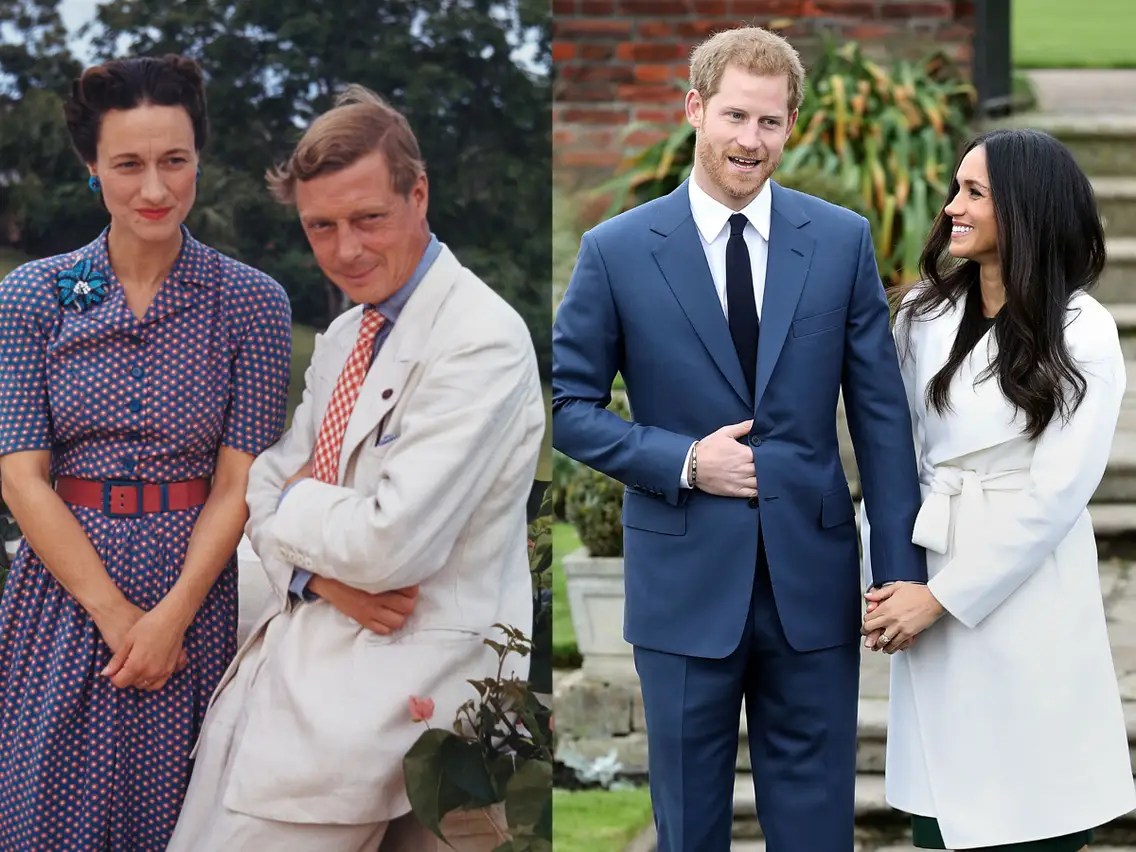
There are lots of parallels between Wallis Simpson and former King Edward VIII (left) and Prince Harry and Meghan Markle (right) (Insider)

Few weeks ago, I reviewed Andrew Lownie’s enthralling and fascinating book Traitor King: The Scandalous Exile of the Duke & Duchess of Windsor. The author – a disillusioned monarchist who believes in institution but feels let down by some members of it – generously accepted to answer a few questions for this blog. Below is the content of our discussion.

________

Mr. Lownie, while researching Traitor King, did you make any findings that surprised you?

Lots not least the extent of the Windsors’ dealings with the Nazis which can be found in documents, the knowledge that the Royal Family and Government had of their activities and the rather bizarre relationship the couple had and their bisexuality. Also, the degree of the attempted British cover up of his treachery.

Understandably, Winston Churchill is a frequent guest in the book. I might be wrong, but I didn’t get the sense that he became a tooth-and-nail opponent of the Duke of Windsor during the war. How would you describe the evolution of the relationship between the two men?

Churchill had been one of the Duke’s strongest supporters during the Abdication, mainly because of his romantic notion of the monarchy, but the scales fell when he saw the Duke’s duplicity over the financial settlement in 1937 and the disloyalty shown during the war when Churchill had to threaten him with court martial. The relationship then became more pragmatic with Churchill trying to find him a job after the war and suppressing the embarrassing captured German documents, but he refused to join a cruise when he learnt the Windsors would be present.

Continue reading “The Harry and Meghan episode is worse than the abdication crisis”

Boris Yeltsin and “The Crown”

Queen Elizabeth II and Russian President Boris Yeltsin (The Telegraph)

I’m watching every episode of The Crown, not only because of my love and appreciation of the monarchy in all its complexity but mainly for its entertainment value. For obvious reasons, I never take the content of the series at face value since there are many aspects which differ from reality.

Nevertheless, episode 6 of The Crown’s Season 5, titled “Ipatiev House”, brought many questions to my mind. For one, Russian President Boris Yeltsin never went to Buckingham Palace to meet Queen Elizabeth II, which makes the whole diatribe in which he insulted the Queen in Russian fictitious and potentially misleading for anyone believing that the series is an accurate portrayal of reality.

I therefore decided to ask Sir Rodric Braithwaite, Her Majesty’s Ambassador in Moscow between 1988 and 1992 and the author of an excellent recent book about the history of Russia, to shed some light on the relationship between the Crown and the two-headed eagle.

Continue reading “Boris Yeltsin and “The Crown””

The Source of JFK’s Greatness

For as long as I can remember, November 22 has always been a sobering date on my calendar. My late father, like many of his generation, revered John F. Kennedy. He owned several pieces of memorabilia. He also vividly remembered where he was and what he was doing on that fateful day when his favorite statesman tragically fell under the bullets. Before the Roosevelts, Truman, LBJ, Reagan and both Presidents Bush – commanders in chief for whom I have tons of admiration – JFK was the first one who piqued my intellectual curiosity.

I cannot proclaim that I have read every book regarding the main figure of contemporary Camelot, but I always make a point of skimming the pages of as many as I can. Mark K. Updegrove is a presidential historian whose work I have always been interested in. I was, therefore, impatient to grab a copy of his recent book Incomparable Grace: JFK in the Presidency. I was expecting a good read because the author has an enthralling writing style. But I got much more than that.

Continue reading “The Source of JFK’s Greatness”

“Putin’s war has forged Ukraine’s sense of nationhood on the battlefield”

Ukrainian soldiers (McGill University)

Two of the greatest pleasures I have as a blogger is reading the best books and being in touch with their authors. Few things make me happier than when they accept to answer a few questions for an interview.

I have always been a huge fan of Sir Rodric Braithwaite, and I was extremely happy to read and review his recent and captivating book about the history of Russia at a time when this country is at crossroads.

As a former British Ambassador to Moscow between 1988 and 1992 and a former foreign policy advisor to Prime Minister John Major, he combines the experience of a man who was on the ground when the URSS was on the cusp of exploding and the talent of an inspired historian.

I, therefore, felt extremely privileged when Sir Rodric generously agreed to answer my questions. I trust you will find his answers of tremendous interest.

___________

Sir Rodric, I’m of the school according to which great leaders make history. In that regard, I would be curious to know which Tsar or leader impresses you the most in the history of Russia and why?

The question of whether history is made by great leaders or impersonal forces will never be settled. It is the intellectual underpinning for Tolstoy’s War and Peace. In my view, you need both. Even the greatest leader cannot buck reality: Bismarck is eloquent on that.

Continue reading ““Putin’s war has forged Ukraine’s sense of nationhood on the battlefield””

The King who jeopardized the Monarchy

The cover of Prince Harry’s memoir was released last week, in mounting anticipation of the day it hits the shelves next January. Since their wedding in May 2018, Harry and Meghan have proven to be distracting – to say the least – for the Royal Family. Their staunch desire to center everything around their desires, feelings and intentions goes against the grain of an institution based on selflessness and duty.

Even though the revelations contained in his book will probably rock and ruffle Buckingham Palace, Prince Harry’s fifth position in the line of succession to the throne render his tribulations much less catastrophic than those posed by his late grandmother’s uncle, King Edward VIII. On December 10, 1936, this Monarch deposed the scepter and the orb for the sake of marrying the Queen of his heart, the American-born divorcee Wallis Simpson.

His brother, George VI, was left to pick up the pieces. He was neither supposed nor prepared to accede the throne. The reputation of the institution was severely tarnished, but the history of the world can be grateful that George Windsor was tasked with this mission because his brother David (Edward VIII)’s presence on the throne would have proved catastrophic in the period leading to and during World War II.

Continue reading “The King who jeopardized the Monarchy”