A striking parallel between Zelensky and de Gaulle

I initially wanted to review Taking Paris: The Epic Battle for the City of Lights by Martin Dugard last February, but then Vladimir Putin launched his troops against Ukraine and I had to shuffle my publications calendar. As you will see, there are fascinating parallels between the fate of France in World War II and the current situation in Ukraine, if only at the leadership level.

After the invasion of France by the Germans in May 1940, the country is in disarray and its statesmen have given up. In the ashes of defeat, a temporary brigadier general will rise to the occasion. Fleeing his homeland on board an airplane provided by British Prime Minister Winston Churchill, Charles de Gaulle left with a “[…] hastily packed suitcase contain[ing] four shirts, one pair of pants, and a single photograph of Yvonne and the children, whose current whereabouts he does not know.” I couldn’t help but think of the same predicament in which Ukrainian President Volodymyr Zelensky found himself on February 24th. As did de Gaulle, he chose to fight, but from home.

Continue reading “A striking parallel between Zelensky and de Gaulle” →
Putin’s Soviet Playbook

As I grow older, I realize that history is one of the surest guides to navigate the present. While many adhered to Francis Fukuyama’s theory that the demise of Soviet Union on December 26, 1991, represented the end of history, others lamented what they perceived as “the greatest geopolitical catastrophe of the century”.

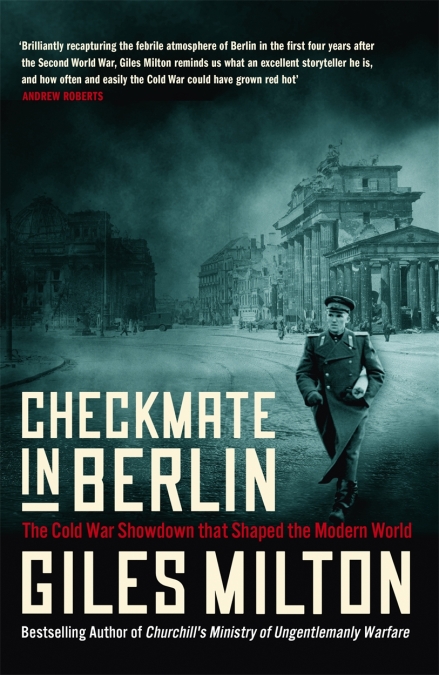
Old habits die hard and Giles Milton’s Checkmate in Berlin: The Cold War Showdown That Shaped the Modern World is an excellent representation of that idiom. “”America is now the primary enemy,” said one of Marshal’s Zhukov’s general at the time of the capture of Berlin. “We have destroyed the base of Fascism. Now we must destroy the base of Capitalism – America.”” Things haven’t changed much in the last 77 years.

Continue reading “Putin’s Soviet Playbook” →

Zelensky shows us what’s worth defending

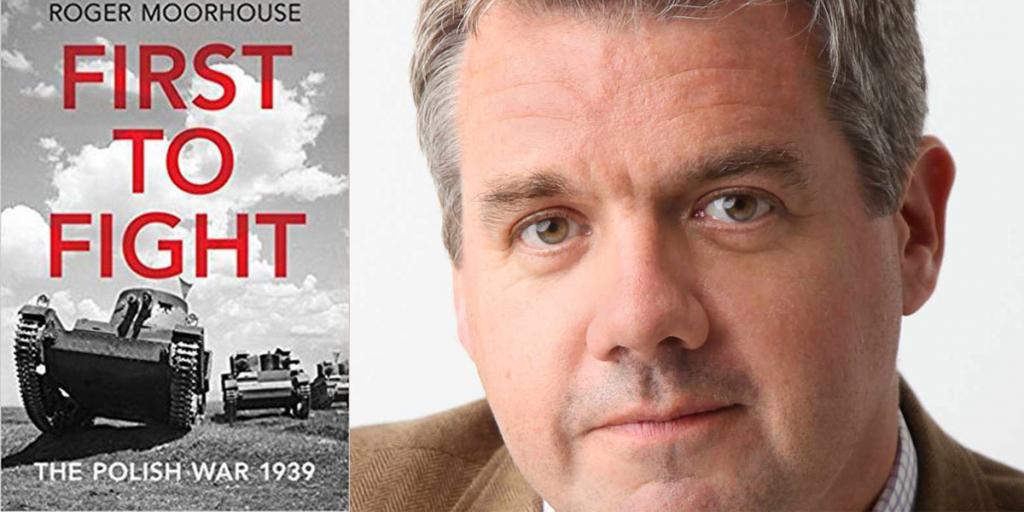
Author and historian Roger Moorhouse (source: Culture.pl)

Acclaimed author and historian Roger Moorhouse, whose Poland 1939 I had the pleasure of reviewing on this blog last weekend, accepted to answer my questions about Polish military history, the war of aggression against Ukraine and the leadership of President Volodymyr Zelensky. Below is the content of our exchange.

Mr. Moorhouse, thank you very much for taking the time to answer my questions, despite your busy schedule. While reading Poland 1939, I kept wondering if and what Western countries did to help the government of Warsaw in the crucial weeks and months leading to World War 2. Could you tell us more about that?

Not enough, is the short answer. There were military alliances signed with both the British and the French – the French one in May 1939, and commitments were made – specific in the French case, more vague in the British – to assist in the event of an invasion. The French committed to send “the bulk” of their forces across the Rhine on Day 15 of mobilization, and the British talked vaguely about sending RAF squadrons to Poland. Little of it, of course, came to pass once Germany actually invaded. The French made a half-hearted advance across the Rhine, and the RAF dropped leaflets over Germany politely asking that the Germans cease and desist. They then shifted the narrative from one of defending Poland to one of promising to restore an independent Poland at some time in the future. It was driven by circumstances, of course, but it was also morally rather cowardly.

Continue reading “Zelensky shows us what’s worth defending” →

Zelensky is living up to what Churchill called “the level of events”

Source: Michael de Adder (@deAdder) / Twitter

Andrew Roberts is the contemporary authority on Winston Churchill. He gave an interview yesterday to Michael Crick for the Mail Online about the similarities between the Greatest Briton and Ukrainian President Volodymyr Zelensky, his contemporary disciple.

Here are a few lines from this insightful article:

“Not only has Zelenskyy stayed in Kyiv, as Churchill did in wartime London, but he is seen on the streets, rallying his people with speeches, and recognizes all the perils and risks.

‘It’s straight out of the Churchill playbook,’ Roberts tells Mail+. And Zelenskyy is showing extraordinary bravery when a team of Russian assassins dressed in Ukrainian army uniforms is said to be out to kill him. That’s not a hazard Churchill faced.”

Continue reading “Zelensky is living up to what Churchill called “the level of events”” →

Is Putin a Weak Strongman?

22 years ago, tonight, Vladimir Putin ambled in history and became President of Russia after Boris Yeltsin retired. Since then, many have spent countless years scrutinizing his every moves. In a sense, the new master of the game largely contributed to Kremlinology’s survival as a discipline. And the prospect of him seeking another term in two years means that Putinology still has bright days ahead. His exercise of power remains one of the most fascinating questions to any student of Russian politics.

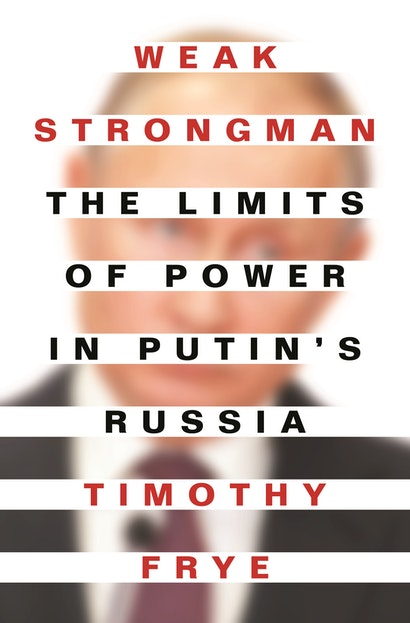
I just finished reading a most excellent book about the Russian President, Weak Strongman: The Limits of Power in Putin’s Russia by renowned Columbia University Professor Timothy Frye. In a documented, clear, and eloquent style, the main conclusion of the author is that Vladimir Putin’s main political quality is his ability to navigate the stormy seas of Russian politics.

Continue reading “Is Putin a Weak Strongman?” →

The Day Zhukov Danced

After German Field Marshal Wilhelm Keitel signed the articles of surrender on May 9th, 1945, “Soviet officers shook hands with their allies from the west.” World War II was officially over, and a festive spirit descended upon the victors. “Vodka and champagne flowed, freely, and buoyed by the joyous atmosphere, [Soviet Marshal] Zhukov even performed a Russian folk dance on the parquet floor of the officers’ mess.”

Passages like those abound in Volker Ullrich’s most recent book Eight Days in May: The Final Collapse of the Third Reich (Liveright). Between the covers of this absorbing and sometimes revolting book, the reader is immersed in the tragic hours when the grandees of the Nazi horde maneuver to cling to power under the leadership of Admiral Karl Dönitz, while trying to save as many German soldiers as possible from the advancing Russian soldiers who are – legitimately, one could say – thirsty for “revenge and retribution”.

Continue reading “The Day Zhukov Danced” →

Wellington took care of his soldiers

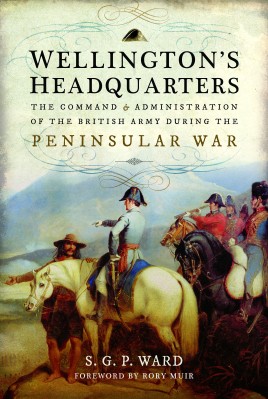
A few months ago, I reviewed the very insightful book Wellington’s Command by G. E. Jaycock. Being interested in anything related to the Iron Duke, it was therefore natural for me to read S. P. G. Ward’s Wellington’s Headquarters: The Command and Administration of the British Army during the Peninsular War (Pen & Sword).

While the objective of the author was to detail and explain the functioning of the Peninsular Army and give a portrait of the overall machinery of war, the most interesting aspect of the book is the portrait of the warlord. Wellington, it is a known fact, was a micromanager. For instance, the author explains that “[…] he was his own Director of Military Intelligence”. One doesn’t need to be a psychologist to understand that he must have been quite a difficult character to deal with – like most famous personalities in history. About the interrogation of prisoners of war, he reduced one of his subordinates, Stewart, to tears because the latter wrongfully thought it fell within the province of his responsibilities.

Continue reading “Wellington took care of his soldiers” →

“The epicenter of the Cold War”

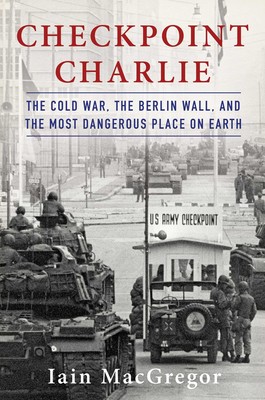
In June 1987, just shy of my 13th birthday, international affairs were already part of my daily interests. I would clip newspaper articles about the Cold War from our local paper before my parents even had the chance of reading it, much to their despair. During that month, on the 12th to be more precise, US President Ronald Reagan stood in front of the Brandenburg Gate in Berlin and pronounced a major speech calling for Soviet leader Mikhail Gorbachev to tear down the wall. “He’ll never do that”, my father replied to me. Retrospectively, anything is possible of course. But few people could imagine back then what would happen only two years later when the Wall crumbled without a single shot being fired.

Fast-forward to 2015. After 9 grueling months stranded as administrative prisoners in Poland due to lack of efficient bureaucracy (to put it mildly), we finally received our coveted residency cards. First order of business was to plan a serious change of scenery for everyone. I could finally take a few days off. Berlin was just a couple hours away by train and I knew this was an opportunity not to be missed.

Continue reading ““The epicenter of the Cold War”” →

Fulfilling MacArthur’s Promise

In a recent interview for this blog, I questioned former Gurkhas commanding officer General Sir Peter Duffell about the reasons why Viscount Slim – the victor of Burma – is less recognized in popular culture than Field Marshal Montgomery for his contribution to victory in World War II. Montgomery, he replied “[…] was much the better-known British Commander because his campaigns were fought much closer to home [North Africa, D-Day, Arnhem].” In a certain way, much the same applies to the fighting of the American forces. Anyone visiting Washington, D.C., can admire the impressive Iwo Jima Memorial, but movies, bookstores and the remembrance rationale are largely dominated by the fight in Europe.

Fortunately, recent years have offered the publication of excellent books about the Pacific theater – for example the contribution of China to the Allied war effort. As we observe and live the geopolitical shift towards Asia, this literature is not only a welcoming phenomenon to better understand the Second World War, but also to navigate the troubled seas of the current world order. Thankfully, the increasing interest generated by the war in the Pacific will be of assistance to further develop our historical conscience in that direction.

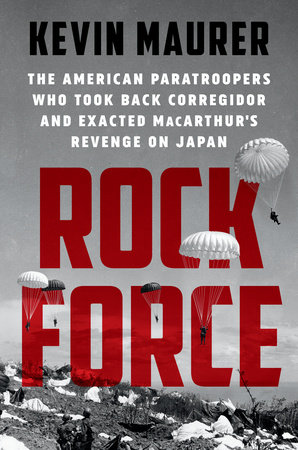
I was therefore thrilled to read Rock Force: The American Paratroopers Who Took Back Corregidor and Exacted MacArthur’s Revenge on Japan (Caliber) by Kevin Maurer. Having been forced to evacuate the island on 11 March 1942, General MacArthur only makes his entrance in the story at the very end, after the men of the 503rd Parachute Infantry Regiment neutralized the Japanese troops assigned to defend the strategic sentry island guarding the entrance of Manila Bay.

Continue reading “Fulfilling MacArthur’s Promise” →

Wellington was not an easy figure to build into a romantic hero

The Duke of Wellington (source: National Army Museum)
(Cliquez ici pour la version française)

I recently had the tremendous pleasure of exchanging with internationally renowned author and historian Alan Forrest about his book on the Battle of Waterloo. Here is the content of our discussion.

Professor Forrest, it’s been a real treat for me to read and review your amazing book on this blog. Many thanks for accepting to answer a few questions for our readers.

I have always nourished a deep interest and admiration about the Duke of Wellington (the first name of my blog was Wellington.World). But he clearly lacked the “romantic poignancy” of his French opponent in the battlefield. Do you feel he has been mistreated / misjudged by history?

I do not think there is any reason to feel that Wellington has been misjudged. He enjoys a high reputation as a military commander, careful in his preparations for battle and alert to the threat of enemy attack. His record in the Peninsular campaign – where he did not, of course, have to face Napoleon – is impressive; and at Waterloo his use of the terrain and his tactics in the face of repeated French attacks have been widely praised. He was, it is true, a more defensive tactician than Napoleon, but I don’t think that that has led to his military qualities being undervalued, and certainly not in Britain.  On the other hand, he was not an easy figure to build into a romantic hero, in contrast to Napoleon who did so much to create his own romantic narrative and who fascinated even those who had no reason to support his ambitions (Walter Scott, for instance, or Goethe, or Byron). 

What is your global appreciation of the Iron Duke? Has he been overrated?

Continue reading “Wellington was not an easy figure to build into a romantic hero” →