JFK, ce tueur de charme

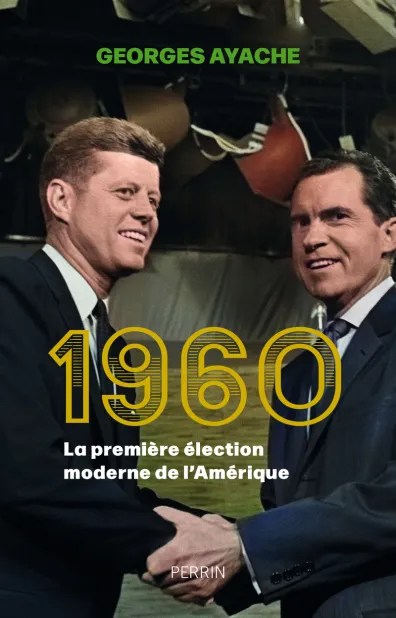
« Les lois sont comme les saucisses. C’est mieux de ne pas voir leur préparation », clamait l’homme d’État allemand Otto von Bismarck. Il en va des victoires électorales comme du processus législatif, puisque la fréquentation des arcanes de ces exercices démocratiques offre souvent la possibilité d’observer des épisodes baroques. Un exemple éloquent de cette affirmation se trouve entre les deux couvertures du dernier livre de l’ancien diplomate Georges Ayache, 1960 : La première élection moderne de l’Amérique (Perrin).

Aussi bien l’avouer d’entrée de jeu, j’ai grandi en m’abreuvant de la légende de JFK. Rien n’aurait pu déboulonner la statue mémorielle que lui avait érigée mon père. J’ai donc toujours nourri un vif intérêt pour ce président qui repose maintenant au panthéon de l’histoire américaine, à l’ombre des magnolias au cimetière national d’Arlington, en Virginie. Les chemins de traverse de mes années universitaires m’ont toutefois amené à la rencontre de celui qui souhaitait barrer la route du premier catholique à accéder au Bureau Ovale, l’insubmersible Richard Nixon.

poursuivre la lecture

Behind the scenes in the Sit Room

From Pearl Harbor to the neutralization of Osama bin Laden, every US President is confronted with crises. Any one of them also needs to manage relations with foreign leaders. Hence, a need for an organized mechanism and apparatus to navigate the traffic and make sure that POTUS can take the pulse of the world at a moment’s notice. This is made possible thanks to a vital institution, whose history is brilliantly recounted by former Clinton administration official and ABC host George Stephanopoulos in The Situation Room: The Inside Story of Presidents in Crisis (Grand Central).

Before its establishment, Presidents monitored world events on an ad hoc basis. For any military history enthusiast, the depiction of Franklin D. Roosevelt’s wheelchair being pushed in a former billiard room to consult maps pinned on the walls to monitor developments unfolding during World War II is captivating. Like so many other things, John F. Kennedy would be an innovator by creating the Situation Room in light of the 1961 Bay of Pigs disaster. Every one of his successors would rely on this evolving institution to accompany the United States’ presence on the world scene.

The most important takeaway from the book relates to the notion of the “three Ps”. The Situation Room is: 1) a place where information is gathered, processed, analyzed and decided upon; 2) it regroups people who serve the Presidency in a selfless and non-partisan way and; 3) a process revealing how every commander in chief manages the affairs of the world.

Continue reading “Behind the scenes in the Sit Room”

The Source of JFK’s Greatness

For as long as I can remember, November 22 has always been a sobering date on my calendar. My late father, like many of his generation, revered John F. Kennedy. He owned several pieces of memorabilia. He also vividly remembered where he was and what he was doing on that fateful day when his favorite statesman tragically fell under the bullets. Before the Roosevelts, Truman, LBJ, Reagan and both Presidents Bush – commanders in chief for whom I have tons of admiration – JFK was the first one who piqued my intellectual curiosity.

I cannot proclaim that I have read every book regarding the main figure of contemporary Camelot, but I always make a point of skimming the pages of as many as I can. Mark K. Updegrove is a presidential historian whose work I have always been interested in. I was, therefore, impatient to grab a copy of his recent book Incomparable Grace: JFK in the Presidency. I was expecting a good read because the author has an enthralling writing style. But I got much more than that.

Continue reading “The Source of JFK’s Greatness”

When Khrushchev Helped JFK

Soviet leader Nikita Khrushchev and US President John F. Kennedy (source: Foreign Policy)

I recently read and reviewed an excellent biography of former Soviet leader Leonid Brejnev by Andreï Kozovoï. Even if I found it to be tragic, I was fascinated to read about Brejnev’s role in the toppling of his predecessor, Nikita Khrushchev, in October 1964. Khrushchev’s persona was light years away from the character portrayed in The Death of Stalin – it is a satire, after all – and his bombastic temper certainly played a role in his downfall.

Khrushchev always fascinated me, whether it is regarding his role during World War II, his succeeding Stalin in 1953 or his role with President John F. Kennedy (of whom we commemorate the assassination today) during the Cuban Missile Crisis in 1962. I recently came upon a very insightful article, “Nikita Khrushchev and the Compromise of Soviet Secret Intelligence Sources” in the International Journal of Intelligence and Counterintelligence by David Easter. In his research, the academic exposes several instances where the First Secretary of the Communist Party of the Soviet Union might have compromised Moscow’s intelligence work and capabilities.

Continue reading “When Khrushchev Helped JFK”

“The epicenter of the Cold War”

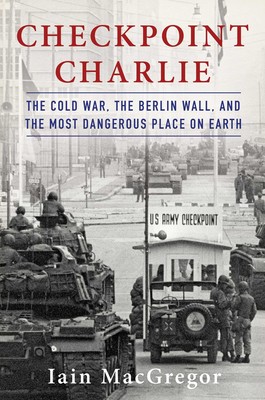
In June 1987, just shy of my 13th birthday, international affairs were already part of my daily interests. I would clip newspaper articles about the Cold War from our local paper before my parents even had the chance of reading it, much to their despair. During that month, on the 12th to be more precise, US President Ronald Reagan stood in front of the Brandenburg Gate in Berlin and pronounced a major speech calling for Soviet leader Mikhail Gorbachev to tear down the wall. “He’ll never do that”, my father replied to me. Retrospectively, anything is possible of course. But few people could imagine back then what would happen only two years later when the Wall crumbled without a single shot being fired.

Fast-forward to 2015. After 9 grueling months stranded as administrative prisoners in Poland due to lack of efficient bureaucracy (to put it mildly), we finally received our coveted residency cards. First order of business was to plan a serious change of scenery for everyone. I could finally take a few days off. Berlin was just a couple hours away by train and I knew this was an opportunity not to be missed.

Continue reading ““The epicenter of the Cold War””