The Making of Trump 2.0

Historically, the main task of any President-elect in the United States is to form a cabinet. In the last weeks, we have seen a cascade of announcements that have raised some eyebrows. Donald Trump’s picks for key positions in his second administration might seem odd to many.

Not so much if you grab a copy of retired Lieutenant General H. R. McMaster’s insightful book At War with Ourselves: My Tour of Duty in the Trump White House (Harper).

Upon his selection as National Security Advisor by the 45th President, the military general wanted to give his boss the best of his expertise. After consulting with one of his notorious predecessors, Lieutenant General Brent Scowcroft, who masterfully seconded President George H. W. Bush, McMaster understood his role as “making the policy process work and developing options for the president; and second, advising the president with views unalloyed by the departments and their bureaucracies.” The only person that mattered to him was the President, whose foreign policy should be well served. He also perceived his role as being above partisanship. His goodwill would be rewarded with disappointment.

Continue reading “The Making of Trump 2.0”

Behind the scenes in the Sit Room

From Pearl Harbor to the neutralization of Osama bin Laden, every US President is confronted with crises. Any one of them also needs to manage relations with foreign leaders. Hence, a need for an organized mechanism and apparatus to navigate the traffic and make sure that POTUS can take the pulse of the world at a moment’s notice. This is made possible thanks to a vital institution, whose history is brilliantly recounted by former Clinton administration official and ABC host George Stephanopoulos in The Situation Room: The Inside Story of Presidents in Crisis (Grand Central).

Before its establishment, Presidents monitored world events on an ad hoc basis. For any military history enthusiast, the depiction of Franklin D. Roosevelt’s wheelchair being pushed in a former billiard room to consult maps pinned on the walls to monitor developments unfolding during World War II is captivating. Like so many other things, John F. Kennedy would be an innovator by creating the Situation Room in light of the 1961 Bay of Pigs disaster. Every one of his successors would rely on this evolving institution to accompany the United States’ presence on the world scene.

The most important takeaway from the book relates to the notion of the “three Ps”. The Situation Room is: 1) a place where information is gathered, processed, analyzed and decided upon; 2) it regroups people who serve the Presidency in a selfless and non-partisan way and; 3) a process revealing how every commander in chief manages the affairs of the world.

Continue reading “Behind the scenes in the Sit Room”

Winning the Battle of Britain

Since the Battle of Britain officially ended on October 31st, 1940, a review of The Battle of Britain by James Holland in the Ladybird Expert Series (Penguin Random House) remains timely in the aftermath of the commemoration of the 84th anniversary of that pivotal episode of World War II on September 15th – just a few days ago.

I might have written it before, but the greatest merit of James Holland’s book in this collection is to offer the reader the most important aspects of the battles he writes about. The Battle of Britain certainly makes no exception to that rule.

Right from the beginning, Adolf Hitler is aware that he needs to knock Britain out of the war, if he is to be successful in his ambitions. The prospects of appeasement decreased as Winston Churchill grew stronger in his role as Prime Minister. After the successful British evacuation at Dunkirk, the feldgrau horde needs to take London by force. But “it would be suicidal to attempt a Channel crossing without command of the skies and sea lanes secure.”

Continue reading “Winning the Battle of Britain”

How Churchill and Dowding saved Britain and the World

“Nothing great will ever be achieved without great men, and men are great only if they are determined to be so”, said Charles de Gaulle – Winston Churchill’s brother in arm during World War II. Resilience is the common thread of Martin Dugard’s new book Taking London: Winston Churchill and the Fight to Save Civilization (Dutton).

While de Gaulle escaped France with only 2 suitcases aboard the RAF plane that flew him into history on June 17, 1940, Churchill wasn’t much more gifted politically when he was asked to become Prime Minister a month earlier. The author reminds the reader that he was the second choice to occupy the role and that he had “no political currency beyond his words and beliefs.”

Yet, he had to keep the country – and the free world – safe from the claws of Nazism. Alone. A longtime admirer and promoter of the Royal Navy – which ruled the waves for centuries – Churchill had no choice but to realize that Nelson’s heirs couldn’t save Britain. Along with his legendary courage, the Royal Air Force was his only asset.

Continue reading “How Churchill and Dowding saved Britain and the World”

Entre guerres

Dans les cours de relations internationales qui ont émaillé mes études universitaires, on nous savonnait les oreilles avec cette théorie selon laquelle la fin de la Guerre froide marquait la fin de la dominance de la geste militaire, du moins comme nous la connaissions jusque-là.

Le fracas des armes appartenait à une période révolue. Il fallait désormais composer avec « l’invention d’un nouveau concept d’opération militaire dont nous allions avoir le redoutable privilège d’inaugurer les contradictions insolubles », « l’intervention humanitaire », pour emprunter les mots utilisés par le général français François Lecointre (retraité) dans son livre Entre guerres (Gallimard).

De l’Irak à la Bosnie, en passant par le Rwanda et Djibouti – pour ne citer que quelques théâtres d’opérations – celui qui sera appelé à occuper la fonction de chef d’état-major des armées françaises entre 2017 et 2021 est issu d’une famille ayant contribué aux belles pages de l’histoire militaire française. Né en 1962, année de la crise de missiles à Cuba, la carrière de François Lecointre correspond à une période durant laquelle l’on croit que l’odeur du cambouis passe au second plan.

poursuivre la lecture

Conflict: The study of warfare at its best

I was impatient to dive between the covers of General David Petraeus (retired) and Lord Roberts book, Conflict: The Evolution of Warfare from 1945 to Ukraine and saying I’m happy I did is a euphemism.

The best way for me to review this enthralling book is to get off the beaten path and summarize the 10 main takeaways that strike me the most.

1. Whatever you think of it, “war is still very much worth studying.” That’s the common thread of the book.

2. Totalitarian régimes have an easier time launching, conducting and bearing the brunt of war. The rise of autocracies throughout the world is therefore a challenge for democracies not accustomed with the pugilistic mindset.

3. Don’t cut military spending. “Money saved in piecemeal defense cuts often costs more in the long run.” The authors mention Great Britain’s decision to axe HMS Endurance before the Falklands War as a case in point. They also refer to Israel’s defense cuts after the Six Days War, with the consequences that followed six years later on the fateful morning of Kippur. Deterrence is cheap compared to war’s tribute in blood and treasure.

Continue reading “Conflict: The study of warfare at its best”

In the footsteps of Golda Meir

Let’s talk about an Israeli Prime Minister who is “an accomplished player in the rough-and-tumble world” of Jewish politics. An extremely talented communicator who can excite supporters and who plays on the American public scene like a virtuoso. At the same time, that leader generates strong feelings – positive and negative – among certain groups, particularly at home. This is a head of government whose political survival is threatened by an existential war launched against the country while its defenders are caught off guard.

Reading these lines, the image of Benjamin Netanyahu will certainly come to your mind. That is, if you are interested in current Israeli political history.

Considering the similarities quoted above, one could argue that the current Prime Minister walks in the footsteps of Golda Meir, in whose care the country was entrusted between 1969 and 1974.

I am fully aware that drawing parallels is a road on which one must tread carefully – after all these two leaders belong in two opposite ideological and partisan camps – but I could not avoid mentioning these striking parallels.

The life and career of the fourth Prime Minister of Israel – and only woman to occupy that function – have piqued my curiosity for quite a long time now. Thanks to the expertise and talent of Professor Deborah E. Lipstadt, who currently serves as the U.S State Department’s Special Envoy for Monitoring and Combating Antisemitism, an excellent opportunity has been granted me through Yale University Press’ excellent Jewish Lives Collection.

Continue reading “In the footsteps of Golda Meir”

The Netanyahu Rules

For several reasons, I have never really been a big fan of memoirs. As a student of Israeli Prime Minister Benjamin Netanyahu’s political vocation, I was nevertheless to dive enthusiastically into his autobiography, whose title is simply Bibi: My Story (Threshold Editions). I was not disappointed, because “Bibi” marshalled all his legendary talent as a communicator to convey the chapters of his life.

I could evoke his conservative philosophy – notably expressed in his revulsion when confronted with the “absurd bureaucracy” preventing the Prime Minister’s Office from getting a new Nespresso coffee machine for six months – his numerous dealings with world leaders from Ronald Reagan to Vladimir Putin and Donald Trump or even the Herculean task of overcoming his detractors and would-be political assassins. I could also mention his admirable historical knowledge and his significant affinity with the Bible and its landscape. Or the care he took to maintain a deep and lasting relationship with the Likud members – an essential ingredient in his political longevity. Maybe I should also have taken the time to explore the influence of Ze’ev Jabotinsky’s “Theory of Public Pressure” on his career. However, the focus of this review is to extract the main lessons – we could call them rules – from his absorbing journey.

Continue reading “The Netanyahu Rules”

Churchill’s Disciple

As far back as reading his incredible columns in the Daily Telegraph, I have been fascinated with Boris Johnson. Throughout his media and political career, the former Prime Minister of the United Kingdom has intrigued and amused me while often making me reflect further on the parallels between the past and the present. In that regard, his riveting and difficult-to-match biography of Winston Churchill underlies how much both statesmen share many similarities, which probably explains why Boris Johnson undertook the process of writing this biography.

That impression was rekindled while I read Sebastian Payne’s absorbing book The Fall of Boris Johnson: The Full Story (Macmillan). Even though the story it recounts was painful at times – yes, I admit, I’m a fan of Boris Johnson and reading about his downfall didn’t make me particularly joyful – it was unquestionably the best political book I have read for years.

Winston Churchill and Boris Johnson will both go down in history as unrivalled communicators of their respective eras. It must have been hard for the latter’s communications shop to provide products that met the criteria of a man who was probably his own best speechwriter.

Continue reading “Churchill’s Disciple”

How Bill Slim Turned the Tide

Any passerby on Whitehall in London walks in front of three statues representing towering British military figures of World War II. The most iconic one is naturally the one representing Viscount Montgomery, the victor of Alamein. Then there’s one of Viscount Alanbrooke, who headed the British Army during the conflict. The third and last one along the way – if you come from the House of Commons – depicts Viscount Slim, the victor of Burma. While I have devoured countless articles and books about Monty and read many things on Alanbrooke, my knowledge about the last member of the trio is scant at best. Mea culpa.

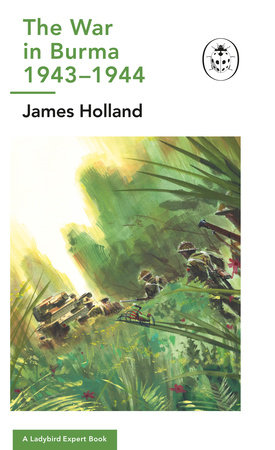
A few weeks ago, The War in Burma 1943-1944 by renowned military historian James Holland came to my attention. I dove right into it with delight. True to his eloquence and unparalleled expertise (I’m a huge fan of his documentaries and I have another book of his on my shelves), this engaging historian broadened my horizons about an aspect and a figure of World War II about which I knew too little.

Published as part of the Ladybird Expert Book collection, the most recent addition to James Holland series is beautifully enhanced by Keith Burns’ stunning and evocative illustrations summarizes the significance of the much too unknown South-East Asian theatre of World War II. Northwest Burma, the prolific historian writes, was “one of the most inhospitable places to fight in the world.” By the end of 1944, the Japanese were on the move to smash British troops on their way to India, hopefully end the British Raj and thwart the delivery of essential supplies to Chiang Kai-shek’s Nationalists in China who were also fighting the Japanese toe and nails. The stakes were unparalleled, and the British couldn’t afford to lose any ground. Outnumbered and demoralized, how could they reverse the tide?

Continue reading “How Bill Slim Turned the Tide”