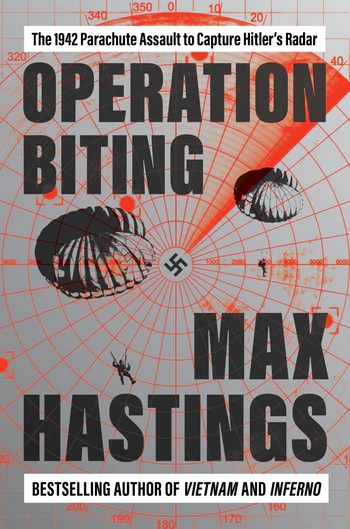
The Caledonian Invasion

In early 1942, Winston Churchill faced a barrage of bad news. Kriegsmarine warships had escaped detection, sailing from occupied France to Germany, and Singapore had just fallen to the Japanese. The time for a large-scale offensive had not yet arrived, but Churchill desperately needed a victory. German radar technology – the Würzburg – was hindering British air operations, and one station, perched on the cliffs of Bruneval near Le Havre in Northern France, became the target of a daring raid. A successful breach of the Nazi fortress would offer much-needed relief during those harsh winter months.

Thus, Operation Biting: The 1942 Parachute Assault to Capture Hitler’s Radar (Harper) vividly springs to life through Sir Max Hastings’ writing. Members of the Black Watch, the Cameron Highlanders, the King’s Own Scottish Borderers, and the Seaforth Highlanders took center stage among the British paratrooper units involved, demonstrating the martial prowess long associated with Caledonian regiments. Nemo me impune lacessit.

Unmistakably, Churchill is the story’s central figure. During the Boer War, which he covered as a young war correspondent, he admired the effectiveness of Afrikaner commandos. True to the British instinct of adapting enemy tactics, Churchill later founded the Special Operations Executive (SOE) in 1940, followed by the formation of the Special Air Service (SAS) the next year. As Hastings notes, the recruits manning these units “were seldom the sort of people to make docile household pets.” The deployment of paratroopers for Operation Biting naturally stemmed from this evolution.

Continue reading “The Caledonian Invasion”
The Four Musketeers of the SOE

A stone’s throw away from the House of Commons and Westminster Abbey lies the St. Ermin’s Hotel in London. Apart from being one of the best addresses in the City, the iconic establishment hosted Winston Churchill, who liked to sip his favourite Champagne at the Caxton Bar. There was even a secret tunnel linking the hotel lobby to Parliament. During a meeting at St. Emin’s, he asked a group of unconventional people to “Set Europe Ablaze” in founding the Special Operations Executive – the legendary SOE. Any visitor to St. Ermin’s can enjoy the sight of a monastic-sized room where the contribution of its members is soberly showcased.

Thanks to a miniseries like SAS: Rogue Heroes, the inestimable achievements of the men and women who waged unconventional warfare in World War II’s most punishing conditions are vividly brought back to public awareness. Shannon Monaghan’s book A Company of Dangerous Men: The Forgotten British Special Operations Soldiers of World War II (Viking) is another significant and euphemistically pleasant contribution. This enthralling book reminded me of Alexandre Dumas’s The Three Musketeers, the elite corps defending the King of France against domestic and foreign threats.

Continue reading “The Four Musketeers of the SOE”

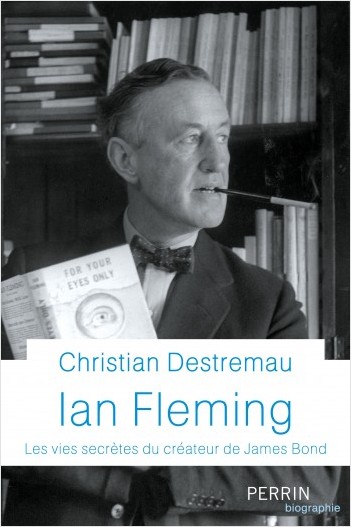
Ian Fleming et James Bond: tel père, tel fils

Dans Skyfall (le meilleur film de James Bond à mon humble avis), il y a une scène où 007 fausse compagnie aux mercenaires de Silva en empruntant un tunnel secret dissimulé dans la maison de son enfance. Au moment de s’y engouffrer, le mythique agent secret déclare : « j’ai toujours détesté cet endroit ». Cette déclaration se veut non seulement emblématique des sentiments du personnage, mais aussi de son créateur, Ian Fleming.

Dans l’enlevante biographie qu’il consacre au père de James Bond (Perrin), l’historien Christian Destremau permet au lecteur de constater à quel point le père et le fils littéraire partagent le même ADN. Amour des voitures, de la vitesse, des douches à l’eau chaude, des montagnes, caractères irrévérencieux et vie sexuelle bien assumée, voilà autant de traits donnés par Fleming à son emblématique personnage. Et j’oubliais que la mère de l’agent du MI6 est Helvète, tout comme celle de Fleming. Je laisserai aux psychologues le plaisir d’épiloguer sur la parenté entre les deux hommes, mais je peux facilement imaginer que l’auteur aurait rêvé de vivre les aventures de son héros. Après tout, n’est-ce pas là le but de la fiction?

Cela dit, n’importe quel amateur des questions de renseignement, aussi novice soit-il, aura tôt fait de constater que M. Bond détonne de manière très exubérante par rapport à la discrétion élémentaire requise de la part des manœuvriers de cet univers ombrageux. Rares doivent être ceux et celles qui raffolent d’attirer l’attention. Il n’est donc guère étonnant que le biographe écrive que « […] James Bond est pour une large part l’héritier des braves du SOE » (Special Operations Executive) – les légendaires services spéciaux créés par Churchill quelques semaines après son arrivée aux commandes en juillet 1940.

poursuivre la lecture