The Presidential Satchel

Historically, the concept of war has followed a familiar script: one victor and one vanquished. However, there exists a scenario that defies this ancient logic — nuclear war. In such a case, writes Annie Jacobsen in Nuclear War: A Scenario (Dutton), “there is no such thing as capitulation. No such thing as surrender.” Only the scorched silence of what once was.

From the very first lines, the reader is drawn into a vortex of dread—a work of speculative fiction so meticulously constructed that it becomes indistinguishable from reality. This is not merely an intellectual exercise; it is a mirror held up to our world, one where the unthinkable remains entirely plausible—and where our ability to avoid catastrophe may depend less on preparedness than on our collective refusal to acknowledge the danger.

The scenario imagined by the author begins with a North Korean nuclear strike on the United States. Confronted with the unthinkable, the President has only six minutes –  six excruciating minutes – to respond, as Ronald Reagan warned in his memoirs. From this point of no return, events unfold with brutal logic, and everything collapses.

Continue reading “The Presidential Satchel”

Waking up the American giant

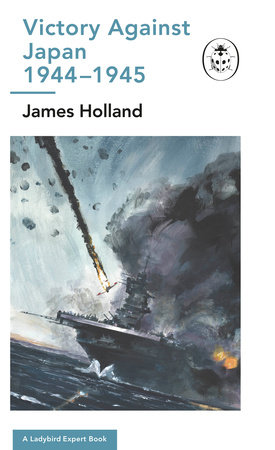
Yesterday, December 7th, marked the infamous 83rd anniversary of the Japanese air raid against Pearl Harbor. This reckless decision would provoke the evaporation of the last isolationist emanations in American public life and pave the way to the Allied victory four years later. But before we got there, a war would need to be fought and waged against a determined and “extremely inflexible” enemy – to use the words of renowned historian James Holland – a favourite of this blog, in case you haven’t noticed.

A few years ago, he wrote a very insightful book in the Ladybird Expert Series about The Pacific War 1941-1943 (Penguin Random House), and I told myself this weekend would be the ideal time to write a few lines about it.

The morning of December 7 was a shocking experience resulting from their underestimation of a lethal nemesis. The Americans took the hit and bounced back. Ultimately, their victory was the result of three crucial ingredients. First, men and resources, which they had in abundance. Second, they had a second-to-none capacity in terms of intelligence, which notably thwarted Admiral Yamamoto’s plan and would ultimately cost him his life. Third, the incomparable leadership of military figures like Admirals Chester Nimitz and William “Bull” Halsey Jr. About the latter, the author evokes that he “gelled immediately” with General Douglas MacArthur – the latter being traditionally a hard-to-get-along figure. Together, “they planned a series of leapfrogging operations, drawing on hard-won experience already gained in the Pacific and on the United States’ burgeoning military might.” Finally, “they were quick to absorb the lessons of war.”

Continue reading “Waking up the American giant”

Coca-Cola and ice cream to defeat Japan

In their seminal book Conflict, which was reviewed here recently, General Petraeus and Lord Roberts posit that, in warfare, “the side that learns and adapts the fastest typically prevails.” An ageless lesson, throughout military history.

As geopolitics evolves, my interest in the Pacific theatre during World War II has increased significantly lately. To prevail against the Empire of the Rising Sun, the US Navy needed to destroy its crucial naval power, which dominated its sphere of influence for five decades. Curtailing Japanese supply lines, notably to deprive its fleet and troops of oil, was instrumental. To that end, American forces would be attacking the islands it occupied. “Capturing these outposts in the middle of the ocean would not only deny them to the Japanese, it would bring the Allied forces closer to Japan itself”, writes renowned military historian James Holland in Victory against Japan 1944-1945, published as part of his insightful contribution to the Ladybird Expert Series (Penguin Random House).

The author also evokes the military ineffectiveness of Chinese Nationalist warlord Chiang Kai-Shek “despite the United States’ two years of ceaseless supplies”, the inestimable contribution of future Marshal Bill Slim and Special Operations Executive (SOE) teams in Burma and the appearance of the B-29 “Superfortress” in the Pacific, “the most expensive single weapons system ever built” up to that point.

Continue reading “Coca-Cola and ice cream to defeat Japan”

How America Could Fall

There has always been a soft spot for the United States in my heart. When I was about 10 years old, I uninstalled my parents’ clothesline to attach a flag of the United States on July 4th. I sensed my father was upset, but he said nothing, probably because he was somehow impressed with my audacity. A few decades later, my feeling of admiration and appreciation remained intact, and it was important for me to visit the Gettysburg National Military Park – which commemorates the most iconic battle of the Civil War during which approximately 50 000 soldiers became casualties. During those captivating pilgrimages on the battlefield, I remember the comfort I felt in my heart that such an occurrence would not happen again. America, I like to think, will remain a beacon of the values to which I am attached for many decades to come. And I guess my heart would like to believe it will be centuries…

But the last few years have considerably shaken this conviction. You may think I’m talking about Donald Trump’s election on November 8, 2016, and you are partially right. The events that occurred on January 6, 2021, were a formidable earthquake. I would never have believed anyone predicting those terrifying images of hooligans storming the US Capitol – the very seat of American democracy. Never. But here we were.

Continue reading “How America Could Fall”

Top Gun Maverick and the Taiwanese flag – Exclusive interview with Chris Fenton

Chris Fenton (source: Variety.com)

With the release of Top Gun Maverick and all the buzz surrounding the issue of the Taiwan flag on Maverick’s leather jacket, Hollywood former movie executive and author Chris Fenton kindly accepted to answer a few questions for this blog. Needless to say, I was extremely happy to be exchanging with the producer of one of my favorite movies, Iron Man 3.

Here is the content of our exchange.

Mr. Fenton, the last couple of years have been difficult for the United States on the world scene and many observers are pontificating about its supposed loss of power. Do you think Top Gun Maverick is a good shot in the arm of American patriotism?

100% yes. Hollywood content can be an extremely effective tool for soft power. Top Gun is the best example of that.

What is the recipe for the success of that iconic movie?

The star power of Tom Cruise and the brand awareness among global consumers of the original Top Gun film.

The Taiwan flag was not supposed to appear on Maverick’s jacket – from what I remember of the 2019 trailer. Could you tell us why the situation has changed?

Continue reading “Top Gun Maverick and the Taiwanese flag – Exclusive interview with Chris Fenton”

Putin thought he could get away with the invasion of Ukraine

Giles Milton (source: Macmillan)

Giles Milton is one of my favorite authors. And it’s always a real pleasure to be in touch with him. Even before I wrote my review of his last book, he agreed to answer some questions for this blog. If you haven’t read his book yet, run to the bookstore or get it online. This is a must, in the context of the aggression war conducted against Ukraine. For the time being, I trust you will enjoy this interview.

Mr. Milton, Checkmate in Berlin is a brilliant lecture about American and British innovation in adversity, mainly in organizing the Berlin airlift. Do you see the same attitude these days towards Ukraine?

Nothing on the scale of the Berlin Airlift had ever been attempted before. True, the Americans had airlifted vast quantities of weapons to the Chinese during the Second World War, but the Berlin Airlift was supporting (and keeping alive) several million Berliners.

Continue reading “Putin thought he could get away with the invasion of Ukraine”

Heeding Wellington’s Advice

Dr. Seth G. Jones (source: CSIS)

In the aftermath of my review of his excellent book, Three Dangerous Men: Russia, China, Iran and the Rise of Irregular Warfare, its author Dr. Seth G. Jones accepted to answer my questions. Our exchange occurred before the start of the invasion of Ukraine. With cyber warfare at the disposal of current armies – like the crashing of the Kremlin website today – the content of this insightful book is ever more pertinent. And Dr. Jones is the best specialist to better understand this new way of conducting war.

Here is the content of this fascinating exchange.

Valery Gerasimov has been an avid student of U.S. military campaigns.

Dr. Jones, in Three Dangerous Men, one of the things I found most interesting was the reading habits of Russian General Valery Gerasimov. Apart from devouring tomes about Russian military doctrine and history, do you know if he is also interested in learning about Western figures and military episodes?

Valery Gerasimov has been an avid student of U.S. military campaigns. He closely studied U.S. operations in Bosnia, Kosovo, Afghanistan, Iraq, Libya, and other countries. Gerasimov concluded that the United States had moved away from what he called the “traditional” approach to warfare and toward a “new,” more clandestine approach, which he termed a “concealed use of force.” Gerasimov’s study of the United States was instrumental in evolving Russia’s own military doctrine, strategy, and tactics—including its use of irregular warfare.

Continue reading “Heeding Wellington’s Advice”

The bookworm, the martyr, and Xi’s longtime friend

War adapts itself and evolves. While some may take comfort in the fact that conventional battles are most likely a phenomenon of the past, the wisdom that guided those who won them is crucial to inform us about how to efficiently carry the fight from now on.

I recently reviewed the insightful novel 2034 by Admiral James Stavridis about a potential future war between China and the United States, during which China’s People’s Liberation Army takes advantage of technology to defeat the US Navy. Anyone watching the news can grasp that the rivalry between Beijing and Washington could lead to a hot war in the future, even if the author of the novel – a man who forgot more about polemology than any of us will ever learn – evaluates that the risks are feeble, the need to be prepared is nevertheless crucial.

Continue reading “The bookworm, the martyr, and Xi’s longtime friend”

“Overall, 2021 has been a difficult year for the Biden team” – Admiral James Stavridis

Admiral James Stavridis USN (Ret.) (source: US Naval Institute)

Before the Holidays, Admiral James Stavridis USN (Ret.), one of my favorite authors, granted me an end of year interview about issues related to his amazing novel 2034 about a war between China and the United States. These geopolitical issues are unlikely to disappear from the radar in the coming months and years. The Admiral’s insights are therefore not only very informative, but also crucial to grasp the state of the world.

Admiral Stavridis, I’ve read and reviewed 2034: A Novel of the Next World War (Penguin Random House) with tremendous interest. Before we head into more serious stuff, a question burns my tongue. Since there are lots of mention of the delicious M&Ms throughout the novel, I was wondering if you are a fan of that candy yourself and if that’s the reason why it is mentioned in the book?

While I am not personally a fan of M&M candies, I have known many sea-going naval officers who are. I liked the idea of Lin Bao [one of the main characters of 2034] enjoying an American candy, essentially a nod to the duality of his upbringing.

Continue reading ““Overall, 2021 has been a difficult year for the Biden team” – Admiral James Stavridis”

2034: The War With China?

I am not a person who enjoys novels. My youngest daughter was therefore astonished when she saw me reading 2034: A Novel of the Next World War. “Yes, but it’s about a potential war between the United States and China. Plus, it’s written by an author I really like and admire, Admiral Stavridis [and Elliot Ackerman]”, I said. I admit that this was an exceptional experience and not only because of the genre, but mainly because this is one of the most thoughtful books anyone interested in geopolitics and the fate of the world should read now.

2034. About 12 years from now. Might as well say tomorrow. Russian President Vladimir Putin still occupies the highest office in the Kremlin – a scenario that made me smile – and the Israelis have lost the Golan after a military confrontation with Syria – an outcome that makes me cringe, since I have seen with my own eyes how vital this territory is to Israel’s security. The Chinese are still vying for “[…] uncontested control of the South China Sea.” Equipped with superior cyber capabilities, the Chinese People’s Liberation Army neutralizes the weapons and communications system of a flotilla of three American warships. Only one of them will remain afloat at the end of the confrontation. A military operation that was supposed to serve as a message turned into a World War.

Continue reading “2034: The War With China?”