Dans les pas d’Ibn Saud

Peu d’hommes ou de femmes d’État sont passés à l’histoire comme ayant fondé un pays. Ibn Saud (Abdelaziz ben Abderrahmane Al Saoud) fait partie de ce club sélect. La magistrale biographie que lui consacre Christian Destremau aux Éditions Perrin nous invite à découvrir un parcours singulièrement passionnant qui permet de comprendre pourquoi et comment le fondateur de l’Arabie saoudite – entité étatique qui a fait son entrée dans la familles des nations en 1932 – un « homme quasiment illettré »est parvenu à laisser une empreinte déterminante et durable dans l’histoire contemporaine.

D’entrée de jeu, cette biographie nous amène à la rencontre d’un virtuose de l’équilibrisme. Ayant échappé aux griffes des ennemis de sa famille à l’âge de 10 ans avec sa sœur en se cachant « dans une grande sacoche attachée par des lanières en cuir sur le flanc d’un dromadaire », Ibn Saud a tôt fait d’apprendre une vérité impitoyable. « L’adversaire le plus dangereux, celui qu’il faut avoir toujours à l’oeil, est tout proche, il partage les repas et le café avec vous, fait mine de vous écouter attentivement lors des assemblées, prend place à vos côtés lors de la prière. Un jour ou l’autre, il sortira lui-même son sabre ou ordonnera à l’un de ses gardes prétoriens de vous abattre. »

Usant donc de prudence, d’intelligence, d’astuce, de dissimulation, de générosité – malgré une situation financière souvent sérieusement précaire – et d’une rare capacité à être réputé comme étant l’homme le mieux informé, il posera les jalons de son œuvre en faisant « de la politique comme un leader européen ». Tout au long de sa vie, il saura ménager les différentes clientèles à l’intérieur du royaume – entre les clans, auprès des religieux et parmi les membres de sa propre famille – et à l’échelle internationale, sachant tirer son épingle du jeu dans la rivalité géopolitique entre la Sublime Porte de Constantinople et Londres, dans un premier temps, et ensuite les divergences américano-britanniques au sortir de la Seconde Guerre mondiale.

poursuivre la lecture

Winning the Battle of Britain

Since the Battle of Britain officially ended on October 31st, 1940, a review of The Battle of Britain by James Holland in the Ladybird Expert Series (Penguin Random House) remains timely in the aftermath of the commemoration of the 84th anniversary of that pivotal episode of World War II on September 15th – just a few days ago.

I might have written it before, but the greatest merit of James Holland’s book in this collection is to offer the reader the most important aspects of the battles he writes about. The Battle of Britain certainly makes no exception to that rule.

Right from the beginning, Adolf Hitler is aware that he needs to knock Britain out of the war, if he is to be successful in his ambitions. The prospects of appeasement decreased as Winston Churchill grew stronger in his role as Prime Minister. After the successful British evacuation at Dunkirk, the feldgrau horde needs to take London by force. But “it would be suicidal to attempt a Channel crossing without command of the skies and sea lanes secure.”

Continue reading “Winning the Battle of Britain”

How Churchill and Dowding saved Britain and the World

“Nothing great will ever be achieved without great men, and men are great only if they are determined to be so”, said Charles de Gaulle – Winston Churchill’s brother in arm during World War II. Resilience is the common thread of Martin Dugard’s new book Taking London: Winston Churchill and the Fight to Save Civilization (Dutton).

While de Gaulle escaped France with only 2 suitcases aboard the RAF plane that flew him into history on June 17, 1940, Churchill wasn’t much more gifted politically when he was asked to become Prime Minister a month earlier. The author reminds the reader that he was the second choice to occupy the role and that he had “no political currency beyond his words and beliefs.”

Yet, he had to keep the country – and the free world – safe from the claws of Nazism. Alone. A longtime admirer and promoter of the Royal Navy – which ruled the waves for centuries – Churchill had no choice but to realize that Nelson’s heirs couldn’t save Britain. Along with his legendary courage, the Royal Air Force was his only asset.

Continue reading “How Churchill and Dowding saved Britain and the World”

Conflict: The study of warfare at its best

I was impatient to dive between the covers of General David Petraeus (retired) and Lord Roberts book, Conflict: The Evolution of Warfare from 1945 to Ukraine and saying I’m happy I did is a euphemism.

The best way for me to review this enthralling book is to get off the beaten path and summarize the 10 main takeaways that strike me the most.

1. Whatever you think of it, “war is still very much worth studying.” That’s the common thread of the book.

2. Totalitarian régimes have an easier time launching, conducting and bearing the brunt of war. The rise of autocracies throughout the world is therefore a challenge for democracies not accustomed with the pugilistic mindset.

3. Don’t cut military spending. “Money saved in piecemeal defense cuts often costs more in the long run.” The authors mention Great Britain’s decision to axe HMS Endurance before the Falklands War as a case in point. They also refer to Israel’s defense cuts after the Six Days War, with the consequences that followed six years later on the fateful morning of Kippur. Deterrence is cheap compared to war’s tribute in blood and treasure.

Continue reading “Conflict: The study of warfare at its best”

Churchill and the SAS

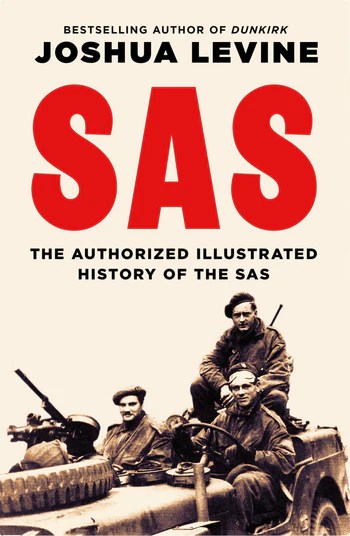
As a big fan of anything related to Special Forces, commandos, and covert operations, I enjoyed immensely reading Joshua Levine’s book SAS: The Authorized Illustrated History of the SAS (William Collins) during the Holidays. Incidentally, I finished reading it a few hours after I learnt that Mike Sadler, the last of the original members of the SAS (Special Air Service) had passed away.

Joshua Levine’s book is filled with breathtaking operations and incomparable characters, like Mike Sadler, David Stirling, Dudley Clarke, Paddy Mayne and Jock Lewes – among many who all played a crucial role in this inspiring chapter of World War II.

The main lesson I take from the author’s work is more political. History is full of fantastic ideas or projects that never lifted off the ground because they were not supported by the right people against all odds. The legendary SAS is not one of those. Bestselling author of Dunkirk, which was written in conjunction with the 2017 movie, Joshua Levine has a keen eye for military exploits.

Continue reading “Churchill and the SAS”

Churchill’s Disciple

As far back as reading his incredible columns in the Daily Telegraph, I have been fascinated with Boris Johnson. Throughout his media and political career, the former Prime Minister of the United Kingdom has intrigued and amused me while often making me reflect further on the parallels between the past and the present. In that regard, his riveting and difficult-to-match biography of Winston Churchill underlies how much both statesmen share many similarities, which probably explains why Boris Johnson undertook the process of writing this biography.

That impression was rekindled while I read Sebastian Payne’s absorbing book The Fall of Boris Johnson: The Full Story (Macmillan). Even though the story it recounts was painful at times – yes, I admit, I’m a fan of Boris Johnson and reading about his downfall didn’t make me particularly joyful – it was unquestionably the best political book I have read for years.

Winston Churchill and Boris Johnson will both go down in history as unrivalled communicators of their respective eras. It must have been hard for the latter’s communications shop to provide products that met the criteria of a man who was probably his own best speechwriter.

Continue reading “Churchill’s Disciple”

“Grit, determination and sacrifice”

In a recent book about FDR and Churchill, historian James B. Conroy recounts how the iconic British Prime Minister convinced the US President to choose the option of attacking the underbelly of the Axis, namely North Africa and Italy, rather than an early landing in France. But more about it later.

Any traveler from Rome disembarking the train at Monte Cassino is granted the unique spectacle of the breathtaking view of the iconic 6th Century Benedictine monastery overlooking the town. Only then can you fully grasp the magnitude of what Allied soldiers endured on their way to Rome.

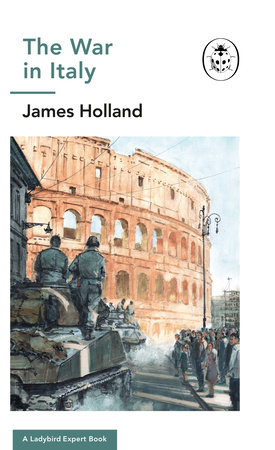
Yet, despite its cruciality, the Italian front is a poor cousin of World War II history. Renowned historian James Holland’s work contributes to correcting that perception. He notably does so in a brief but evocative book he devotes to The War in Italy as part of the excellent Ladybird Expert series. Between the covers, James Holland notably illustrates that, far from disengaging the enemy, German troops did everything they could to block its way North. For instance, he writes that the bombing of the Monte Cassino Abbey made the position stronger for the 1st Fallschirmjäger paratroopers who reinforced the Gustav Line in that sector. British General Harold Alexander’s 15th Army Group would not be celebrating Christmas 1943 in the Eternal City. Hitler’s troops were anything but a spent force. They would stubbornly defend their positions “for over a year and a half”. On the Allied side, the landings at Salerno (Sicily) were “very nearly a catastrophic failure”, foreshadowing hardships to come.

Continue reading ““Grit, determination and sacrifice””

Charles III, l’étoffe d’un grand roi

« « Fils de », « époux de », puis « père de », Charles dut […] se battre pour affirmer sa personnalité et promouvoir ses engagements. » À elle seule, cette observation du biographe et journaliste Philip Kyle résume le parcours fascinant mais souvent tragique du monarque qui sera couronné après-demain en l’abbaye de Westminster.

Mon chef d’État favori, Winston Churchill, a attendu l’âge vénérable de 65 ans – celui de la retraite – pour atteindre le sommet. Il est invité à diriger son pays au pire moment de son histoire, lorsque le péril brun déferle en Europe. De son côté, Charles III aura dû attendre 8 ans de plus que son illustre compatriote pour vivre sa consécration. Après sept décennies dans l’antichambre du trône, il « […] fut l’héritier à avoir attendu le plus longtemps son accession. ». Les deux personnages auront fréquenté les abîmes et les hauts sommets, mais se seront démarqués par une homérique ténacité devant l’adversité. Je m’arrêterai ici sur ce corollaire, même s’il y aurait encore tant à écrire.

Le plus grand mérite de la biographie que nous propose Philip Kyle est de révéler des facettes peu connues, voire occultées, de celui sur la tête duquel sera déposée la couronne de saint Édouard dans quelques heures. Sensible, altruiste – « […] il sélectionnait souvent un enfant peu talentueux, qui n’allait pas l’aider à gagner, mais qui aurait sans doute été choisi en dernier autrement » pour faire partie de son équipe à l’école, mais de caractère affirmé, Charles n’a jamais craint de susciter la controverse pour faire avancer ses idées. Je garde en mémoire le souvenir d’un professeur au secondaire qui se moquait du prince de Galles, narguant sa posture écologiste et son habitude de parler aux plantes.

poursuivre la lecture

Churchill was better at strategy than politics

Professor Simon J. Ball (University of Leeds)

I recently reviewed Professor Simon J. Ball’s revealing book about the battle of Alamein (The Folio Society). He generously accepted to answer few questions for this blog, and I take immense pleasure in sharing the content of our exchange with you today. I trust you will enjoy reading it.

_________

Professor Ball, I might be wrong, but I have a feeling that the Mediterranean theater during World War II has been overlooked. Why is it important to pay more attention to it? How crucial was it in the big picture of the conflict? 

SJB: The war in the Mediterranean was of central importance. It blew apart the idea of the Mediterranean as a unified zone, although all the major powers tried to engineer integration at some points. Oddly the idea of the Mediterranean as an integrated politico-economic-cultural area, “breathing with the same rhythms”, was popularized by Fernand Braudel in the late 1940s.

Continue reading “Churchill was better at strategy than politics”

Joe Biden: Leader of the Free World

“To every man there comes in his lifetime that special moment when he is figuratively tapped on the shoulder and offered a chance to do a very special thing, unique to him and fitted to his talents,” declared Winston Churchill. For many, that hour comes early. For some, like the heroic British Prime Minister, it comes later. For others, like US President Joe Biden, it comes even later in life.

As we commemorate today the tragic first anniversary of the murderous onslaught launched by Vladimir Putin against Ukraine, it seems fitting to write about one of the best political biographies I have read in a long time. The Fight of His Life: Inside Joe Biden’s White House (Scribner) is required reading for anyone seeking to understand the character of the 46th President of the United States.

In the summer of 2017, the events surrounding the extreme-right manifestations in the streets of Charlottesville convinced former Vice President Biden that Donald Trump “was giving evil a safe harbour”, thus contributing to the Democratic politician’s decision to run. The combat for 2020 was between good and evil. And no one was better equipped than Joe Biden to lead it.

Continue reading “Joe Biden: Leader of the Free World”