Yossi Cohen: From the Shadows to the Hustings

In the new world order that is taking shape, the special relationship between Israel and the United States remains paramount. To paraphrase Sir Winston Churchill’s description of his relationship with President Franklin D. Roosevelt, “No lover ever studied every whim of his mistress” as closely as Benjamin Netanyahu did those of President Donald Trump. It therefore came as no surprise that the Israeli Prime Minister celebrated the arrival of 2026 last week at Mar-a-Lago. No one can dispute that Bibi is unparalleled when it comes to possessing a keen sense of history. But no statesman is eternal, and some actors are already jockeying to succeed him.

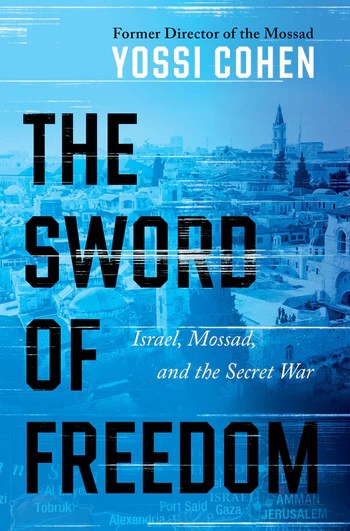
Former Mossad director Yossi Cohen is said to be among them, and the publication of his riveting memoir—The Sword of Freedom: Israel, Mossad, and the Secret War (Broadside Books)—will do little to calm speculation about a potential bid. The narrative spans forty-two years of service to Israel, at the heart of some of its most secret operations, including the iconic 2018 mission in which Mossad operatives seized Iran’s nuclear archives from a clandestine warehouse south of Tehran. Cohen notably served under the legendary Meir Dagan—who took him under his wing and is believed to have later recommended him to Prime Minister Netanyahu as a successor—and his aptitude for human relations, clearly a strength, naturally pointed him toward public life.

Continue reading “Yossi Cohen: From the Shadows to the Hustings”

Le Hamas, ennemi mortel de l’Occident

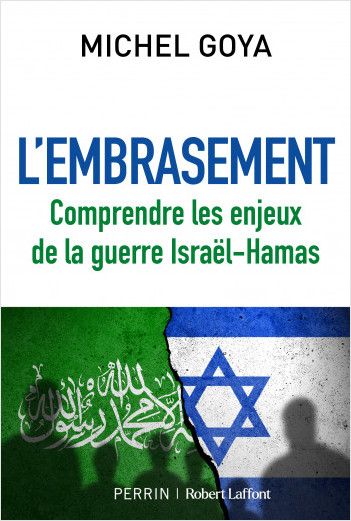
J’ai toujours apprécié la plume et les analyses de Michel Goya et j’étais impatient de plonger le nez dans son dernier livre L’embrasement : Comprendre les enjeux de la guerre Israël-Hamas (Perrin / Robert Laffont). À quelques bémols près, sur lesquels je reviendrai en deuxième partie, je n’ai pas été déçu.

Dans la tourmente actuelle, un constat s’impose. Israël a très mal jaugé son adversaire. Le Hamas est à des années lumières d’une troupe de lanceurs de pierres ou de terroristes improvisés. C’est un ennemi mortel « bien organisé et bien équipé », faisant preuve d’ingéniosité qui a laissé l’armée israélienne aveugle et sourde devant le péril qui se dessinait et qui l’a frappé au crépuscule le 7 octobre.

À cet égard, certains passages m’ont causé beaucoup d’étonnement. D’abord, celui de l’utilisation par le Hamas, d’« une flotte de petits drones-munitions bricolés, [grâce à laquelle] l’organisation terroriste détruit [au moment de son incursion sanguinaire] caméras optiques et thermiques, détecteurs de mouvement, antennes-relais sur la clôture et les tours de guet ainsi que les mitrailleuses téléopérées placées dans des petites tours en béton. » Comme quoi la meilleure technologie du monde doit parfois s’agenouiller devant des adversaires déterminés qui savent la contourner. Ce dont atteste une seconde affirmation, selon laquelle « le service de renseignement du Hamas a cartographié patiemment tous les points sensibles le long de celle-ci [la barrière de sécurité entre Gaza et Israël] et organisé très précisément la manière de les neutraliser. »

poursuivre la lecture

In the footsteps of Golda Meir

Let’s talk about an Israeli Prime Minister who is “an accomplished player in the rough-and-tumble world” of Jewish politics. An extremely talented communicator who can excite supporters and who plays on the American public scene like a virtuoso. At the same time, that leader generates strong feelings – positive and negative – among certain groups, particularly at home. This is a head of government whose political survival is threatened by an existential war launched against the country while its defenders are caught off guard.

Reading these lines, the image of Benjamin Netanyahu will certainly come to your mind. That is, if you are interested in current Israeli political history.

Considering the similarities quoted above, one could argue that the current Prime Minister walks in the footsteps of Golda Meir, in whose care the country was entrusted between 1969 and 1974.

I am fully aware that drawing parallels is a road on which one must tread carefully – after all these two leaders belong in two opposite ideological and partisan camps – but I could not avoid mentioning these striking parallels.

The life and career of the fourth Prime Minister of Israel – and only woman to occupy that function – have piqued my curiosity for quite a long time now. Thanks to the expertise and talent of Professor Deborah E. Lipstadt, who currently serves as the U.S State Department’s Special Envoy for Monitoring and Combating Antisemitism, an excellent opportunity has been granted me through Yale University Press’ excellent Jewish Lives Collection.

Continue reading “In the footsteps of Golda Meir”

James Bond with a kippah

Yesterday’s attack against Israel launched by Iran using drones was yet another illustration that this country lives under an ongoing existential threat. Yet, the war against Israel is not new. The Ayatollahs’ régime is waging it since it seized power in Tehran in 1979. Ever since, it invested wealth of resources and imagination to eradicate Israel. The continued efforts to acquire the nuclear bomb features in that evil military toolbox.

The efforts deployed by Israel to counter and prevent this deadly scenario to materialize is at the center of Target Tehran: How Israel Is Using Sabotage, Cyberwarfare, Assassination – and Secret Diplomacy – to Stop a Nuclear Iran and Create a New Middle East (Simon & Schuster) by Yonah Jeremy Bob and Ilan Evyatar.

Ever since Tehran is trying to build the bomb, Israel has worked around the clock to expose this evil machination. Things came to a head on April 30, 2018, when Israel Prime Minister Benjamin Netanyahu unveiled the content of Iran’s nuclear secrets to the world in a brilliant press conference. The denunciation of Tehran’s hypocrisy was made possible by a Mossad operation to seize archives from the belly of the beast.

Continue reading “James Bond with a kippah”

“It’s hard to be a Jew”

Mark Twain declared that “history doesn’t repeat itself, but it often rhymes.” Any student of Israel’s history certainly had that feeling on October 7, when the country was attacked the day after the festival of Sukkot, a significant moment in the Jewish calendar. Historians will undoubtedly spend lots of time and expertise drawing similarities between the surprise attack that marked the start of the Yom Kippur War on October 6, 1973, and the latest murderous incursions launched by Hamas terrorists last month.

Few weeks prior to that “date which will live in infamy” to borrow FDR’s words, author Uri Kaufman released an enthralling book, Eighteen Days in October: The Yom Kippur War and How It Created the Modern Middle East (St. Martin’s Press). From cover to cover, this book details the very existential nature of this war – or any armed conflict – for Israel’s survival. On several occasions, Israel could have lost, marking the end of the Jewish State.

Continue reading ““It’s hard to be a Jew””

The Netanyahu Rules

For several reasons, I have never really been a big fan of memoirs. As a student of Israeli Prime Minister Benjamin Netanyahu’s political vocation, I was nevertheless to dive enthusiastically into his autobiography, whose title is simply Bibi: My Story (Threshold Editions). I was not disappointed, because “Bibi” marshalled all his legendary talent as a communicator to convey the chapters of his life.

I could evoke his conservative philosophy – notably expressed in his revulsion when confronted with the “absurd bureaucracy” preventing the Prime Minister’s Office from getting a new Nespresso coffee machine for six months – his numerous dealings with world leaders from Ronald Reagan to Vladimir Putin and Donald Trump or even the Herculean task of overcoming his detractors and would-be political assassins. I could also mention his admirable historical knowledge and his significant affinity with the Bible and its landscape. Or the care he took to maintain a deep and lasting relationship with the Likud members – an essential ingredient in his political longevity. Maybe I should also have taken the time to explore the influence of Ze’ev Jabotinsky’s “Theory of Public Pressure” on his career. However, the focus of this review is to extract the main lessons – we could call them rules – from his absorbing journey.

Continue reading “The Netanyahu Rules”

Netanyahu Was Right

I had the privilege of meeting Israeli Prime Minister Benjamin Netanyahu years ago. During our discussion, he stressed the fact that it was crucial to support Israel because it is the first line of defense of the West and its values. As a commando soldier, diplomat and statesman, this man has accumulated a vast experience fighting extremism in its most brutal forms.

I was therefore not surprised to learn that he was the first world leader to make a congratulatory call to President Donald Trump, after the Americans liberated the world of the nefarious presence of Qasem Soleimani, the Iranian warlord in charge of the Revolutionary Guards who was a combination of “James Bond, Erwin Rommel, and Lady Gaga rolled into one” for his supporters.

That information is revealed in Killing the Killers: The Secret War Against Terrorism (St. Martin’s Press) by veteran journalist Bill O’Reilly and acclaimed author Martin Dugard, whose books I reviewed on this blog.

Continue reading “Netanyahu Was Right”

Sayeret Matkal on the frontlines

July 4th marked the 47th anniversary of the Entebbe operation, during which Israeli commandos rescued passengers held hostages by Palestinian terrorists and Ugandan soldiers after the hijacking of an Air France plane in Athens. Israel lost one soldier during the operation, Yoni Netanyahu, brother of the current Prime Minister of Israel. The audacious soldiers who appeared in the skies of Entebbe in the middle of the night belonged to Sayeret Matkal – Israel’s Defense Force’s General Staff Reconnaissance Unit. The unit was founded in 1957 by Avraham Arnan and was directly inspired by the iconic SAS (Special Air Service) warriors who served under the Union Jack during World War II.

I was too young to remember what happened at Entebbe. But another operation has captivated me since I was a teenager. I vividly remember hearing on the radio the news of Abu Jihad’s neutralization in April 1988 in Tunis. From memory, Israel was announced as having ordered this operation and I wondered how these intrepid operatives could perform their art so far away from the shores of their homeland.

I was therefore thrilled to read Sayeret Matkal: The Greatest Operations of Israel’s Elite Commandos (Skyhorse Publishing) by Avner Shur and Aviram Halevi, whose first chapter invites the reader to walk with the Israeli commandos to accomplish Operation Show of Force under the leadership of commander Moshe “Boogie” Ya’alon.

Continue reading “Sayeret Matkal on the frontlines”

La ruse, cette égalisatrice de puissance

La série télévisée Valley of Tears (La vallée des larmes) diffusée sur HBO Max relate le début de la guerre du Kippour – jour le plus sacré du calendrier juif – qui a été initiée par la Syrie et l’Égypte le 6 octobre 1973. Dans cette série, un jeune officier du renseignement, Avinoam, s’évertue sans succès à prévenir ses supérieurs du danger qui guette Israël par les informations qu’il est parvenu à glaner en espionnant des conversations téléphoniques syriennes. Jérusalem sortira vainqueure du conflit 19 jours plus tard, mais la conscience nationale restera traumatisée par cet épisode.

« La surprise est bien plus que la moitié de la bataille », comme l’évoque Rémy Hémez dans son livre Les Opérations de déception : Ruses et stratagèmes de guerre (Perrin). En octobre 1973, nous dit-il dans son exposé enlevant, « deux mythes de la société israélienne se sont effondrés : l’invincibilité de l’armée et l’infaillibilité des services de renseignements. » Les Israéliens étaient pourtant bien avisés, mais ils ont été bernés par ce que le militaire-chercheur désigne comme étant le « biais de confirmation », cette « […] tendance à ne rechercher, et à ne trouver pertinentes, que les informations qui confirment nos préconceptions. » Au lieu de focaliser sur les intentions de l’adversaire, l’attention a été portée sur les capacités, ce qui a eu pour effet de bercer Israël d’un faux sentiment de sécurité en raison de la supériorité de ses forces militaires.

poursuivre la lecture

The Gurkha Diaries

Any history buff strolling in Old Jerusalem can observe some vestiges of the British Empire. There’s the Mahane Yehuda police station on Jaffa Road, which served during the Mandate. Less than two hours from the capital city of Israel, on the Mediterranean Coast, one can visit the Acre prison where Jewish nationalists were imprisoned, including those who were condemned to death. At least, it was possible to do so when I visited back in 2008.

The rebirth of Israel in 1947-1948 was a direct consequence of the disappearance of the British Empire in the aftermath of World War II. The same year also witnessed the partition between India and Pakistan, a development that would give rise to population displacements and massacres. Robert Atkins, author of The Gurkha Diaries of Robert Atkins MC: India and Malaya 1944 – 1958 (Pen & Sword) and his fellow Gurkhas [the sturdy and legendary Nepalese soldiers who serve the Crown since the middle of the 19th century] were deployed on that theater and attempted “[…] to mitigate the massacres [between Hindus and Muslims] and stem the violence in the last days of a teetering Raj.” The magnitude of the violence perpetrated during that tragic chapter of contemporary history must have been staggering for the young soldiers, but they carried on with admirable bravery, nevertheless.

Continue reading “The Gurkha Diaries”