The Caledonian Invasion

In early 1942, Winston Churchill faced a barrage of bad news. Kriegsmarine warships had escaped detection, sailing from occupied France to Germany, and Singapore had just fallen to the Japanese. The time for a large-scale offensive had not yet arrived, but Churchill desperately needed a victory. German radar technology – the Würzburg – was hindering British air operations, and one station, perched on the cliffs of Bruneval near Le Havre in Northern France, became the target of a daring raid. A successful breach of the Nazi fortress would offer much-needed relief during those harsh winter months.

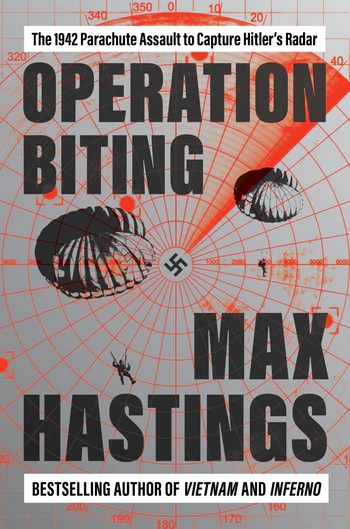
Thus, Operation Biting: The 1942 Parachute Assault to Capture Hitler’s Radar (Harper) vividly springs to life through Sir Max Hastings’ writing. Members of the Black Watch, the Cameron Highlanders, the King’s Own Scottish Borderers, and the Seaforth Highlanders took center stage among the British paratrooper units involved, demonstrating the martial prowess long associated with Caledonian regiments. Nemo me impune lacessit.

Unmistakably, Churchill is the story’s central figure. During the Boer War, which he covered as a young war correspondent, he admired the effectiveness of Afrikaner commandos. True to the British instinct of adapting enemy tactics, Churchill later founded the Special Operations Executive (SOE) in 1940, followed by the formation of the Special Air Service (SAS) the next year. As Hastings notes, the recruits manning these units “were seldom the sort of people to make docile household pets.” The deployment of paratroopers for Operation Biting naturally stemmed from this evolution.

Continue reading “The Caledonian Invasion”
How Bill Slim Turned the Tide

Any passerby on Whitehall in London walks in front of three statues representing towering British military figures of World War II. The most iconic one is naturally the one representing Viscount Montgomery, the victor of Alamein. Then there’s one of Viscount Alanbrooke, who headed the British Army during the conflict. The third and last one along the way – if you come from the House of Commons – depicts Viscount Slim, the victor of Burma. While I have devoured countless articles and books about Monty and read many things on Alanbrooke, my knowledge about the last member of the trio is scant at best. Mea culpa.

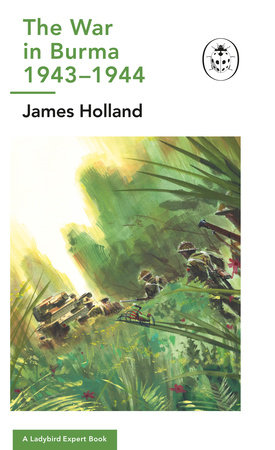
A few weeks ago, The War in Burma 1943-1944 by renowned military historian James Holland came to my attention. I dove right into it with delight. True to his eloquence and unparalleled expertise (I’m a huge fan of his documentaries and I have another book of his on my shelves), this engaging historian broadened my horizons about an aspect and a figure of World War II about which I knew too little.

Published as part of the Ladybird Expert Book collection, the most recent addition to James Holland series is beautifully enhanced by Keith Burns’ stunning and evocative illustrations summarizes the significance of the much too unknown South-East Asian theatre of World War II. Northwest Burma, the prolific historian writes, was “one of the most inhospitable places to fight in the world.” By the end of 1944, the Japanese were on the move to smash British troops on their way to India, hopefully end the British Raj and thwart the delivery of essential supplies to Chiang Kai-shek’s Nationalists in China who were also fighting the Japanese toe and nails. The stakes were unparalleled, and the British couldn’t afford to lose any ground. Outnumbered and demoralized, how could they reverse the tide?

Continue reading “How Bill Slim Turned the Tide”

« Je pense que Harry couche avec le fantôme de sa mère »

L’historien et biographe Jean des Cars (source: The Limited Times)

Le comte Jean des Cars est un personnage des plus sympathiques et généreux. Sa bibliographie est impressionnante et il est le spécialiste de référence des têtes couronnées européennes. Il m’a accordé il y a quelques jours un long entretien à propos de la monarchie britannique, dans la foulée du décès de Sa Majesté la reine Elizabeth II survenu le 8 septembre dernier.

« J’ai été le premier journaliste francophone reçu à Buckingham Palace par le prince Charles [maintenant le roi Charles III]. C’était en 1982, avant son mariage avec Diana », de mentionner fièrement l’auteur du récent livre à succès Pour la reine (Perrin) qui en est à sa cinquième réédition. « J’avais appris qu’il allait venir en France, pour honorer la mémoire des combattants de la Royal Air Force qui s’étaient cachés dans les caves à champagne et qui avaient vécu des moments épouvantables. Il devait être accompagné de Lord Mountbatten. J’ai donc dit au journal (Le Figaro) : « Et si on demandait un entretien au prince de Galles? » Tout le monde me regarde et me dit : « vous êtes fou. » J’ai donc pris l’annuaire téléphonique de Londres. J’ai appelé Buckingham et j’ai demandé à parler à l’officier de presse en charge du prince de Galles. On me passe alors un Australien avec un accent de crocodile qui me demande de lui envoyer par télécopieur une photocopie de mon passeport et ma liste de questions. Deux jours plus tard, on me confirmait un rendez-vous qui était prévu le surlendemain. Personne n’a cru que j’avais simplement obtenu cet entretien simplement à cause d’un appel à Buckingham Palace », de se remémorer l’historien avec gourmandise.

poursuivre la lecture