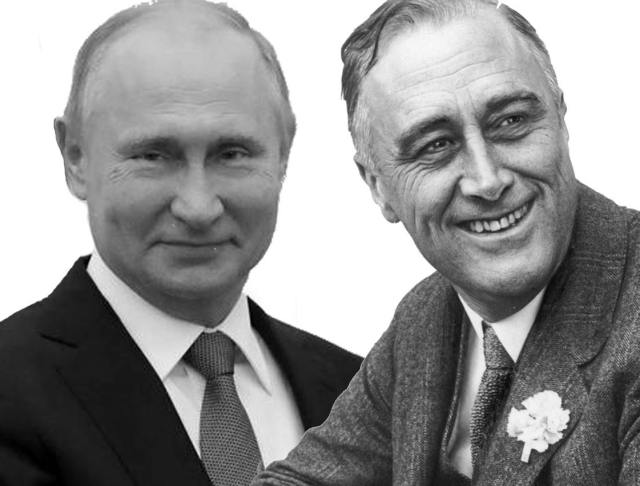
FDR was a role model for Vladimir Putin

PutinFDR

LA VERSION FRANÇAISE SUIT

After reading his insightful, well-written and gripping book about President Vladimir Putin, I asked Professor Mark Galeotti if he would accept to answer a few questions for this blog. He swiftly agreed and I’m very grateful for the generosity of his time. Here is the content of our exchange.

Many sincere thanks Pr. Galeotti for accepting to respond to a few questions for my blog.

His very privacy means we all get to imagine our own personal Putin…

PutinMarkGaleottiOn page 22 of your excellent book about President Putin, you write “If people think you are powerful, you are powerful.” On page 53, you refer to “purposeful theatricality”. In your book, Putin doesn’t come across as a bad person. Is there an important difference between the public and private persona of the Russian President? How is Mr. Putin different in private than what he shows in public?

The thing is that we really have very little sense of the true private self of Vladimir Putin: he absolutely protects that side of his life, and instead what we see is a guarded and carefully managed public persona. I think that for all the opulence of his lifestyle – the palaces, the personal staff, the thousand-dollar tracksuits – he is actually something of a lonely and distant figure, now almost trapped within the public persona, but this is very much my own imagining. In a way, that’s the point: his very privacy means we all get to imagine our own personal Putin…

On page 75, you debunk the notion that Vladimir Putin is some kind of social conservative (he notably upholds abortion rights), arguing that he is a pragmatist first. This notion is unfortunately not widely known in the West. Why do you think observers and commentators still hold to the notion that he is some kind of conservative ideologue?

Continue reading “FDR was a role model for Vladimir Putin”

Vladimir Poutine, ce méconnu

PutinMarkGaleottiNe cherchez pas à savoir pourquoi, mais la fête de Pâques me fait toujours penser à la Russie. J’ignore d’où ça vient, mais c’est comme ça.

Il est donc à propos que je publie quelque chose à propos de ce pays en cette fin de semaine pascale.

On le sait, Vladimir Poutine flotte dans une aura de mystère et d’incompréhension. Homme le plus dangereux du monde pour les uns, objet de curiosité pour plusieurs ou figure inspirante pour les autres, celui qui est aux commandes de la Russie depuis 20 ans laisse peu de gens indifférents. Et ça lui fait probablement bien plaisir, puisque son positionnement médiatique enviable est proportionnel à l’influence qu’il souhaite son pays voir occuper sur la scène internationale.

Le personnage me fascine depuis longtemps et je suis toujours à la recherche de bonnes lectures pour mieux le connaître – au-delà des attaques en règle ou de l’hagiographie.

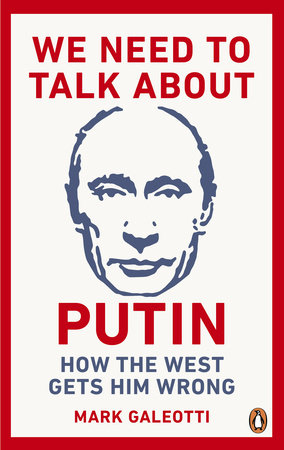
Le portrait que brosse Mark Galeotti du président russe dans We Need to Talk About Putin : How the West gets Him Wrong mérite assurément de faire partie des lectures incontournables à propos de ce chef d’État.

Selon l’auteur, les malentendus dans nos relations avec la Russie découleraient de notre incompréhension de celui qui la dirige. D’où la nécessité de mieux en comprendre les ressorts.

Acteur politique rationnel, Poutine serait d’abord et avant tout un pragmatique désireux de faire en sorte que la Russie soit respectée sur la scène internationale. Fondamentalement loyal, le dirigeant n’aimerait pas prendre de risques (l’épisode ukrainien serait une erreur de parcours découlant de mauvais conseils selon l’historien britannique) et ne serait pas un idéologue. Il dérogerait également aux normes de plusieurs Russes de sa génération, en épousant une approche positive et inclusive envers les femmes.

Alors que les pays de l’ancien Bloc de l’Est sont une région du globe où l’antisémitisme se métastase avec la montée de l’extrême-droite (comme en Pologne), l’individu ne saurait être accusé d’aucun travers antisémite « dans un pays affichant une histoire sombre dans sa relation avec la communauté juive. » Finalement, pour répondre à l’accusation selon laquelle tous les ennemis du locataire du Kremlin se font zigouiller, Mark Galeotti intitule l’un de ses chapitres « Les ennemis de Poutine ne meurent pas tous » (après tout, Alexei Navalny est toujours vivant), exposant que « les Russes ont plus de chances de succomber à des rivalités criminelles ou d’affaires qu’en raison de démêlés avec le régime. »

Cela n’est pas sans me rappeler mon séjour à Moscou, au cours duquel j’avais aperçu la voiture d’un banquier devant mon hôtel, gardé par un agent de sécurité (qui ressemblait davantage à un mercenaire) armé jusqu’aux dents et se tenant prêt à appuyer sur la gâchette de son AK-17. Toute personne s’intéressant de près ou de loin à l’histoire de la Russie sait que le climat de violence fait partie du tissu social et politique de ce pays depuis des siècles. Il n’est donc pas étonnant que Poutine ait revêtu l’armure publique d’une personnalité forte, puisque « si les gens croient que vous êtes puissants, vous êtes puissants. »

L’auteur attribue les crimes politiques (notamment l’assassinat de Boris Nemtsov) au climat qui s’est fait jour autour des cercles du pouvoir. Même si une commande n’est pas donnée directement, le message passe subtilement et les basses œuvres sont exécutées. Avec un humour noir, il observe que Poutine est un autocrate miséricordieux. Vous ne tomberez pas sous les balles d’un tueur si vous ne l’obligez pas à vous acheminer prématurément vers le Créateur. Ne franchissez donc pas la ligne. Je me questionne cependant à savoir si Poutine cautionne ce système d’emblée ou s’il ne fait que l’instrumentaliser pour demeurer au pouvoir. Je ne retiendrai pas mon souffle en attendant la réponse. C’est brutal et je suis à des années lumières d’être à l’aise avec les règlements de conflits à coups de pistolet ou d’attentats, mais c’est la réalité.

Cela dit, j’ai été étonné de lire que VVP (c’est par ses initiales que plusieurs désignent souvent le chef d’État russe) serait également un sentimental, mais j’aurais dû m’en douter puisque la personnalité très dominante du président russe masque assurément, comme chez tous les individus, des blessures que l’on tient à protéger derrières les barbelées d’une posture « macho ». Mais je ne veux pas jouer les psychologues amateurs.

L’intérêt du travail de Mark Galeotti repose sur le fait que Vladimir Poutine est assurément mal perçu et visiblement mal compris en occident. Depuis longtemps, je suis d’avis que le tsar actuel est une bien meilleure option pour plusieurs que ceux qui pourraient vouloir ou être appelés à le remplacer.

L’historien adresse donc une mise en garde à l’effet que « Toute interférence plus active ou agressive entrainerait probablement des réactions actives et agressives, accordant plus de pouvoir à ces ultranationalistes que Poutine est parvenu à contenir. Le personnage n’est ni un fanatique, ni un lunatique et une Russie vivant dans la stabilité est moins dangereuse que si elle évolue dans le chaos. »

On ne pourrait saurait donc en vouloir à ceux qui souhaitent que les faucons ne délogent pas l’aigle de son nid.

S’il est un défaut dont j’affublerais ce livre, c’est qu’il est malheureusement beaucoup trop court. J’aurais bien avalé plusieurs pages supplémentaires rédigées par cette plume renseignée et agréable.

_________

Mark Galeotti, We Need to Talk About Putin: How the West Gets Him Wrong, London, Ebury Press, 2019, 143 pages.

Q & A with CDR Guy M. Snodgrass (USN, Retired)

GuySnodgrass3
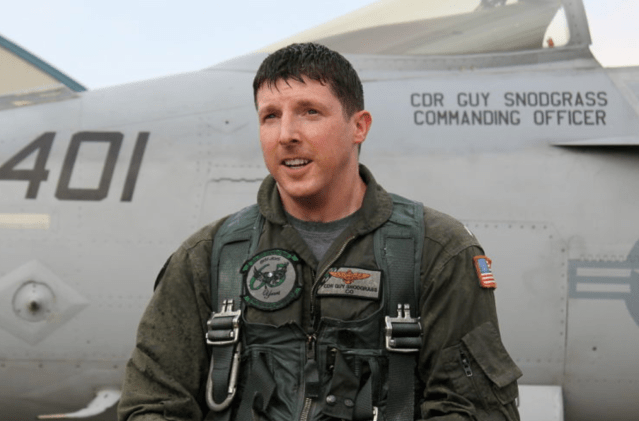
Commander Guy M. Snodgrass (USN, Retired), author of Holding the Line: Inside Trump’s Pentagon with Secretary Mattis.

In the process of writing my review of his excellent book, Holding the Line: Inside Trump’s Pentagon with Secretary Mattis, I got in touch with Commander Guy M. Snodgrass (USN, Retired), asking if he would agree to respond to a few questions for my readers. Despite a busy schedule and numerous media requests in relation with his book, he kindly accepted. I’m both grateful and impatient to put my hands on his upcoming book.

Commander Snodgrass, what’s your favorite political memoir, apart from Peggy Noonan’s (I assume it’s on the top of your list)?

All Too Human: A Political Education by George Stephanopoulos.

His favorite bios are the ones written about Henry Kissinger and George H. W. Bush

What’s your favorite biography? (My little finger tells me it might be “Kissinger” by Walter Isaacson).

Either Kissinger by Walter Isaacson (for it’s no-holds portrayal of Kissinger) or Power and Destiny by Jon Meacham (the biography of former President George H. W. Bush).

Given your past career, you certainly nourish an interest in military history? What’s your favorite book in that category?

I’ll give you the standard TOPGUN answer to your question: it depends. I have a lot of ‘favorites’ depending on the application or topic at hand. Top three are: Eisenhower At War by David Eisenhower, The Nightingale’s Song by Robert Timberg, and The Encyclopedia of Military History by Ernest and Trevor Dupuy. For fun I’ll throw in Robin Olds’s Fighter Pilot.

NATO Secretary General Jen Stoltenberg is largely unflappable, calm under pressure, and a gifted politician who never seemed to be a loss for words during a press conference.

During your tenure with Secretary Mattis, which international personality (military or political) left the best impression on you and why?

Jen Stoltenberg, Secretary General of NATO. He is largely unflappable, calm under pressure, and a gifted politician who never seemed to be a loss for words during a press conference.

The U.S. must find ways to coexist with both nations (Russia and China) on the world stage while holding the line with regards to U.S. interests.

I’d be very curious to know if you share Henry Kissinger’s vision about Russia and China? (I would have loved to read more about it in your book, but I understand it was not its scope)

No, at least not the way Kissinger views them now. Russia and China actively work to subvert U.S. influence around the world. Kissinger is far too eager to rush into their arms from what I’ve seen from him in recent years. Regardless, the U.S. must find ways to coexist with both nations on the world stage while holding the line with regards to U.S. interests.

Are you working on another book or is it something you are planning?

Yes: TOPGUN’s TOP 10: Leadership Lessons from the Cockpit (just posted on Amazon). An opportunity to share the most powerful lessons I learned during my time as a TOPGUN Instructor.

I was raised to put service before self, which is why a military career was so satisfying. I’m certainly open to pursuing a pathway that leads to a return to public service.

Would you consider a run for political office in the future?

Would I? Possibly. Both U.S. political parties are incredibly unsettled at the moment, so I have a hard time determining if recent shifts in platforms are permanent or merely a reaction to President Trump. I was raised to put service before self, which is why a military career was so satisfying. I’m certainly open to pursuing a pathway that leads to a return to public service. In the meantime, it’s an honor to be able to publish and make a positive impact in the lives of others.

Riding with Napoleon

AndrewRobertsLeadership

In April 2013, I made a point to be in London for Lady Thatcher’s funeral, on my way back to Canada from Rome. Throughout my youth, the former Prime Minister of Great Britain had always been one of my favorite leaders. It was therefore an honor to stand on the street and see her casket pass in front of me on a morning of reverence.

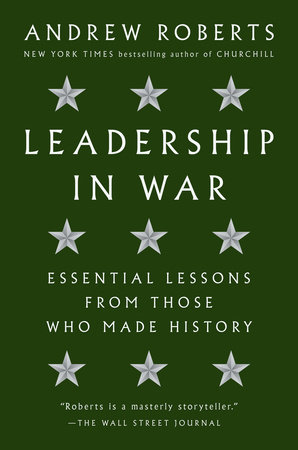
Just a few days ago, I finished reading Andrew Robert’s last book, Leadership in War: Essential Lessons from those who made history and, to my great delight, the 9th leader about whom he writes is Margaret Thatcher (the preceding 8 are Napoleon Bonaparte, Horatio Nelson, Winston Churchill, Adolf Hitler, Joseph Stalin, George C. Marshall, Charles de Gaulle and Dwight D. Eisenhower). I was pleasantly surprised. After all, if the Iron Lady doesn’t deserve a place in such a book, who does?

Thinking about leaders who left an indelible mark in military leadership makes one wonder how did they get there in history? Andrew Robert answers this question when he writes that: “Except through heredity, one does not become a war leader in the first place unless one has a strong personality.”

While it is easy to think and write about the qualities and strengths of great figures of history, it is no less important and vital to understand that, like us, they are humans. The first challenge they must meet is failure. For the road to success if filled with obstacles, but, as Winston Churchill would say, “sometimes, when she scowls most spitefully, [goddess Fortune] is preparing her most dazzling gifts.” Furthermore, you can’t please everyone. I found it almost unbelievable to read that “Although eight admirals, all of them in tears, carried his [Admiral Nelson’s] coffin, such was his controversial status in the Admiralty because of his ceaseless self-promotion and occasional refusal to obey orders that eighteen other admirals refused to attend.” How can anyone dare refuse attending the victor of Trafalgar’s funeral? Statesmen also need to cope with ungratefulness – like those dealing with Stalin and Charles de Gaulle learnt. Finally, you can’t afford modesty. After all, most of these leaders understood “[…] that if their reputations could help conquer, and thus save the lives of their men, who were they to be modest?” Hence, the myth created by de Gaulle to safeguard France’s self-respect during World War II.

But, more than anything, the leaders perform better when they’re profoundly humane. Those who know me are aware of my deep admiration for Churchill, but my favorite chapter is the one Andrew Roberts wrote about Napoleon. I loved to read about the Emperor’s obsession with his men’s boots (after all, his army covered lots of territory by foot), the fact that “he always made sure that wine from his own table was given to the sentries outside his door”, the fact that Napoleon didn’t hesitate to take his own medal of the Légion d’honneur to present it to a deserving soldier or having the feeling that you are observing the Emperor’s “superb filing system” while riding in his busy carriage moving across Europe on bumpy roads. I never was a big fan of the man derisively called the “God of War” by Clausewitz, but Andrew Roberts deserves the credit for turning the ship of my fascination in his direction.

Tomorrow, January 27th, will mark the 75th anniversary of the liberation of Auschwitz, let me say a few words about Margaret Thatcher again. Before picking up Leadership in War, I was totally unaware of her profound philo-Semitism – a disposition I share with her. It was also fascinating to read that “Churchill […] was theologically a lot closer to Judaism than to the Anglican Church into which he was born.” But I digress. Thatcher learnt from her father “[…] the superiority of decisive practical action over mere hand-wringing and vapid moralizing, of the kind that all too many appeasers – in the 1930s and since – have been guilty.” As the metastases of the antisemitic cancer are spreading throughout the world, men and women of goodwill who seek to fight this disease will have to take inspiration from Margaret Thatcher to wage this vital battle. But that’s another story for another post.

I’m writing it for the first time on this blog, but I have been saying it for years. Few authors compare to Andrew Roberts. He dips his pen in the most eloquent ink to bring to life figures who have heaps of lessons to teach us (sometimes about values not to espouse like in the case of Hitler or Stalin).

If there was one leader about whom I would love to know what Andrew Roberts has to say, it would be Moshe Dayan. He mentions him on a few occasions in the book. Just enough to tease, but who knows? We might see something published about the famous Israeli warlord by the author in the future.

Leadership in War is an essential addition on the bookshelves of any leadership enthusiast, whether in the business world, in politics or in the ranks of the military.

239 pages of exquisite intellectual pleasure.

_____________________________________________

Andrew Roberts, Leadership in War: Essential Lessons from those who made history, New York, Viking, 2019, 256 pages.

I would like to express my heartfelt gratitude to the fantastic Sharon Gill at Penguin Random House Canada for helping me with a review copy of this excellent book.

The Brave of the First Wave

TheFirstWave“The bigger the challenge, the better we play.” – Lord Lovat

Late in the summer of 2014, life blessed me with the opportunity to visit Juno Beach, the hallowed ground where Canadian troops landed on June 6th, 1944.

While I visited the German bunker, carrying my son in a sling, I kept meditating about the kind of men that landed on that fateful day.

Men who could cope with gigantic – and potentially lethal – problems such as a landing craft drifting away from the planned landing side, German guns that were supposed to have been silenced through bombings, lack of ammunition or food, the psychological tool of being sleep-deprived and surrounded by enemies who only waited for the right moment to assault and kill you.

These were not the type of men we encounter every day, I told myself. But maybe they were, in the sense that they were all different and they were all human, made of flesh and blood. Just like you and me.

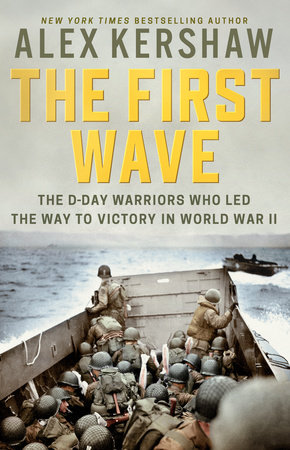
A few weeks ago, I received a copy of the magnificent book The First Wave by military historian Alex Kershaw by the fantastic people at Penguin Random House Canada.

What a treat it was for the military history enthusiast in me.

The key to responding to the question I kept asking myself on the beach lies on page 312, when the author writes that a Veteran US Ranger “[…] stressed that during the most critical combat of modern times it was the “heart and mind” that had mattered most.”

Witness to that, “[…] an advance party had cut through a barbed-wire perimeter [protecting a gun battery] and crawled across the hundred-yard-wide minefield, disarming mines with their bare fingers in the dark.” (page 87). Talk about heart and mind!

But the men who fought their way on and through the beaches were also led by exceptionally inspiring figures.

Let me just quote two, among all those evoked by Alex Kershaw. Brigadier General Theodore Roosevelt (son of the 26th President of the United States) and Lord Lovat (Simon J. Fraser), 24th chieftain of Clan Fraser.

General Roosevelt insisted on landing with his troops walking with his cane (he was suffering from arthritis) “[…] wearing a knit watch cap, not the regulation helmet […]”, insisting to board his landing craft unaided.

As for Lord Lovat, the inspiring Scottish commando leader certainly must have looked like an eccentric for his German enemies, for he “[…] was armed with a hunting rifle, dressed for a good day’s walk on the moors: a white turtleneck sweater, suede vest, khaki corduroy pants, and a duffle coat, which he would leave behind when he went ashore.”

The ordinary men from Canada, Great Britain and the United States who successfully assaulted the Nazi fortress on that historic day became extraordinary through their endurance, sacrifice and determination. And they were inspired by men who rejected the blandness of conformity by showing themselves for what they were, whether it was being afflicted by illness or expressing pride in their ancestry.

Alex Kershaw is probably the best book I have read so far about D-Day and the importance of supreme courage when the going gets tough (I’m referring here to Lieutenant Colonel James Rudder’s men who were besieged in a cramped command post without food, water, ammunition and sleep (page 243)).

Beautifully written (I love Kershaw’s style) and engaging, The First Wave should be the first companion you think of bringing on the roads of summer vacations or on a beach where you will be able to enjoy what these guys fought for – freedom.