The kitchens of the Tsar

On June 24, 2023, Yevgeny Prigozhin – the former convict-turned-entrepreneur-turned-warlord, shook the pillars of the Kremlin. The eyes of the world were riveted on the screens while Wagner mercenaries drove to Moscow. The leader had had enough of Russia’s military leadership that was, in his opinion, responsible for the state of things in Ukraine. Could it be the end of the régime? Few could predict what would happen. At the end of the day, Vladimir Putin prevailed, but the mutiny revealed the character of a man who thought bigger of himself than he could deliver.

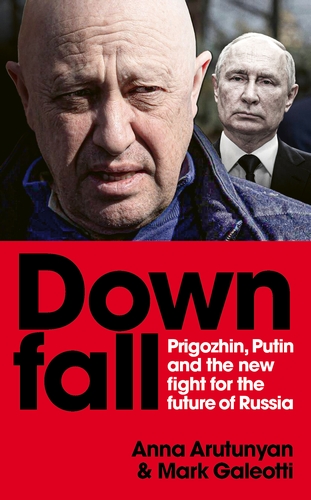
In the recent book Downfall: Prigozhin, Putin and the new fight for the future of Russia (Ebury Press) they co-wrote, journalist Anna Arutunyan and renowned Russia observer Mark Galeotti explain why and how Prigozhin – the servant who forgot his place – embarked on his death knell on what could be described as his highway to hell.

Since Prigozhin intertwined his destiny with Vladimir Putin’s reign, his biography can’t be dissociated from the nature and the functioning of the régime he eagerly served for his good fortune. Comparing the Kremlin to a medieval court where adhocracy prevails, the authors explain that one’s influence and fate are related to its importance to the Tsar.

Continue reading “The kitchens of the Tsar”

The Making of Trump 2.0

Historically, the main task of any President-elect in the United States is to form a cabinet. In the last weeks, we have seen a cascade of announcements that have raised some eyebrows. Donald Trump’s picks for key positions in his second administration might seem odd to many.

Not so much if you grab a copy of retired Lieutenant General H. R. McMaster’s insightful book At War with Ourselves: My Tour of Duty in the Trump White House (Harper).

Upon his selection as National Security Advisor by the 45th President, the military general wanted to give his boss the best of his expertise. After consulting with one of his notorious predecessors, Lieutenant General Brent Scowcroft, who masterfully seconded President George H. W. Bush, McMaster understood his role as “making the policy process work and developing options for the president; and second, advising the president with views unalloyed by the departments and their bureaucracies.” The only person that mattered to him was the President, whose foreign policy should be well served. He also perceived his role as being above partisanship. His goodwill would be rewarded with disappointment.

Continue reading “The Making of Trump 2.0”

Behind the scenes in the Sit Room

From Pearl Harbor to the neutralization of Osama bin Laden, every US President is confronted with crises. Any one of them also needs to manage relations with foreign leaders. Hence, a need for an organized mechanism and apparatus to navigate the traffic and make sure that POTUS can take the pulse of the world at a moment’s notice. This is made possible thanks to a vital institution, whose history is brilliantly recounted by former Clinton administration official and ABC host George Stephanopoulos in The Situation Room: The Inside Story of Presidents in Crisis (Grand Central).

Before its establishment, Presidents monitored world events on an ad hoc basis. For any military history enthusiast, the depiction of Franklin D. Roosevelt’s wheelchair being pushed in a former billiard room to consult maps pinned on the walls to monitor developments unfolding during World War II is captivating. Like so many other things, John F. Kennedy would be an innovator by creating the Situation Room in light of the 1961 Bay of Pigs disaster. Every one of his successors would rely on this evolving institution to accompany the United States’ presence on the world scene.

The most important takeaway from the book relates to the notion of the “three Ps”. The Situation Room is: 1) a place where information is gathered, processed, analyzed and decided upon; 2) it regroups people who serve the Presidency in a selfless and non-partisan way and; 3) a process revealing how every commander in chief manages the affairs of the world.

Continue reading “Behind the scenes in the Sit Room”

The financier who exposed Vladimir Putin

Six years ago this week, Turkish President Recep Tayyip Erdogan survived a coup launched by a faction of the Armed Forces. The statesman mobilized his supporters, enjoining them to resist the coup, by using the FaceTime app on his iPhone. At the time, I was impressed by the powerful impact of such a small tool in creating such a momentous outcome.

I was reminded of that story while reading Bill Browder’s book Freezing Order: A True Story of Money Laundering, Murder and Surviving Vladimir Putin’s Wrath (Simon & Schuster), not only because of the cruciality of knowing how to use the modern tools of communications, but also because there is a huge price to pay when you confront an autocrat.

Bill Browder can attest to that.

The author of Freezing Order is an American-born financier (now living in the UK) and founder of Hermitage Capital Management who has been active in Russia between 1996 and 2008. In June 2008, one of his lawyers, “[…] Sergei Magnitsky, discovered that […] criminals had used our stolen companies and their fake claims to apply for a fraudulent $230 million tax refund.” That’s where the roller coaster ride that is this book begins.

Continue reading “The financier who exposed Vladimir Putin”

How America Could Fall

There has always been a soft spot for the United States in my heart. When I was about 10 years old, I uninstalled my parents’ clothesline to attach a flag of the United States on July 4th. I sensed my father was upset, but he said nothing, probably because he was somehow impressed with my audacity. A few decades later, my feeling of admiration and appreciation remained intact, and it was important for me to visit the Gettysburg National Military Park – which commemorates the most iconic battle of the Civil War during which approximately 50 000 soldiers became casualties. During those captivating pilgrimages on the battlefield, I remember the comfort I felt in my heart that such an occurrence would not happen again. America, I like to think, will remain a beacon of the values to which I am attached for many decades to come. And I guess my heart would like to believe it will be centuries…

But the last few years have considerably shaken this conviction. You may think I’m talking about Donald Trump’s election on November 8, 2016, and you are partially right. The events that occurred on January 6, 2021, were a formidable earthquake. I would never have believed anyone predicting those terrifying images of hooligans storming the US Capitol – the very seat of American democracy. Never. But here we were.

Continue reading “How America Could Fall”

Boris Johnson’s Thatcher Moment?

British Prime Minister Boris Johnson (source: The Telegraph)

British Prime Minister Boris Johnson is embroiled in a “Partygate” which might provoke the end of his premiership. For all we know and depending on the circumstances and the conclusions of the Sue Gray report, he might be living his last days at 10 Downing Street. Professor Tim Bale of Queen Mary University of London is one of the best specialists on the Conservative Party. Despite a busy schedule, he kindly accepted to answer a few questions for this blog.

Professor Bale, considering Mr. Johnson’s persona and past, do you think the organization of parties at 10 Downing Street while the rest of the UK was in lockdown was predictable?

Johnson has never considered rules as something that should constrain him, so it’s all too easy to believe that those parties took place and that he didn’t care.

Continue reading “Boris Johnson’s Thatcher Moment?”

Exclusive interview with an avid reader, Premier of Alberta Jason Kenney

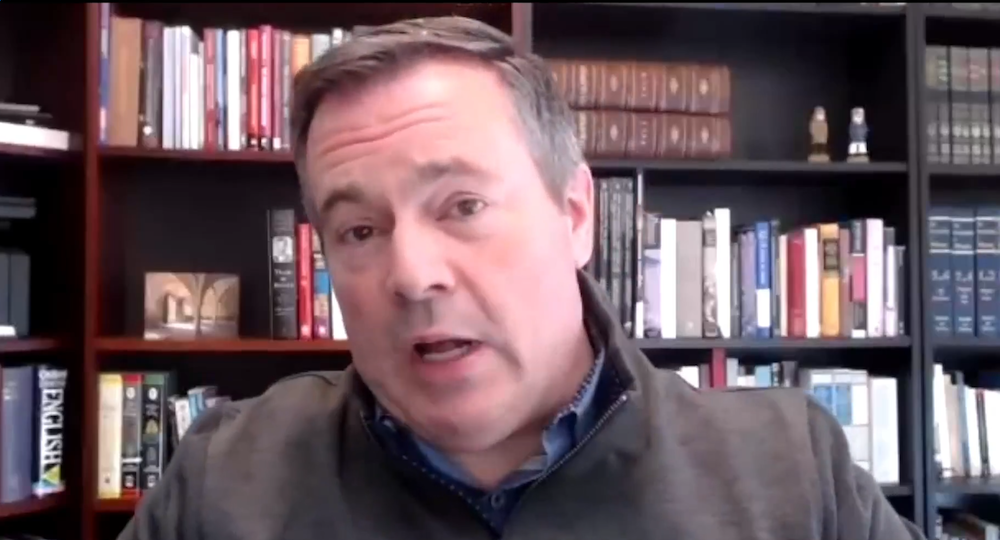
Premier of Alberta Jason Kenney, pictured in front of his bookshelves. (source: Alberta Politics)

I have known the Premier of Alberta, Jason Kenney, for almost 20 years and I’m proud to count him as a friend. As well as enjoying pancakes at the traditional breakfast he traditionally organized as federal Member of Parliament, I fondly remember eating poutine with him when my family and I participated in the Calgary Stampede in 2012. If there’s one thing we invariably always talk about (other than politics of course), it is books. He’s a consummate avid reader, a fellow bookworm.

Like every elected official, the Premier is fighting Covid-19 and its dire consequences in his home province of Alberta, making headlines. These are tough times. But I won’t get into that. Don’t expect anything controversial here. This is about books, which I found to be a source of solace in these difficult months. I was therefore extremely pleased when Mr. Kenney accepted to take a few moments within his brutal schedule to respond to a few questions for this blog.

I hope you enjoy this simple yet insightful exchange.

______________

Premier Kenney, I remember, when you were a federal cabinet Minister, those amazing pictures of boxes from a famous Canadian bookstore filled with books you received. Have your reading habits changed since you have become Premier of Alberta two years ago?

Continue reading “Exclusive interview with an avid reader, Premier of Alberta Jason Kenney”

Pragmatism will determine Naftali Bennett’s premiership

Israeli Prime Minister Naftali Bennett (source: The New York Times)

Last year, I had the tremendous privilege of obtaining an exclusive interview with former Israeli Prime Minister Ehud Olmert. Despite a busy schedule, he accepted in the last couple of days to answer a few questions about the designation of Naftali Bennett as 13th Prime Minister of the country. I always appreciate his straightforward style.

Here is therefore the content of our exchange.

Mr. Olmert, what are your personal impressions of Prime Minister Bennett? Do you know him personally and what are your first impressions upon his designation?

I am very happy that Naftali Bennett was sworn in as Prime Minister. I know him, of course, and I think that he is a worthy person. Obviously, he doesn’t have a longtime experience considering his short time in national politics. But how experienced was President Obama when he was elected President?

Continue reading “Pragmatism will determine Naftali Bennett’s premiership”

Putin was certainly quite pro-Netanyahu

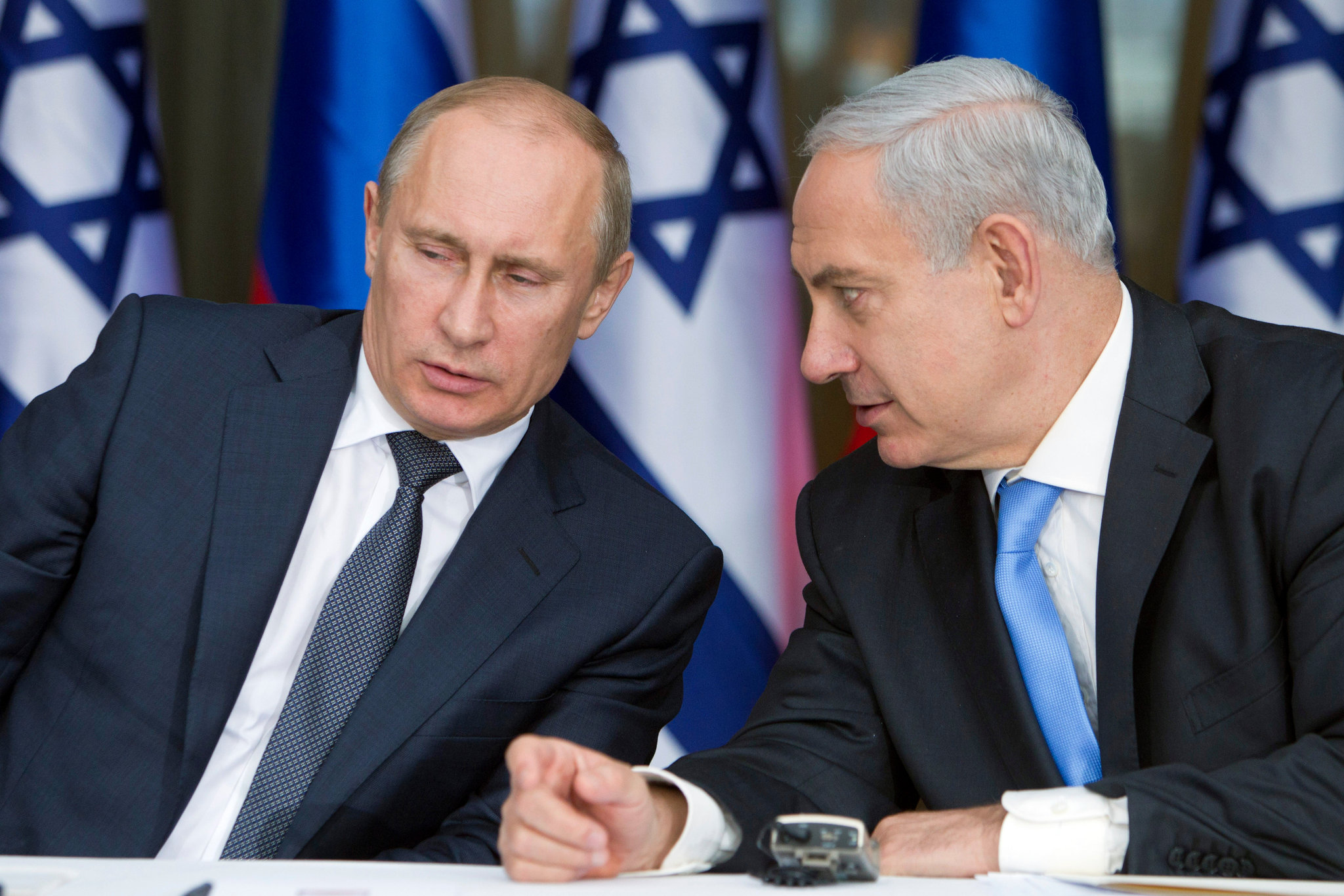
Russian President Vladimir Putin and then-Prime Minister Benjamin Netanyahu (source: The New York Times)

In his last speech as Prime Minister of Israel last Sunday, Benjamin Netanyahu evoked his proximity with President Vladimir Putin the following way:

“We developed special relations with Russia, not just with Russia as a state, we also nurtured a direct close line with the president of Russia. And in so doing, we guaranteed the freedom of maneuver of the Israeli Air Force in the skies of Syria in order to prevent Iran entrenchment on our Northern border.”

A news outlet stressed the fact that the former Prime Minister of Israel “[…] boasted of his friendship with Putin and was a frequent guest in Russia.

I have always found the closeness between Putin and Netanyahu to be extremely interesting, not to say simply fascinating. Notably in the context of the increasing presence of Russia in the Middle East.

Continue reading “Putin was certainly quite pro-Netanyahu”