The Making of Trump 2.0

Historically, the main task of any President-elect in the United States is to form a cabinet. In the last weeks, we have seen a cascade of announcements that have raised some eyebrows. Donald Trump’s picks for key positions in his second administration might seem odd to many.

Not so much if you grab a copy of retired Lieutenant General H. R. McMaster’s insightful book At War with Ourselves: My Tour of Duty in the Trump White House (Harper).

Upon his selection as National Security Advisor by the 45th President, the military general wanted to give his boss the best of his expertise. After consulting with one of his notorious predecessors, Lieutenant General Brent Scowcroft, who masterfully seconded President George H. W. Bush, McMaster understood his role as “making the policy process work and developing options for the president; and second, advising the president with views unalloyed by the departments and their bureaucracies.” The only person that mattered to him was the President, whose foreign policy should be well served. He also perceived his role as being above partisanship. His goodwill would be rewarded with disappointment.

Continue reading “The Making of Trump 2.0”

Joe Biden: Leader of the Free World

“To every man there comes in his lifetime that special moment when he is figuratively tapped on the shoulder and offered a chance to do a very special thing, unique to him and fitted to his talents,” declared Winston Churchill. For many, that hour comes early. For some, like the heroic British Prime Minister, it comes later. For others, like US President Joe Biden, it comes even later in life.

As we commemorate today the tragic first anniversary of the murderous onslaught launched by Vladimir Putin against Ukraine, it seems fitting to write about one of the best political biographies I have read in a long time. The Fight of His Life: Inside Joe Biden’s White House (Scribner) is required reading for anyone seeking to understand the character of the 46th President of the United States.

In the summer of 2017, the events surrounding the extreme-right manifestations in the streets of Charlottesville convinced former Vice President Biden that Donald Trump “was giving evil a safe harbour”, thus contributing to the Democratic politician’s decision to run. The combat for 2020 was between good and evil. And no one was better equipped than Joe Biden to lead it.

Continue reading “Joe Biden: Leader of the Free World”

The Source of JFK’s Greatness

For as long as I can remember, November 22 has always been a sobering date on my calendar. My late father, like many of his generation, revered John F. Kennedy. He owned several pieces of memorabilia. He also vividly remembered where he was and what he was doing on that fateful day when his favorite statesman tragically fell under the bullets. Before the Roosevelts, Truman, LBJ, Reagan and both Presidents Bush – commanders in chief for whom I have tons of admiration – JFK was the first one who piqued my intellectual curiosity.

I cannot proclaim that I have read every book regarding the main figure of contemporary Camelot, but I always make a point of skimming the pages of as many as I can. Mark K. Updegrove is a presidential historian whose work I have always been interested in. I was, therefore, impatient to grab a copy of his recent book Incomparable Grace: JFK in the Presidency. I was expecting a good read because the author has an enthralling writing style. But I got much more than that.

Continue reading “The Source of JFK’s Greatness”

Pierre Poilievre and the Canadian Conservatives are very, very far away from being like the US Republicans

Stephen Marche (source: stephenmarche.com)

Following the publication of my recent review of his excellent, penetrating, but preoccupying book The Next Civil War: Dispatches from the American Future (Avid Reader Press / Simon & Schuster), Canadian essayist and novelist Stephen Marche kindly accepted to answer a few questions for this blog. It is therefore with tremendous pleasure that I share the content of our exchange.

_________

BookMarc: Mr. Marche, you present a gloomy portrait of the threats that America might well be confronted to in a near future. Between the 5 scenarios you envision, which one is the most likely in your opinion and why?

Stephen Marche: Well, I would say that a version of the first scenario—about a united right that rallies over a bridge—has sort of already happened. I don’t really think that one is more likely than another. I prided myself in the book about being very specific about the limits of the models I used to write the pieces. Some, like the environmental models, are incredibly strong. Others, like the economic models, aren’t worth the paper they’re written on. But I give the best available models in each case.

Continue reading “Pierre Poilievre and the Canadian Conservatives are very, very far away from being like the US Republicans”

Vladimir Putin, campaign manager

A few years ago, I was captivated by Peter Schweizer’s book Reagan’s War: The Epic Story of His Forty-Year Struggle and Final Triumph Over Communism. That fascinating book detailed how the 40th President of the United States used the economic weaknesses of the USSR to bring it on its knees, notably with the help of the Saudis regarding the oil price and the military build-up with which Moscow could not compete with Washington.

Turns out that, while the USSR crumbled, a young KGB lieutenant colonel named Vladimir Putin took good note.  In a recent interview with a former Soviet official, my interlocutor spoke to me about the Russian President’s love of judo – his favorite sport – and the transposition of its techniques in politics. The master of the Kremlin’s dealings in world affairs is a good illustration of his abilities to take advantage of his opponents’ weight to knock them down.

Nowhere is this ability more evident than in the pages of British journalist Luke Harding’s book Shadow State: Murder, Mayhem, and Russia’s Remaking of the West (Harper). In a real page-turner, the author details how the Russian government and its entities are influencing the West’s political life. For example, using Novichok as a calling card in attempting to neutralize Sergei Skripal, a former Russian intelligence officer who betrayed the GRU (The Main Directorate of the General Staff of the Armed Forces of the Russian Federation). Or shabby dealings using banks allegedly to bail out influential people – allegedly like former US President Donald Trump. Moscow is determined to go to any lengths “[…] to return to a nineteenth-century model of great-power politics and to disrupt the ideals-based international order established after the Second World War […].”

Continue reading “Vladimir Putin, campaign manager”

Biden cares about people other politicians would ignore

Evan Osnos besides a picture of his excellent biography of President Joe Biden (source: The Aspen Institute).

(version française)

Few days before the US presidential election of November 3rd, I reviewed the biography of then-Democratic presidential candidate Joe Biden by acclaimed author and journalist Evan Osnos.

Those of you who watched CNN during the last couple of weeks have certainly seen him, since he notably commented the inauguration of the 46th President.

Despite a hectic schedule, Mr. Osnos kindly accepted to answer a few exclusive questions for this blog. I’m very happy to share this insightful interview which sheds light on the personality of the new resident of the White House.

Here is the content of our exchange.

I was amazed to see that President Biden installed a bust of President Harry S. Truman in the Oval Office. How does this former President inspire him? 

Biden has fond memories of Truman because of his grandfather’s political influence on him. He recalls visiting his “Grandpop” Ambrose Finnegan, in Scranton, and all the Irishmen in the neighborhood were blue-collar “Truman Democrats.” “That’s the thing they liked about Harry Truman: no artifice,” Biden wrote in his first memoir. “He knew where he stood, and he wasn’t afraid to say it.”

Continue reading “Biden cares about people other politicians would ignore”

President-elect Joe Biden and the Return of Empathy

Like millions of people around the world, I’m impatient to see the results of Tuesday’s US presidential elections. Full disclosure, I ardently root for a Joe Biden victory. Not because I’m a traditional Democrat supporter (I am not, I canvassed in New Hampshire for my favorite contemporary president George W. Bush and I attended the 2004 and 2008 Republican National Conventions), but because of my profound lack of affinities for his opponent.

If you’re a Trump supporter, you can stop right here (and I suspect you will), because you won’t like the rest of this review.

When I read Bob Woodward’s latest book, Rage, a few weeks ago, I was struck by the following passage from one of his discussions with the current president of the United States:

“When’s the last time you apologized?”, asked Woodward. “Oh, I don’t know, but I think over a period – I would apologize. Here’s the thing: I’m never wrong.”

To me, that exchange encapsulates the Trump problem. Like kings of the Middle Ages, he thinks he can do no wrong. And he believes he can do or say whatever he wants, to hell with the consequences.

You don’t expect a head of state or government to be perfect. You want him or her to abide by certain standards but also to be human – like the rest of us. In this day and age, that’s precisely Joe Biden’s main quality in this race.

I was therefore curious to read Evan Osnos’ Joe Biden: The Life, The Run, and What Matters Now, to see what more could I learn about the man who might be on his way to march on Pennsylvania street after his inauguration on January 20th, 2021. I did not seek a policy book. I wanted a full-rounded portrait of a man seeking the highest office in the US, detailing his qualities and shortcomings. By all means, the author did not disappoint. An avid reader, Biden is known for his loyalty and being humble, as well as being arrogant and sometimes sloppy. He’s human!

Evan Osnos writes that he is such a tactile politician that “When Biden and Obama worked a rope line, Biden sometimes took so long that aides had to restart the soundtrack.” Or when “Leon Panetta recalled listening to Biden work the phone at the White House: “You didn’t know whether he was talking to a world leader or the head of the political party in Delaware.””

In a nutshell, Biden is the kind of guy you’d like to sip a caramel macchiato with on a Saturday morning.

Thanks to the author, I learnt that Joe Biden – contrary to some political accusations – is not part of the establishment. He was, incidentally, “[…] among the least prosperous members of the United States Senate” and he planned to take a second mortgage to pay for his son’s cancer treatments (who passed away later). President Obama offered to help him financially, but his vice-president never came back to ask for it.

Biden suffered in his life. A lot. And one of his strongest traits (in my humble opinion) is that he is not afraid to share his humanity. A few days before Christmas 1972, he lost his first wife and daughter in a car accident. He went through serious health issues. The most touching part of the book for me is when the author writes about “Brayden Harrington, a thirteen-year-old from New Hampshire, [that] gave credit to Biden for telling him that they belonged to “the same club – we stutter.””

America is in a state of turmoil. Americans are suffering. Greatly. This mood won’t disappear at the touch of a magic wand nor at the turn of a blind eye. If he is elected this week, Joe Biden will probably never rank among the transformational presidents such as FDR, LBJ or Reagan. But he can be a gifted and consequential transitional one like Harry S. Truman or George H. W. Bush. The grandfather who looks like he’s just out of the gym (I borrow this formula from the author) would bring a healthy dose of much-needed humanity, sincerity, modesty, decency and, dare I say, sometimes vulnerability in the White House.

This electoral cycle, I suspect many people are voting against Donald Trump and not necessarily for Joe Biden. For those unfamiliar with who Joe Biden’s character, Evan Osnos opens a window on the personality of an attaching man whose challenges will be of Himalayan proportions depending on Tuesday’s electoral results.

Joe Biden most certainly won’t be able to transform US politics in a heartbeat, but at least Americans will have a good man at the helm of the ship of state.

Let us now hope that Evan Osnos will put his exceptional talents as a biographer at our service in writing about another political or historical figure in the near future. In his book about Joe Biden, he mentions the Democratic contender has read one of the tomes about LBJ by Robert A. Caro. Having myself tremendously enjoyed this four-volumes biography of JFK’s successor, I find Osnos talents to be comparable to those of the iconic writer.

__________

Evan Osnos, Joe Biden: The Life, The Run, and What Matters Now, New York, Scribner, 2020, 192 pages.

I would like to express my heartfelt gratitude to the always helpful Athena Reekers of Simon & Schuster Canada for providing me with a copy of this book.

Q & A with CDR Guy M. Snodgrass (USN, Retired)

GuySnodgrass3
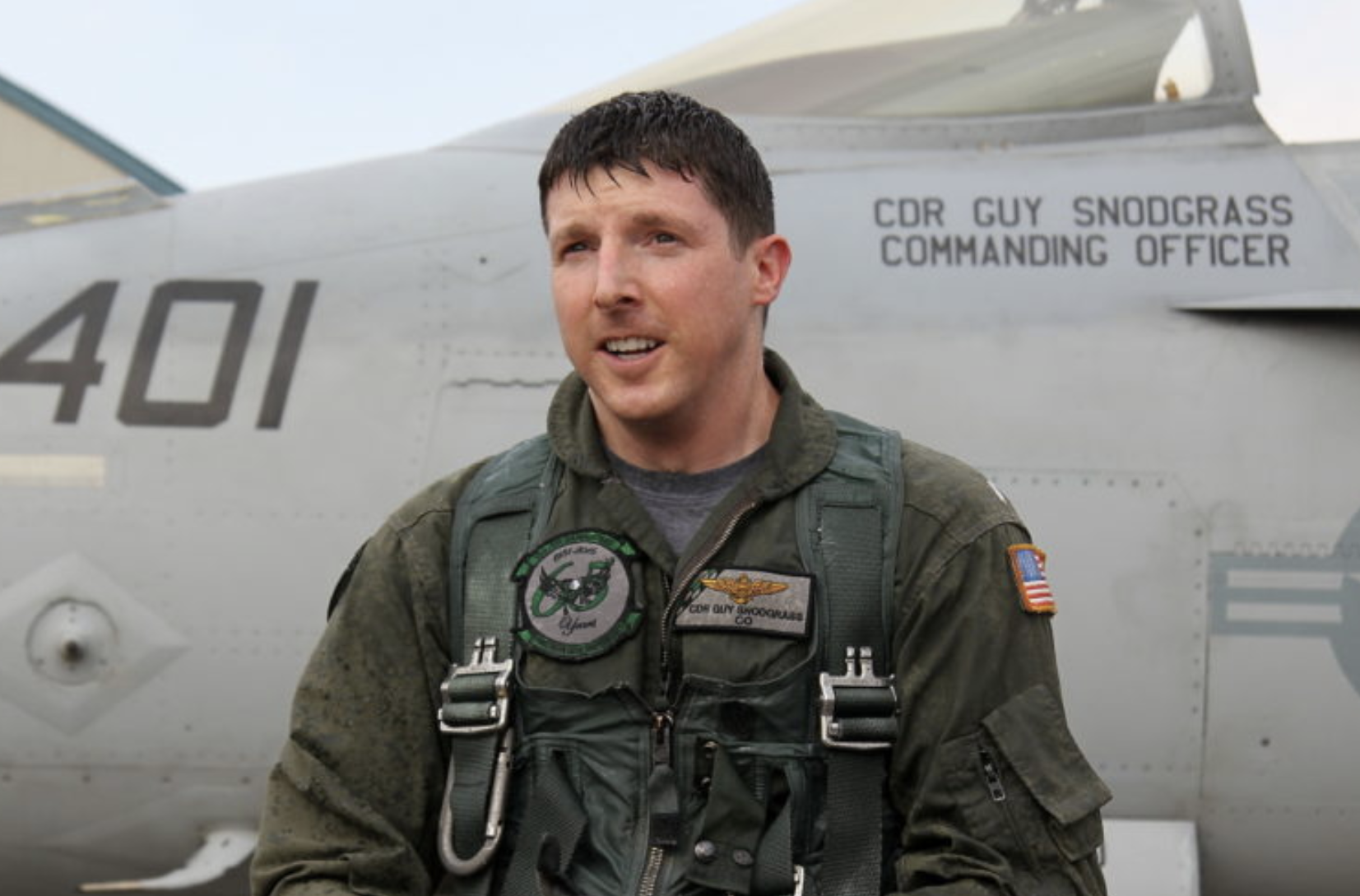
Commander Guy M. Snodgrass (USN, Retired), author of Holding the Line: Inside Trump’s Pentagon with Secretary Mattis.

In the process of writing my review of his excellent book, Holding the Line: Inside Trump’s Pentagon with Secretary Mattis, I got in touch with Commander Guy M. Snodgrass (USN, Retired), asking if he would agree to respond to a few questions for my readers. Despite a busy schedule and numerous media requests in relation with his book, he kindly accepted. I’m both grateful and impatient to put my hands on his upcoming book.

Commander Snodgrass, what’s your favorite political memoir, apart from Peggy Noonan’s (I assume it’s on the top of your list)?

All Too Human: A Political Education by George Stephanopoulos.

His favorite bios are the ones written about Henry Kissinger and George H. W. Bush

What’s your favorite biography? (My little finger tells me it might be “Kissinger” by Walter Isaacson).

Either Kissinger by Walter Isaacson (for it’s no-holds portrayal of Kissinger) or Power and Destiny by Jon Meacham (the biography of former President George H. W. Bush).

Given your past career, you certainly nourish an interest in military history? What’s your favorite book in that category?

I’ll give you the standard TOPGUN answer to your question: it depends. I have a lot of ‘favorites’ depending on the application or topic at hand. Top three are: Eisenhower At War by David Eisenhower, The Nightingale’s Song by Robert Timberg, and The Encyclopedia of Military History by Ernest and Trevor Dupuy. For fun I’ll throw in Robin Olds’s Fighter Pilot.

NATO Secretary General Jen Stoltenberg is largely unflappable, calm under pressure, and a gifted politician who never seemed to be a loss for words during a press conference.

During your tenure with Secretary Mattis, which international personality (military or political) left the best impression on you and why?

Jen Stoltenberg, Secretary General of NATO. He is largely unflappable, calm under pressure, and a gifted politician who never seemed to be a loss for words during a press conference.

The U.S. must find ways to coexist with both nations (Russia and China) on the world stage while holding the line with regards to U.S. interests.

I’d be very curious to know if you share Henry Kissinger’s vision about Russia and China? (I would have loved to read more about it in your book, but I understand it was not its scope)

No, at least not the way Kissinger views them now. Russia and China actively work to subvert U.S. influence around the world. Kissinger is far too eager to rush into their arms from what I’ve seen from him in recent years. Regardless, the U.S. must find ways to coexist with both nations on the world stage while holding the line with regards to U.S. interests.

Are you working on another book or is it something you are planning?

Yes: TOPGUN’s TOP 10: Leadership Lessons from the Cockpit (just posted on Amazon). An opportunity to share the most powerful lessons I learned during my time as a TOPGUN Instructor.

I was raised to put service before self, which is why a military career was so satisfying. I’m certainly open to pursuing a pathway that leads to a return to public service.

Would you consider a run for political office in the future?

Would I? Possibly. Both U.S. political parties are incredibly unsettled at the moment, so I have a hard time determining if recent shifts in platforms are permanent or merely a reaction to President Trump. I was raised to put service before self, which is why a military career was so satisfying. I’m certainly open to pursuing a pathway that leads to a return to public service. In the meantime, it’s an honor to be able to publish and make a positive impact in the lives of others.

Why Mattis didn’t survive in the Trump administration

HoldingTheLineReading memoirs of important players who worked during presidencies has always fascinated me. I notably cherish the moments spent reading Dick Morris, Ed Rollins, Peggy Noonan, George Stephanopoulos and James Carville’s books during my University years. Classics in my humble opinion.

I was therefore thrilled to dive into Holding the Line: Inside Trump’s Pentagon with Secretary Mattis by Guy M. Snodgrass, former Chief Speechwriter and Communications Director for Secretary of Defense James N. Mattis.

What strikes me upon finishing this book is how difficult it must have been to work for and with the 45th President. Picture this. You’ve prepared a briefing for the leader of the free world and this man is only fixated on organizing a big military parade in Washington, D.C., because he was impressed with the 14th of July celebrations in Paris. You therefore realize that, next time around, you will “[…] only use slides with pictures… no words.” You’re talking here about the individual who makes life-and-death decisions for 1.3 million members of the Armed Forces and can decide to start a war.

I could also mention the particular episode when Lockheed Martin’s executives decided to flatter Trump’s ego by pretending his involvement in the F-35 contributed to lower the cost. “The only problem? Those savings had been already planned for years in advance […].” That’s how insecure and immature the current resident of the White House is.

And then there’s the moment when people at the Pentagon – the Secretary of Defense at the top of the list – learnt, probably live on TV or over the Internet, during a summit between Trump and Kim Jong Un that “war games” historically planned and organized between the US and South Korean armies would be suspended. Talk about respecting your allies. Much the same happened with the creation of the Space Force. Not to mention the NATO summit when POTUS went off message. In brief, “the administration wasn’t operating strategically, but rather looking for issues to provide immediate satisfaction.” The type of instant gratification you can expect from children.

To a certain extent, this portrait of the man was to be expected. Donald Trump has never been renowned for being a serious person, an avid reader or an intellectually curious politician. Chances are slim he will fall in love with a tome about General George Marshall or the minutiae of military affairs. I doubt we will see a pile of books set aside for him at the Barnes & Noble downtown D.C. (I once saw such a pile set aside for President George W. Bush during one of my visits in the US Capital).

I don’t know why, but what flabbergasted me the most was to read how Mattis reacted to Trump and the way he accepted to be treated. On one hand, he could have a phone conversation with the President, using a very ingratiating tone of voice and, on the other, he would lose control of a meeting with National Security Advisor John Bolton, Treasury Secretary Steven Mnuchin and State Secretary Mike Pompeo, allowing them to interrupt him with impunity. Not the type of behavior you expect from a man who is compared to General George Patton and whose nickname is “Mad Dog”.

According to the author, James Mattis “[…] is actually conflict-adverse in dealing with people he sees on a regular basis.” Which could explain how a retired US Marines Corps General got trampled over by a real estate mogul and his minions. In other words, Mattis became a legend with men who served under him, but he was not necessarily cut to serve alongside a president who doesn’t believe in the tenets of diplomacy which are so important to Mattis and to Rex Tillerson who served as Secretary of State at the beginning of the current administration and was also fired by the Tweeter-in-Chief.

It goes without saying that Donald Trump could have benefited so much more from the talent, expertise and knowledge of a bookish military figure “[…] who at one point owned more than seven thousand books in his library […]” and who takes inspiration from the legendary Henry Kissinger, but these type of men need more than 180 characters to reflect and take action. In a sense, one wonders how is it that such a great man could stick around so long in an administration that doesn’t know the meaning of grace, diplomacy and vision.

Many books will be published in the future about the inside story of the Trump administration. But I’m certain Guy Snodgrass will be among the most interesting, because of his inspired style, but also his profound decency (between the lines, you can understand that this guy was way too kind for the treacherous world of politics). Like his former boss, he’s a warrior-scholar. And Lord knows we need such men more than trigger-happy provocateurs.