The best books, their authors and the great people who inspire these stories / Les meilleurs livres, leurs auteurs et les grand.e.s de l'histoire qui les inspirent.
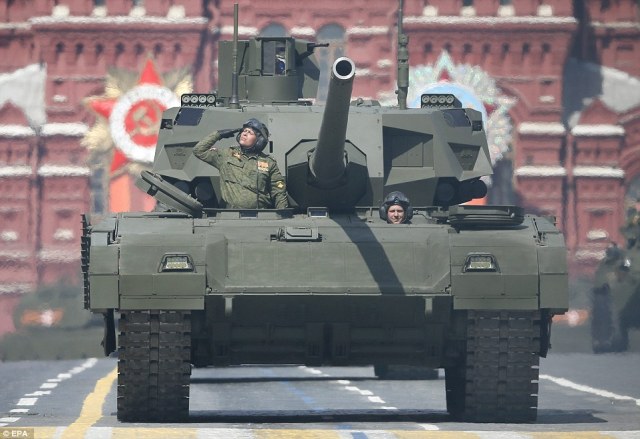
C’est ainsi que le char d’assaut Armata (T-14) représenterait le changement le plus révolutionnaire depuis les 50 dernières années, au niveau de sa conception. Réputé être plus léger, plus rapide, muni d’un système de détection des menaces à 360 degrés et fort du fait que sa tourelle ne nécessite pas la présence d’un membre d’équipage – ce qui accroit la sécurité des membres d’équipage –, et une portée de feu supérieure à celle de ses vis-à-vis occidentaux, le Armata « offre aux Russes un avantage technique et tactique manifeste qui les rendra confiants » selon l’article.
On rappelle également que la flotte russe est 35 fois plus importante que celle des Britanniques et que la réponse du ministère de la défense du Royaume-Uni à ces développements de la technologie militaire russe n’est probablement pas appropriée à la situation.
Naturellement, une armée a besoin de plus que de bons chars d’assaut pour remporter la mise sur le champ de bataille. Mais c’est un atout de premier plan dont les décideurs occidentaux devraient prendre en considération.
Au temps de la guerre froide, les Américains avaient compris qu’un investissement massif dans le secteur des forces armées contribuerait à faire plier les genoux de Moscou. Dans un contexte où les gouvernements de l’OTAN peinent à convaincre l’opinion publique de l’importance et de la nécessité de consacrer une enveloppe budgétaire plus importante à ce secteur pour parer à toute menace, il semblerait que le maitre du Kremlin ait tiré un enseignement de cet épisode de l’histoire contemporaine.
Je ne suis pas le moins du monde étonné de lire cet article de zone militaire au sujet du récent camouflet infligé par Varsovie à la France dans le dossier de la vente des hélicoptères de manœuvre H225M Caracal.
Mais ce qui est encore plus étonnant – et positivement – c’est l’attitude du gouvernement français dans le dossier, puisque « […] cette brouille avec Varsovie n’aura aucune incidence sur la participation des forces françaises aux mesures de réassurance prises en faveur de la Pologne et des pays baltes par l’Otan […] ».
Le moins que l’on puisse dire, c’est qu’ils ont de la classe, les Français. Beaucoup même.
On le sait, la Pologne ne rate jamais une occasion d’invectiver les Russes et de leur imputer les pires maux de la terre. Dans une certaine mesure, cette posture peut s’expliquer par la relation historique entre les deux pays. Cela étant dit, Varsovie devrait changer de répertoire dans ses relations avec ses amis et alliés de l’OTAN. Les affronts sont rarement de bons gages de relations fructueuses, durables et solides.
La figurine LAH200 Count Galeazzo Ciano de la collection King & Country photographiée sur le livre de Max Schiavon.
Durant un séjour en Italie en 2013, j’ai effectué une visite guidée consacrée à Mussolini. En parcourant différents quartiers de Rome, il fut possible de constater que le Duce conserve l’intérêt, pour ne pas dire une certaine affection, de plusieurs. Dans une certaine mesure et malgré sa présence au côté d’Hitler, son aura a survécu à la déconfiture du fascisme et aux effets du temps.
Mais peu d’auteurs se penchent sur Mussolini dans la langue de Molière. L’historien militaire français Max Schiavon a relevé le gant en publiant récemment un excellent livre à propos du dictateur, Mussolini. Un dictateur en guerre.
Si Mussolini est habilement parvenu à maitriser l’échiquier politique italien entre les deux conflits mondiaux, il en fut tout autrement de sa capacité à revêtir les habits du chef de guerre. Quatre raisons majeures viendront plomber son action durant la Seconde Guerre mondiale.
Tout d’abord, Mussolini est dépourvu de toute formation militaire. On aura souvent entendu la rengaine à l’effet que les soldats italiens n’étaient pas des guerriers très valeureux, mais le fait demeure que les forces armées souffraient d’impréparation pour le conflit auquel le Duce les destinait. Sur le champ de bataille, le maréchal Rommel observait pour sa part que l’infériorité des Italiens devant les Britanniques en Afrique du Nord était redevable au fait que la performance des premiers était tétanisée par leur infériorité en termes de forces motorisées. (p. 192). Appelant Clausewitz à la barre de son argumentaire, Max Schiavon expose que « le plus strict des devoirs de l’État, c’est de se munir de l’armée de sa politique. » (p. 151) À son grand dam, Mussolini ne sut pas intégrer la pensée du célèbre prussien dans sa politique.
Ensuite, en emboitant le pas d’Hitler, le chef du gouvernement mesura mal l’état d’esprit de sa population, laquelle se démarquait par son pacifisme, l’absence de désir de partir en guerre, un sentiment défavorable – voire hostile – aux Allemands et à leurs desseins. Celui qui avait bien joué ses cartes pour faire la conquête du pouvoir eut donc la main moins bonne avec la Res Militaris.
De plus, Mussolini accepte d’être la 5e roue du carrosse d’un régime allemand qui le trompe sans vergogne à moult reprises et qui le méprise ouvertement. À témoin, l’anecdote citée par Max Schiavon au sujet du baron de Fiorio, officier de liaison italien auprès des services de renseignement allemands qui déclare à voix haute « Alors, mon cher Franz, nous voici à vos côtés » après que l’Italie se soit rangée derrière l’Allemagne nazie. Pour réponse, son collègue allemand, le major Franz Seubert, de lui répondre : « Bravo, nous gagnerons la guerre quand même. » (p. 142-143). Tout était dit.
Finalement, incapable de tirer l’enseignement accompagnant ses échecs, Mussolini était condamné soit à les répéter ou à tout simplement les ignorer. Contrairement à un Franco qui sut habillement jouer ses cartes durant la Deuxième Guerre mondiale et ainsi demeurer à la tête de son pays lorsque les canons se turent, Mussolini était destiné à tomber en même temps que les étendards de bataille des forces italiennes. Son gendre et ministre des affaires étrangères, le comte Galeazzo Ciano, lui conseilla pourtant, à la lumière des actions posées par les Allemands et des divergences de vues entre Rome et Berlin, de prendre ses distances avec le Reich. Cette disposition allait plus tard lui coûter la vie.
Certains pourront reprocher à l’auteur de ne pas être entré dans le menu détail des opérations militaires, mais tel n’était pas son objectif. Avec brio, il s’est concentré à dépeindre le parcours de Mussolini en tant que chef de guerre, une trajectoire promise à la défaite malgré un parcours qui suscita une admiration toujours observable au hasard d’une discussion dans un café ou au détour d’une visite chez un boutiquier romain.
_____
Max Schiavon, Mussolini. Un dictateur en guerre, Paris, Perrin, 2016, 270 pages.
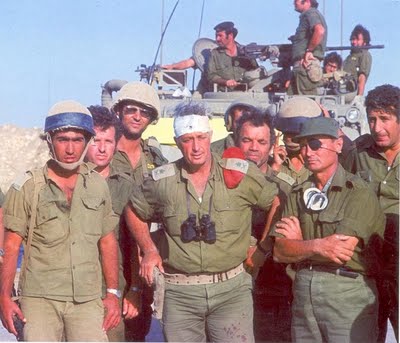
Ariel Sharon (in the middle) and Moshe Dayan (on the right) during the Kippur War.
I have always been interested in the origins, the conduct and the military actors who participated in the 1973 Kippur War, which was launched against Israel by Egypt and Syria.
I was therefore very pleased to find this recent article written by David Tal and published in the pages of Middle Eastern Studies recently.
According to Professor Tal, the responsibility of the Kippur War lies at Egyptian president Anwar Sadat doorstep.
Contrary to the school of thought supporting the assumption that “[…] the 1973 October war could have been avoided if Israel had responded positively to Sadat’s peace offers during 1971-1973”, David Tal goes in detail to demonstrate that Egypt did everything to arrive at a settlement through the battlefield, advancing proposals that were unacceptable to Israel and refusing to move an inch on its demands.
But why was that?
“[…] Sadat was offended by the Egyptian military defeat in 1967”, Egypt’s pride was damaged by this outcome and the only way to repair the situation would be either through “[…] regaining the territories without having to negotiate with Israel, or by going to war.”
Sadat’s war aims were nevertheless very modest. A symbolic gain of territory would permit Egypt to proclaim a victory and wash its humiliation.
Everyone knows that Israel won the war, but less known is the fact that the terms accepted by Sadat within the Camp David Agreement framework were those espoused by Israel before the October war and rejected by the Egyptian president.
This war of choice solely happened for Sadat to claim a symbolic victory allowing him to don the mantle of peacemaker few years later.
For anyone interested in the contemporary history of the Middle East and Israel, David Tal’s work is great food for thought.
Trop souvent, les médias et observateurs occidentaux ignorent ou gomment la présence et les actions des forces armées turques et, à plus forte raison, les impératifs guidant les décisions du gouvernement Erdoğan, afin de se concentrer sur d’autres points chauds. Cette lecture a pour effet de nous priver d’une perspective tout aussi pertinente et actuelle à propos du point de vue du gouvernement de Ankara, lequel est indiscutablement directement concerné par ce qui se passe de l’autre côté de sa frontière.
Parce qu’il est important de tenir compte de tous les acteurs en présence si on souhaite avoir un portrait réaliste de la situation, j’ai donc l’intention de garder un œil sur cette perspective, afin de partager mes opinions et observations à ce sujet.
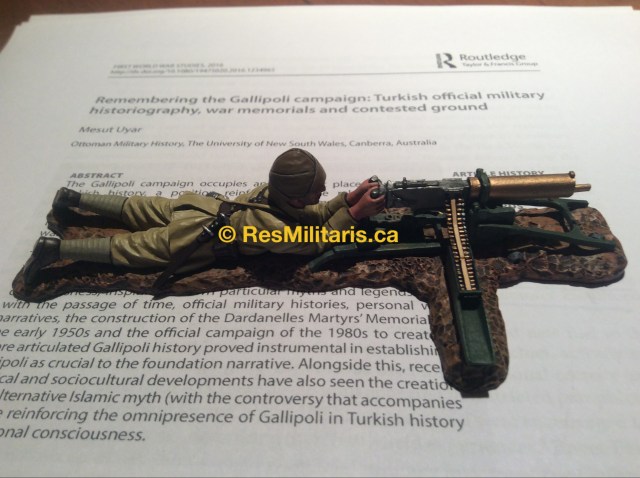
King & Country AL68 – Turkish Machine Gunner lying prone
As we approach November 11th and the ceremonies organized to commemorate what it represents, the theme of remembrance occupies a special place in my readings.
Since the evacuation of the last Anzac troops at dawn on December 20th 1915, marking a Turkish victory, the process of memory and remembrance on the Turkish side has been all but easy. Subjected to political, religious, military and identity considerations – just to quote these examples – Turkish people incessantly advocated the development and promotion of awareness of the sacrifices of their fellow citizens during that famous campaign. And it is one of the most interesting aspects of this article. Family and friends of veterans, soldiers and officers who served and fought on the peninsula along with university students were at the vanguard of this evolution.
At the entrance of the Australian War Memorial, in Canberra, the visitors can see a whale boat that served to transport the troops on the shores of Gallipoli, in front of which the following inscription is displayed: “The Australian nation was born on the shore of Gallipoli.”
With our Western eyes and conceptions, it is often too easy to focus exclusively on the military feats of Australians, New Zealanders and other Allied troops and to ignore the gallantry of the Turkish soldiers and their commanders – the most notorious being Mustafa Kemal Atatürk – founder of the Republic of Turkey. Doing so, we forfeit the opportunity to better understand and appreciate the impact of the Gallipoli campaign in the national identity and consciousness of Turkey, a country that is not only member of NATO but also an ally in the fight against terror.
Thanks to military historians like Mesut Uyar, we can better appreciate the efforts deployed by the Turkish people to bring the valor of their ancestors on the battlefield to our attention and appreciation.
The days leading to Remembrance Day are always a privileged moment to think about the sacrifice of these men and women who, throughout the ages, have sacrificed so much for our societies and our world. Remembrance should not occur exclusively in the morning of November 11th. It should be a daily exercice. That’s why I was so happy to take a picture of this King & Country figure, FW162 “The Last Goodbye”, last night in front of the National War Memorial in Ottawa, Ontario.
“At the going down of the sun and in the morning, we will remember them.”
Dr. William Philpott of King’s College London – who specializes in the history of World War I, of the French army and British strategy – is one of my favorite historians.
In one of his past articles, “France’s Forgotten Victory” published in The Journal of Strategic Studies, he came to a conclusion that struck me:
“It was not the independently minded and dilatory British, or the tardy and brash Americans who won the war for the Entente, but the resilient, determined French, who refused to give in in the face of invasion and national disaster.”
With brio, Professor Philpott articulates convincing arguments about the fact that the French poilus are the true heroes of the First World War. Their contribution has visibly been occulted in historiography and public awareness.
_____
William Philpott, professeur au King’s College de Londres – qui se spécialise en histoire de la Première Guerre mondiale, de l’armée française et de la stratégie britannique – est l’un de mes historiens favoris.
Dans l’un de ses articles passés, intitulé « France’s Forgotten Victory » (la victoire oubliée des Français) dans The Journal of Strategic Studies, il en arrive à une conclusion étonnante mais révélatrice :
« Ce n’est pas le soldat britannique retardataire indépendant d’esprit, ni les Américains tardifs et impétueux qui ont remporté la guerre pour l’Entente, mais plutôt les Français déterminés et résistants, qui ont refusé d’abdiquer devant la menace d’invasion et de catastrophe nationale. »
Avec brio, le Professeur Philpott avance des arguments solides à l’effet que les poilus français sont les véritables héros de la Première Guerre mondiale. Leur contribution a visiblement été passée sous silence dans l’historiographie et l’imaginaire populaire.
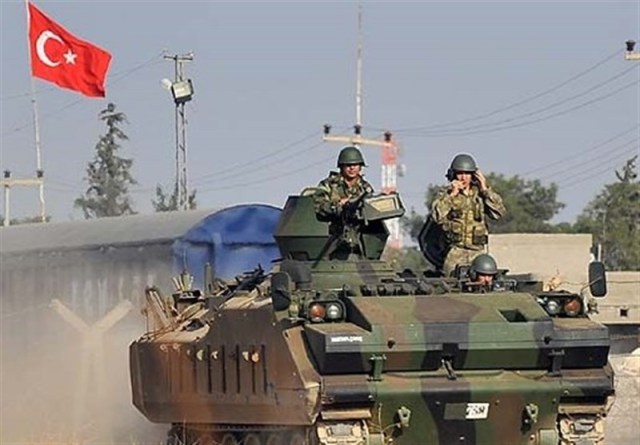
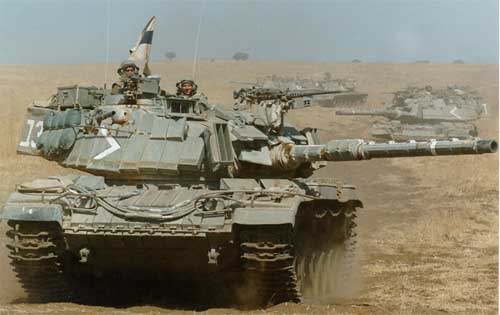
Of particular interest in these news is the fact that the M60’s upgrade would be realized using Israeli expertise, marking “the first Turkish-Israeli defense deal after the two former allies froze their diplomatic ties in 2010 but agreed on détente recently.” But it would not be a first, since a previous upgrade realized by Israeli Military Industries occurred in the 1990s.
Those who follow military affairs and the Middle East will also remember that, last April, a Turkish M60T tank – “[…] a version of the US-made tank upgraded by Israeli Military Industries (IMI)” – survived an anti-tank attack launched by soldiers of the Islamic State using a 9K129 Kornet ATGW.
It goes without saying that Ankara’s decision to use Israeli military expertise in its upgrading of the Armed forces is not only savvy to contribute to a better political climate in the region but also wise in terms of providing its troops with the best possible equipment.
I’m always happy when The Journal of Slavic Military Studies releases a new issue. Since 80% of the Wehrmacht losses occurred on the Eastern Front, I’ve always thought it is primordial to be interested in that vital aspect of World War 2.
The current issue of the JSMS features a very interesting article by Valerii Nikolaevich Zamulin about the difficulties related to the supply services before the battle of Kursk.
Since the soldier of the Red Army was the one who carried the burden of fighting the Germans, it is astonishing to read about those: “[…] tens of thousands of men each day who were under the stress of moral danger were unable to receive the most basic needs – a clean uniform and a decent meal.”
We can also refer to those commanders who “[…] bullied and mistreated subordinates, who were daily shoveling dozens of cubic meters of earth, erecting defensive lines, while being half-starved, unwashed for several weeks, and drenched in sweat in winter tunics and trousers.”
Wasn’t it Napoleon who declared that: “An army marches on its stomach”? Under those circumstances, the soldiers of the Red Army had a tall order.
General Nikolai Vatutin – commander-in-chief of the Voronezh front – had to find a solution to this situation and to other challenges, like lack of transport and replacement issues, encountered by the Red Army in that sector before the battle.
Against all odds, Vatutin succeeded.
Along with his subordinates, “[…] they managed to organize the system of rear services on an acceptable level”, they “[…] expanded the infrastructure of the territory where the Voronezh Front’s armies deployed and practically from scratch managed to create a logistics system that supplied the troops with everything necessary” and they ensured that “[…] all of the rifle divisions and the artillery and tank unites were not simply replenished but essentially brought back to table strength […].”
Under heavy duress, the Red Army soldier was therefore given the tools to fight with gallantry against his enemies.
Zamulin’s article is truly fascinating and deserves to be read by any student of the Eastern Front and the Red Army.

 Je ne suis pas le moins du monde étonné de lire
 The days leading to Remembrance Day are always a privileged moment to think about the sacrifice of these men and women who, throughout the ages, have sacrificed so much for our societies and our world. Remembrance should not occur exclusively in the morning of November 11th. It should be a daily exercice. That’s why I was so happy to take a picture of this King & Country figure, FW162 “The Last Goodbye”, last night in front of the National War Memorial in Ottawa, Ontario.
 BookMarc